MicroLED Implant Could Cast New Light on Cancer Treatment
Why It Matters
The implant could dramatically improve the efficacy and patient comfort of photodynamic therapy, expanding its use beyond superficial tumors. Its low‑cost, wireless design may accelerate adoption of advanced, minimally invasive oncology treatments worldwide.
Key Takeaways
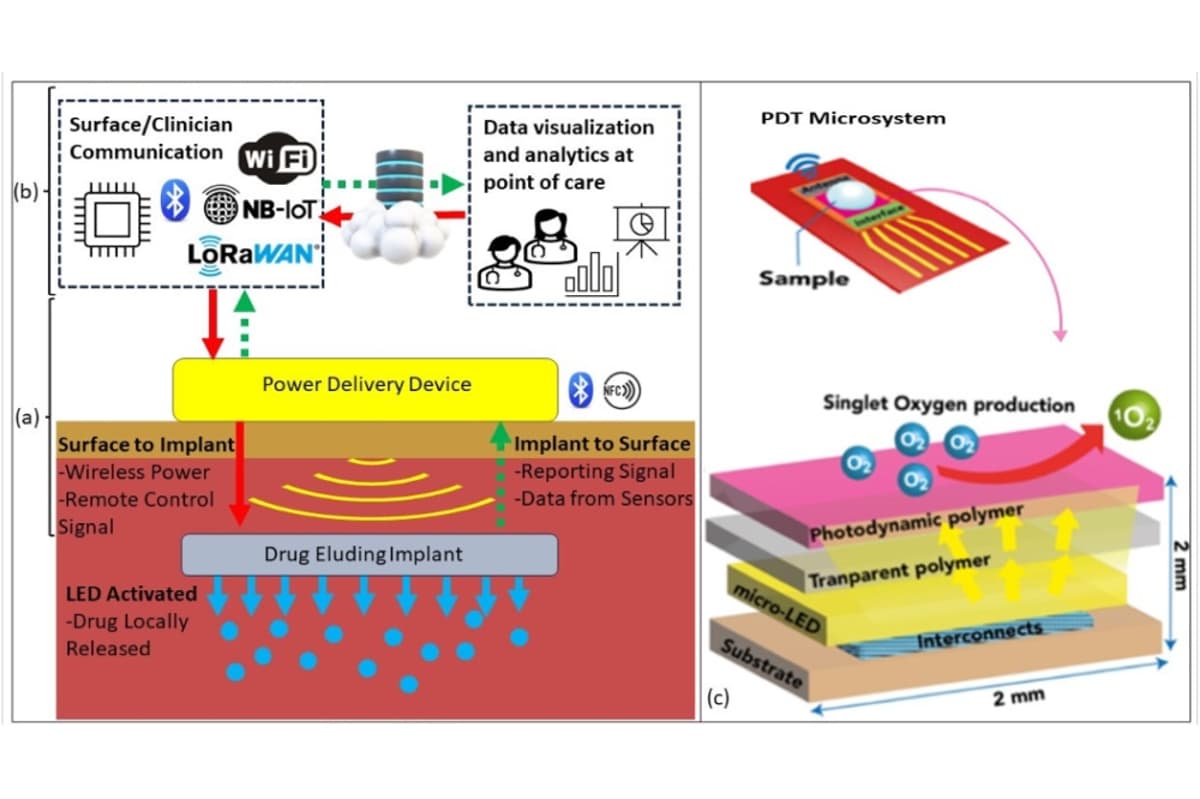
- •Flexible 40 mm disc implant uses wireless microLEDs for photodynamic therapy
- •LEDs deliver >5 mW optical output, penetrating up to 50 mm tissue
- •Wireless power eliminates bulky external light sources, reducing invasiveness
- •Scalable, low‑cost fabrication could make implant affordable for hospitals
- •EPSRC‑funded project won IET Health Technology Award 2024
Pulse Analysis
Photodynamic therapy (PDT) has long been valued for its ability to destroy cancer cells with light‑activated drugs, yet its clinical reach is hampered by tissue absorption that limits light delivery to deep‑seated tumors such as those in the bladder. Traditional PDT relies on external lamps or fiber‑optic probes, often requiring cumbersome equipment and invasive procedures. The University of Glasgow’s microLED implant sidesteps these constraints by placing a flexible light source directly adjacent to the tumor, ensuring that sufficient photons reach the photosensitiser while minimizing collateral damage.
The device is a 40 mm disc fabricated on a Parylene C substrate, a polymer already approved for long‑term medical implants. Four microLEDs, powered wirelessly through resonant inductive coupling, emit more than five milliwatts of optical power and have demonstrated penetration through synthetic tissue layers up to 50 mm. Laser‑based nanofabrication at the James Watt Nanofabrication Centre enables batch production at low cost, and the wireless architecture eliminates bulky power supplies. Early laboratory tests confirmed reliable singlet‑oxygen generation, the reactive species that kills cancer cells.
Beyond the technical breakthrough, the implant’s affordability and ease of deployment could reshape the oncology market. With bladder cancer accounting for 16 UK deaths daily, a minimally invasive, outpatient‑compatible PDT solution promises faster recovery times and reduced hospital overhead. Backed by EPSRC funding and honored with the 2024 IET Health Technology Award, the project is positioned for further pre‑clinical trials and potential partnership with medical‑device firms. If regulatory hurdles are cleared, the technology may extend to other hollow‑organ cancers, heralding a new class of wireless, implantable photonic therapies.
MicroLED implant could cast new light on cancer treatment
Comments
Want to join the conversation?
Loading comments...