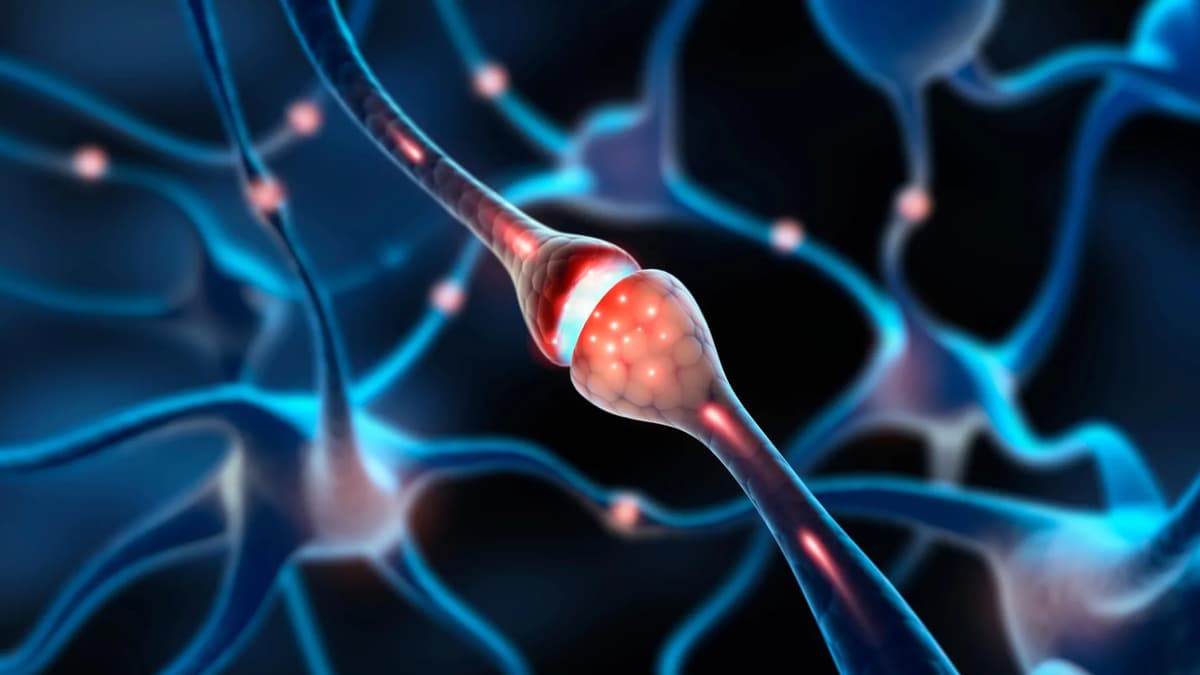
MIT Scientists Discover Millions of “Silent Synapses” In the Adult Brain
Companies Mentioned
Why It Matters
The hidden pool of silent synapses provides a biological basis for continuous learning in adulthood and offers a potential target for therapies aimed at age‑related cognitive decline and neurodegenerative disease.
Key Takeaways
- •~30% of adult mouse cortical synapses are silent
- •Silent synapses lack AMPA receptors, containing only NMDA receptors
- •eMAP imaging revealed abundant filopodia as silent synapse markers
- •Unsilencing requires pairing glutamate with neuronal activity, adding AMPA receptors
- •Reserve of silent synapses may enable lifelong learning without memory loss
Pulse Analysis
The MIT team’s finding that roughly 30 percent of cortical synapses in adult mice remain electrically silent overturns a long‑standing dogma that such immature connections disappear after early development. Silent synapses, defined by the presence of NMDA receptors without accompanying AMPA receptors, sit in a dormant state until a specific learning event triggers their activation. This hidden reservoir offers a mechanistic explanation for the brain’s capacity to acquire new memories throughout adulthood without erasing established ones, a balance that has puzzled neuroscientists for decades.
The breakthrough emerged from eMAP—epitope‑preserving Magnified Analysis of the Proteome—a tissue‑expansion technique that visualizes proteins at nanometer resolution. By expanding mouse brain slices, the researchers observed an unexpected abundance of filopodia studded with NMDA receptors but lacking AMPA receptors, the hallmark of silent synapses. Subsequent patch‑clamp experiments demonstrated that pairing glutamate release with postsynaptic depolarization rapidly recruits AMPA receptors, converting the filopodial contacts into functional synapses. This low‑threshold plasticity contrasts sharply with the high‑energy remodeling required for mature synapses, highlighting a distinct, flexible substrate for memory encoding.
Because the silent‑synapse pool appears to persist into adulthood, it opens new avenues for tackling age‑related cognitive decline and neurodegenerative disorders. If the number or responsiveness of these dormant connections wanes with age, restoring their plasticity could rejuvenate learning capacity without destabilizing existing memories. Pharmaceutical strategies that promote AMPA‑receptor insertion or modulate filopodial signaling are already under investigation, and the MIT findings provide a concrete biological target for such interventions. Future work will need to confirm whether comparable silent synapses exist in the human cortex and how they are altered in conditions like Alzheimer’s disease.
MIT scientists discover millions of “silent synapses” in the adult brain
Comments
Want to join the conversation?
Loading comments...