Nanofiber Bionic Skin Helps Infected Wounds Heal Faster in Preclinical Study
Why It Matters
The dressing offers a scalable, antibiotic‑free approach that could lower infection rates, reduce healing time, and cut healthcare costs in a market seeking advanced wound‑care solutions.
Key Takeaways
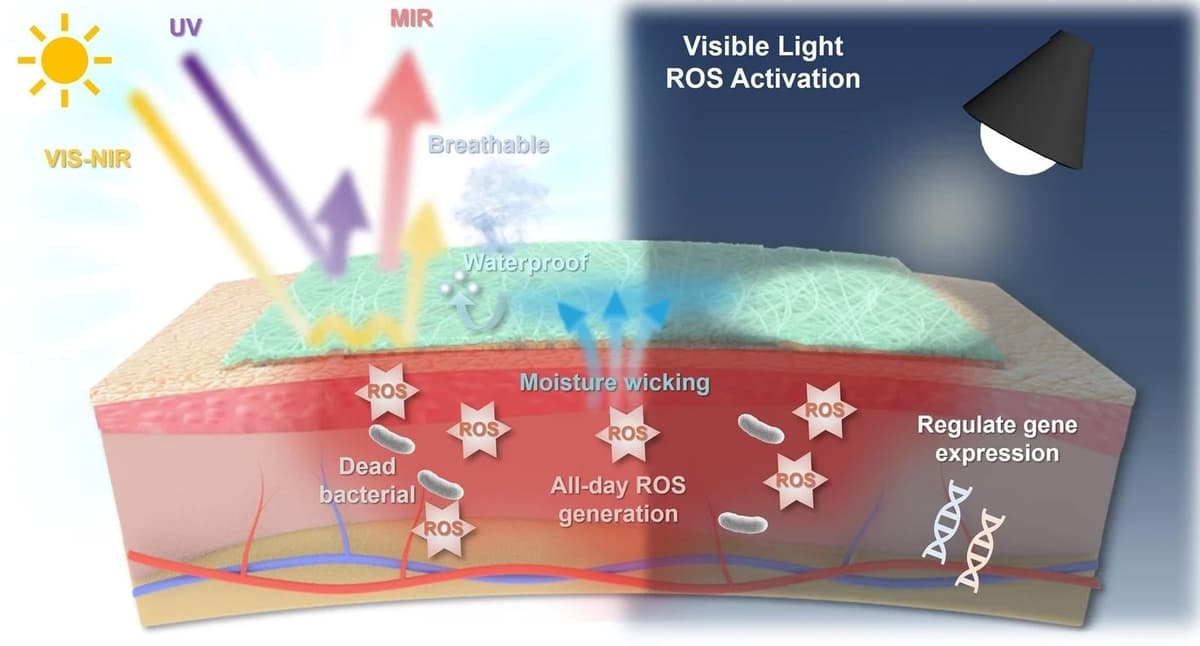
- •Janus nanofiber dressing achieves 21.6 MPa strength, 54% elongation
- •Visible-light ROS kills 97.1% of Staph aureus in wounds
- •Passive cooling lowers wound temperature by up to 4 °C under sun
- •Solvent welding improves nanofiber mechanical uniformity and stress distribution
- •High breathability mimics skin, enhancing comfort for infected wound care
Pulse Analysis
Post‑operative wound infections affect 5%‑20% of surgical patients, driving costly complications and prompting a surge in demand for smarter dressings. Traditional options—hydrocolloids, foams, gauze—struggle with infected sites, either lacking antimicrobial action or causing discomfort. Meanwhile, rising antibiotic resistance intensifies the search for non‑pharmaceutical defenses. In this landscape, nanofiber technologies have emerged as a promising frontier, offering high surface area, breathability, and the ability to embed functional agents that can be released on demand.
The new bionic cooling skin leverages a Janus architecture where one side hosts zinc‑based zeolitic imidazolate frameworks (ZIFs) that generate reactive oxygen species when exposed to visible light. Solvent welding fuses electrospun PVDF fibers, delivering a uniform stress profile and a breaking strength of 21.6 MPa—comparable to native skin. Iron doping doubles ROS output, achieving a 97.1% antibacterial rate against Staphylococcus aureus. Simultaneously, the asymmetric design provides passive radiative cooling, reducing local wound temperature by up to 4 °C under sunlight, which improves patient comfort and may suppress bacterial proliferation.
If translated to clinical use, this multifunctional dressing could reshape infected‑wound management by eliminating the need for systemic antibiotics, shortening healing timelines, and lowering overall treatment costs. Its scalable electrospinning and solvent‑welding processes align with existing manufacturing pipelines, easing regulatory pathways. As the wound‑care market anticipates solutions that combine antimicrobial efficacy, mechanical resilience, and patient comfort, the Janus nanofiber platform positions itself as a compelling candidate for next‑generation commercial products.
Nanofiber Bionic Skin Helps Infected Wounds Heal Faster in Preclinical Study
Comments
Want to join the conversation?
Loading comments...