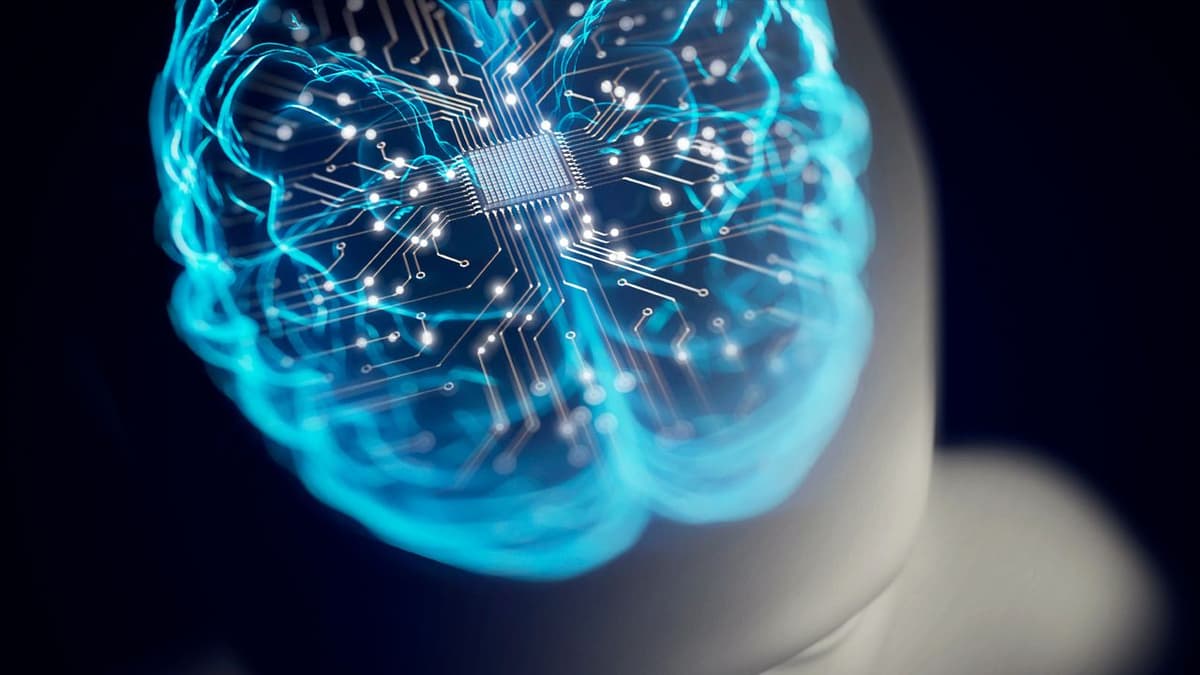
New Data Center Will Be Partially Powered by Human Brain Cells for the First Time
Companies Mentioned
Why It Matters
If biological reservoirs can handle niche AI tasks with far lower power, they could alleviate the soaring energy demands of hyperscale data centers and open new avenues for adaptive computing.
Key Takeaways
- •Cortical Labs launched Melbourne facility housing CL1 hybrid neuron‑chip units
- •Each CL1 module contains ~200,000 stem‑cell‑derived human neurons on a microelectrode array
- •Neurons act as a low‑power reservoir computer for pattern‑recognition tasks
- •Scaling biological chips faces engineering, reproducibility and ethical challenges
- •Singapore site aims to expand capacity but remains under construction
Pulse Analysis
The emergence of biological data centers reflects a broader quest to break the silicon ceiling that now limits AI growth. Traditional GPUs and CPUs consume megawatts of electricity to train large language models, prompting researchers to look at the brain’s 20‑watt efficiency. By embedding living neurons onto a silicon substrate, Cortical Labs leverages reservoir computing, where the rich dynamics of neural tissue transform inputs into high‑dimensional patterns that downstream software can decode. This hybrid approach promises a new class of low‑energy processors for pattern‑recognition and decision‑making tasks that are difficult to optimize with deterministic hardware.
Technically, the CL1 system integrates a microelectrode array with a life‑support module that supplies nutrients, regulates temperature, and monitors cell health. Real‑time stimulation and recording turn neuronal spikes into digital signals, enabling a feedback loop that can be trained on simple games like Pong or Doom. However, scaling from bench‑scale devices to data‑center‑grade clusters introduces formidable hurdles: maintaining sterile conditions, ensuring uniform cell behavior across thousands of modules, and addressing the limited lifespan of cultured neurons. Reproducibility remains a concern, as biological variability can lead to inconsistent performance, a stark contrast to the predictability of silicon.
From a market perspective, the technology is still speculative, but its potential impact on AI infrastructure is noteworthy. Energy‑intensive data centers account for a growing share of global electricity use, and any viable low‑power alternative could attract cloud providers seeking sustainability credentials. Moreover, the adaptive nature of living neural networks may complement existing AI pipelines, handling noisy or sparse data where conventional models struggle. As ethical guidelines evolve around the use of human‑derived cells, investors and regulators will watch closely to see whether biological computing can transition from laboratory curiosity to commercial reality.
New data center will be partially powered by human brain cells for the first time
Comments
Want to join the conversation?
Loading comments...