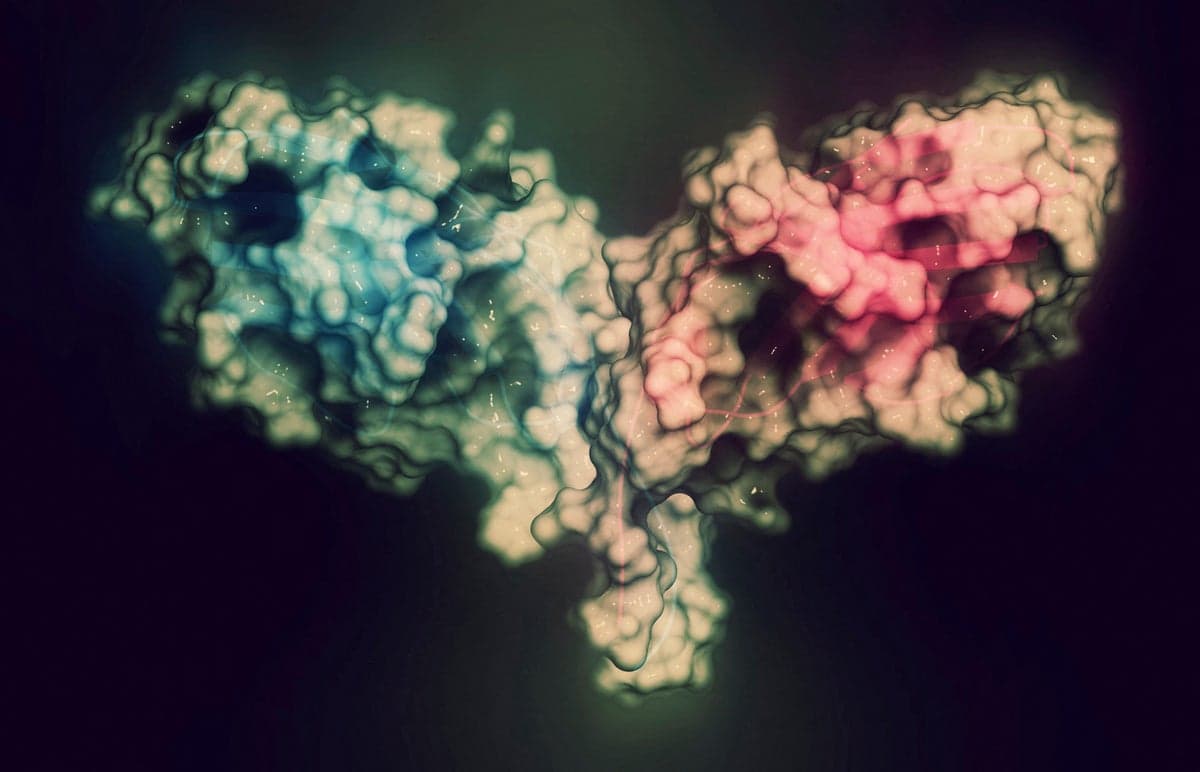
New Protein-Folding AI Vastly Expands on Alphafold's Efforts
Companies Mentioned

Why It Matters
The unprecedented scale and open‑source licensing of the ESM Atlas could democratize protein structure data, accelerating drug discovery and basic biology research. Its superior performance on protein interactions promises faster development of antibodies and engineered proteins.
Key Takeaways
- •ESM Atlas contains 1.1 billion predicted structures, 6.8 billion sequences.
- •ESMFold2 outperforms AlphaFold 3 on protein complex predictions.
- •Atlas is fully open source, allowing unrestricted commercial use.
- •Includes metagenomic proteins absent from AlphaFold database.
- •Used to design functional antibodies targeting cancer and immune proteins.
Pulse Analysis
The release of the ESM Atlas marks a watershed moment in computational biology, building on the legacy of DeepMind’s AlphaFold that transformed structural genomics by delivering high‑accuracy models for over 200 million proteins. By expanding the catalog to more than a billion structures, the new resource not only fills gaps left by earlier databases but also provides a unified platform for researchers to explore the vast, uncharted protein universe. This scale‑up mirrors broader trends in AI‑driven science, where massive data and model capacity unlock insights previously considered unattainable.
ESMFold2, the engine behind the atlas, leverages a protein‑language model trained on billions of sequences, including metagenomic data from soil, ocean and other ecosystems. This training regime enables the model to capture subtle evolutionary patterns and predict the geometry of protein complexes, a task where AlphaFold 3 and other tools have shown limitations. Early benchmarks indicate that ESMFold2 delivers higher accuracy for antibody‑antigen interactions and other multi‑protein assemblies, positioning it as a powerful complement to existing structural prediction pipelines.
For the biotech and pharmaceutical sectors, the open‑source nature of ESMFold2 removes licensing barriers that have slowed commercial adoption of AI‑based design tools. Companies can now integrate the model into proprietary pipelines, accelerating the discovery of novel therapeutics, enzymes, and diagnostic reagents. Moreover, the atlas’s breadth of metagenomic sequences opens avenues for mining environmental biodiversity for new bio‑active compounds. As the community validates and builds upon these predictions, the ESM Atlas is poised to become a foundational infrastructure that fuels the next generation of protein engineering and precision medicine.
New protein-folding AI vastly expands on Alphafold's efforts
Comments
Want to join the conversation?
Loading comments...