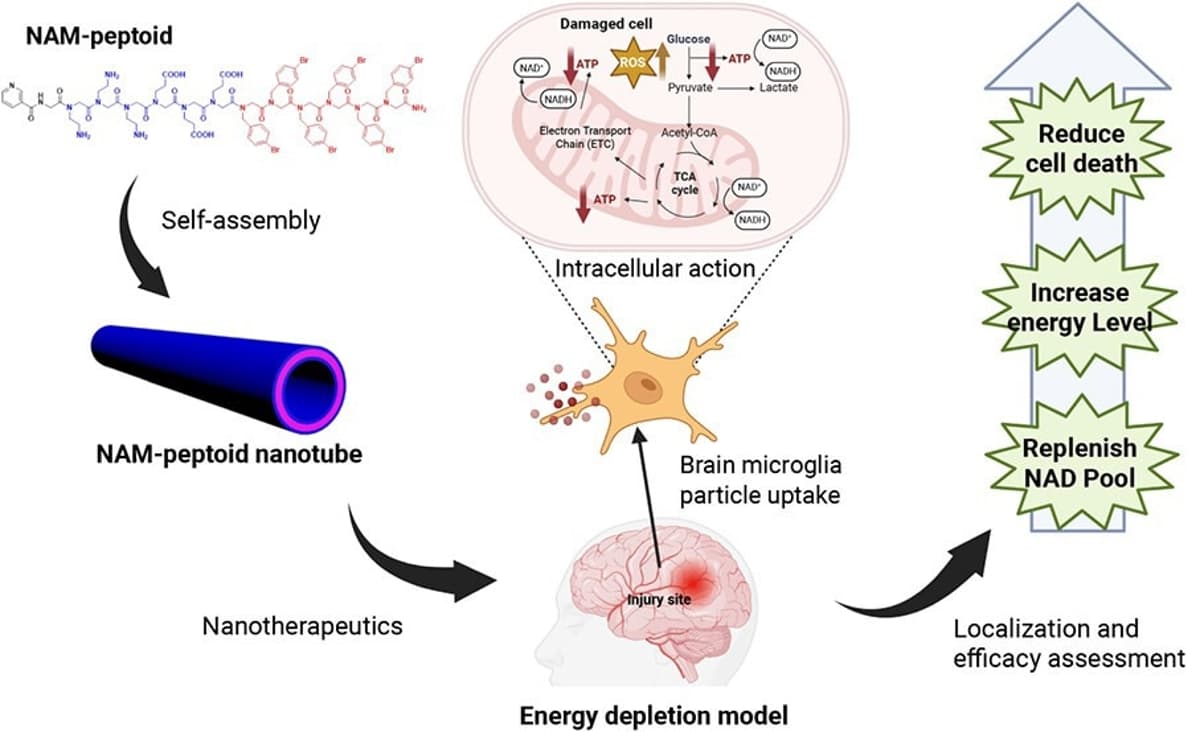
Nicotinamide Nanotubes Restore Brain Cell Energy After Acute Injury
Why It Matters
By overcoming poor cellular uptake of NAD⁺ precursors, NAM‑PNTs offer a scalable strategy to mitigate energy failure—a primary driver of neuronal death—potentially reshaping acute neuro‑trauma therapeutics.
Key Takeaways
- •NAM‑PNTs increase ATP and NAD(H) in injured microglia
- •Intermediate‑length nanotubes (~120 nm) deliver optimal efficacy
- •Single dose cuts lesion volume in neonatal rat brain injury
- •Platform can be adapted for other neuro‑degenerative targets
Pulse Analysis
Acute brain trauma triggers a cascade of metabolic collapse, chiefly through NAD⁺ depletion, which cripples ATP production and amplifies oxidative stress. Conventional supplementation with nicotinamide or other NAD⁺ precursors has been hampered by rapid degradation and insufficient penetration of the blood‑brain barrier. The recent ACS Nano study leverages peptoid chemistry to construct self‑assembling nanotubes that protect and ferry nicotinamide directly into microglia, the brain’s resident immune cells, thereby addressing the delivery bottleneck that has long limited metabolic therapies.
The engineered NAM‑PNTs were rigorously evaluated across three preclinical tiers: BV‑2 microglial cultures subjected to oxygen‑glucose deprivation, organotypic whole‑hemisphere brain slices, and a neonatal rat model of hypoxia‑ischemia. Across these platforms, the nanotubes consistently elevated intracellular ATP, restored NAD(H) pools, and suppressed pro‑inflammatory cytokines such as IL‑1β, IL‑6, and TNF‑α. Notably, an intermediate nanotube length of roughly 120 nm achieved the best balance between tissue diffusion and cellular uptake, translating into a measurable reduction in cortical and thalamic lesion scores after just one systemic injection. These findings underscore the therapeutic relevance of precise nanomaterial engineering for neuro‑protective interventions.
Beyond acute injury, the modularity of peptoid nanotubes opens avenues for treating chronic neurodegenerative disorders where mitochondrial dysfunction is a hallmark, including Alzheimer’s and Parkinson’s disease. Future work must address long‑term safety, pharmacokinetics, and dosing regimens, but the current data provide a compelling proof‑of‑concept that nanomedicine can restore cellular energetics in the brain. If translated clinically, this approach could shift the paradigm from symptomatic management to metabolic restoration, offering patients a more fundamental line of defense against neurological damage.
Nicotinamide Nanotubes Restore Brain Cell Energy After Acute Injury
Comments
Want to join the conversation?
Loading comments...