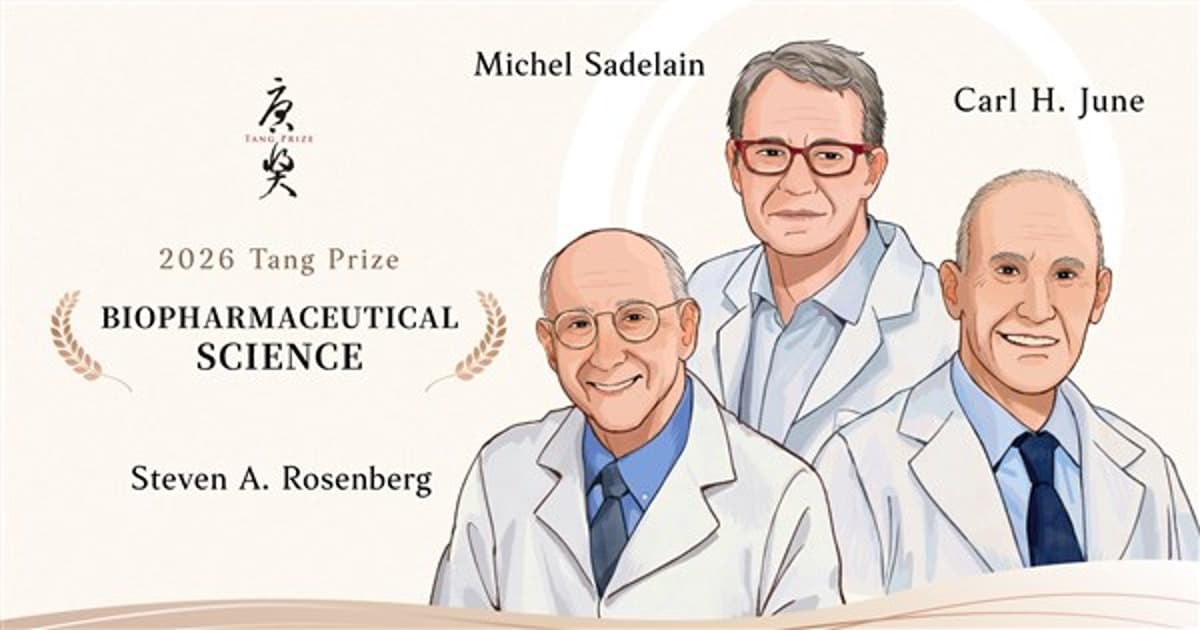
Patient Care, Perseverance, Bold Ideas Key to Cancer Breakthroughs: Tang Prize Laureates
Why It Matters
These breakthroughs have reshaped oncology, creating high‑value, cell‑based therapeutics that generate billions in market revenue and offer cures where conventional drugs fail.
Key Takeaways
- •TIL therapy yields 56% tumor regression, 25% complete durable responses
- •CAR‑T cells act as living drugs, often requiring only one infusion
- •Rosenberg, Sadelain, June received NT$40 M (~US$1.26 M) Tang Prize award
- •Decades of perseverance turned experimental immunology into multi‑billion‑dollar industry
Pulse Analysis
Immunotherapy’s rise from a fringe concept to a cornerstone of cancer care began with humble observations. In the 1980s, Steven Rosenberg noticed a kidney‑transplant patient’s tumor recede after immunosuppression stopped, prompting experiments with high‑dose interleukin‑2 and the eventual development of tumor‑infiltrating lymphocyte (TIL) therapy. Decades of patient‑focused trials demonstrated that more than 400 individuals treated with TIL experienced tumor regression in 56 % of cases, and a quarter achieved complete, lasting remission—proof that the immune system can be harnessed as a drug.
Parallel to TIL, Michel Sadelain and Carl June engineered the first chimeric antigen receptor (CAR) constructs, converting a patient’s own T cells into programmable killers. Their perseverance paid off when early trials in 2007 showed dramatic responses in refractory blood cancers, leading to FDA approvals for CAR‑T products such as Kymriah and Yescarta. These “living drugs” expand after infusion, often delivering a one‑time cure, exemplified by Emily Whitehead’s long‑term remission from pediatric leukemia. The commercial impact is profound: cell‑based therapies now command multi‑billion‑dollar market valuations and drive a new manufacturing paradigm where hospitals act as drug factories.
Looking ahead, the Tang Prize laureates’ legacy fuels the next generation of cell therapies—off‑the‑shelf allogeneic products, armored CAR‑T cells, and multiplexed gene edits aimed at solid tumors. Overcoming scalability, safety, and cost challenges will determine whether these innovations replicate the early successes of TIL and CAR‑T. By rewarding perseverance and patient‑centric science, the Tang Prize underscores the strategic importance of sustained investment in biopharmaceutical research, signaling to investors and policymakers that breakthrough immunotherapies remain a high‑growth, high‑impact frontier.
Patient care, perseverance, bold ideas key to cancer breakthroughs: Tang Prize laureates
Comments
Want to join the conversation?
Loading comments...