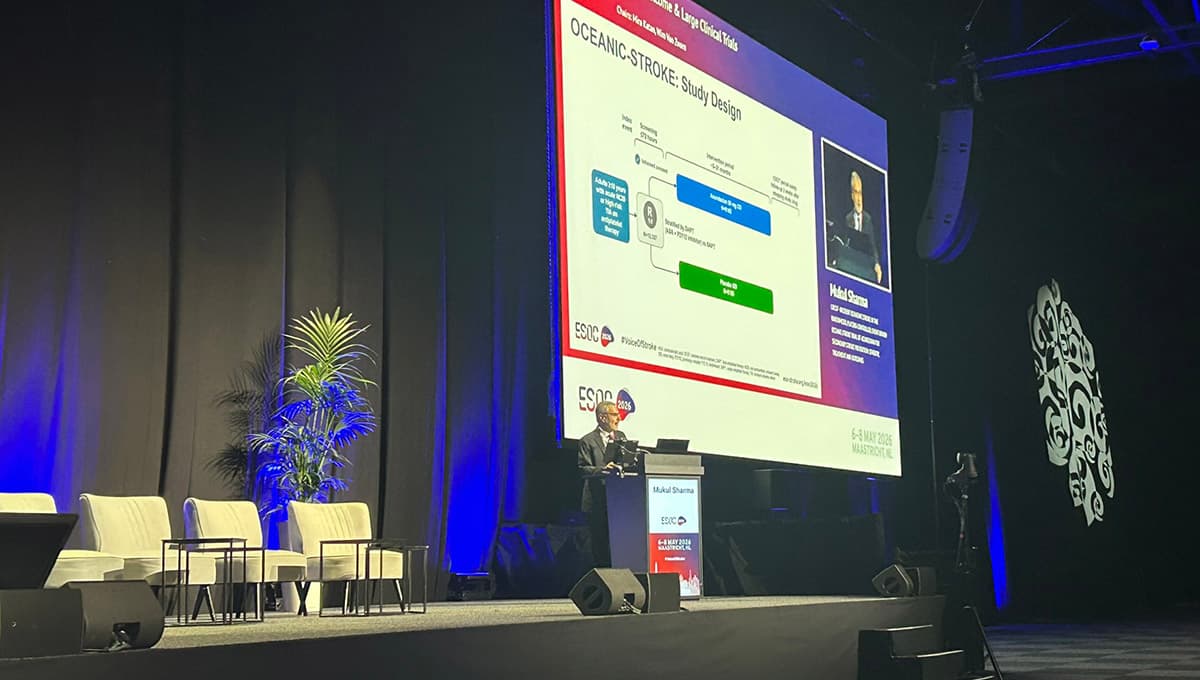
Recurrent Strokes Less Severe on Asundexian: OCEANIC-STROKE
Why It Matters
Asundexian offers a safer, more effective alternative to aspirin for preventing severe recurrent strokes, potentially reshaping secondary‑prevention guidelines and reducing long‑term disability costs.
Key Takeaways
- •Asundexian cut disabling/fatal strokes by 31% (2.1% vs 3.0%).
- •Severe strokes (NIHSS ≥8) were less frequent with asundexian.
- •No increase in symptomatic intracranial hemorrhage observed.
- •Net clinical benefit improved across mortality, bleeding, and cardiovascular events.
Pulse Analysis
For decades, aspirin has been the cornerstone of secondary stroke prevention, despite its modest efficacy and bleeding risk. The OCEANIC‑STROKE trial introduced asundexian, a novel factor XIa inhibitor, as a targeted antithrombotic that interferes with the intrinsic coagulation pathway. Enrolling over 12,000 patients with recent non‑cardioembolic ischemic stroke or high‑risk TIA, the study demonstrated a 26% relative reduction in recurrent ischemic events, positioning asundexian as a compelling candidate to diversify the therapeutic arsenal beyond traditional antiplatelet agents.
Beyond incidence, the trial’s deeper dive into stroke severity revealed a shift toward milder neurological deficits. Patients on asundexian were significantly less likely to experience NIHSS scores of 8 or higher, translating into fewer cases requiring IV thrombolysis or mechanical thrombectomy. This severity attenuation not only improves individual quality of life but also eases the burden on acute stroke services, which often grapple with resource‑intensive interventions for large‑vessel occlusions. The median NIHSS at seven days dropped from three in the placebo group to two with asundexian, underscoring a tangible clinical advantage.
Safety and overall value propositions are equally compelling. Across multiple net clinical‑benefit composites—combining ischemic stroke, major bleeding, cardiovascular death and all‑cause mortality—asimundexian consistently outperformed placebo, with hazard ratios ranging from 0.81 to 0.85. Importantly, symptomatic intracranial hemorrhage rates remained unchanged, alleviating concerns of heightened bleeding. The drug’s effect persisted throughout a median follow‑up of 1.5 years, suggesting durable protection. Should regulatory approval follow, asundexian could reshape secondary‑prevention protocols, offering clinicians a high‑efficacy, low‑bleed alternative that may reduce long‑term disability costs and improve patient outcomes.
Recurrent Strokes Less Severe on Asundexian: OCEANIC-STROKE
Comments
Want to join the conversation?
Loading comments...