Science in Space
Why It Matters
Demonstrating viable drug assembly in microgravity could launch a new era of space‑enabled biomanufacturing, accelerating development of targeted cancer treatments. The collaboration showcases how international partnerships expand life‑science capabilities beyond Earth.
Key Takeaways
- •DNA Nano Therapeutics‑3 tests DNA‑based drug assembly on ISS
- •Microgravity enables precise molecular self‑assembly not possible on Earth
- •Experiment targets next‑gen chemotherapy and immunotherapy production
- •NASA and ESA collaboration expands life‑science capabilities in space
- •Success could lead to on‑orbit manufacturing of personalized medicines
Pulse Analysis
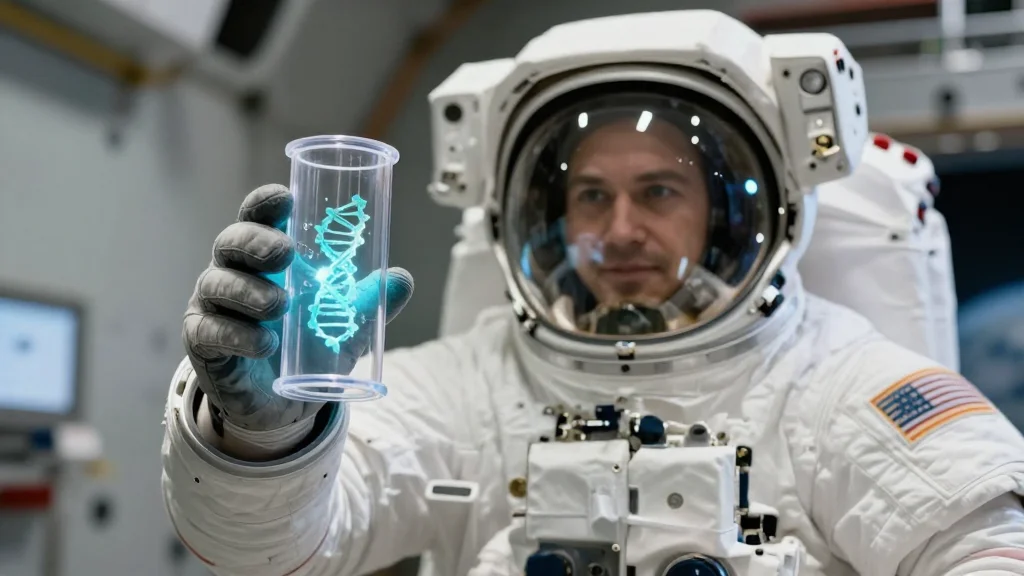
The International Space Station’s Kibo laboratory continues to serve as a microgravity testbed for cutting‑edge biomanufacturing. This week, NASA astronaut Chris Williams and ESA astronaut Sophie Adenot operated the Life Science Glovebox to run the DNA Nano Therapeutics‑3 experiment. The study leverages DNA‑inspired assembly techniques to construct therapeutic nanostructures that could one day deliver chemotherapy or trigger immune responses directly at tumor sites. By processing genetic‑material samples in orbit, the crew is gathering data that cannot be replicated under Earth’s gravity. The data will inform ground‑based models that aim to replicate space‑derived processes.
Microgravity offers a unique environment where molecular diffusion and sedimentation behave differently, allowing proteins and nucleic acids to self‑assemble with unprecedented precision. Prior ISS experiments have demonstrated that crystals of pharmaceuticals grow larger and more uniform in space, improving purity and efficacy. DNA Nano Therapeutics‑3 builds on that foundation, testing whether programmable DNA scaffolds can act as templates for assembling drug‑delivery particles. Early results suggest that the absence of buoyancy forces reduces aggregation, a critical hurdle for scaling up nanomedicine production. Such insights also guide the design of automated reactors for continuous production in orbit.
If the experiment validates on‑orbit synthesis, the pharmaceutical industry could tap a new manufacturing paradigm that shortens development cycles and enables personalized medicines produced in space. Companies are already filing patents for orbital drug factories, and venture capital is flowing into space‑biotech startups. The joint NASA‑ESA effort also signals growing international cooperation, spreading costs and expertise across agencies. Successful translation of these findings could open commercial payload opportunities, positioning the ISS and future lunar habitats as hubs for high‑value biotech manufacturing. Ultimately, this could reshape supply chains, delivering life‑saving drugs to remote or disaster‑stricken regions faster.
Science in Space
Comments
Want to join the conversation?
Loading comments...