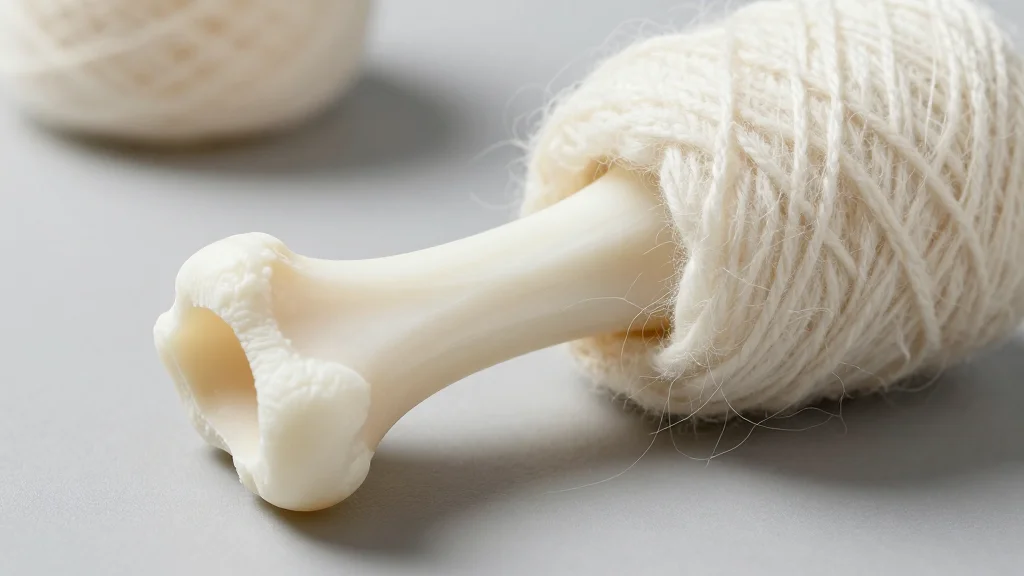
Scientists Transform Wool Into Bone Repair Material
Why It Matters
A renewable, scalable scaffold could lower costs and improve outcomes for bone repair, challenging collagen’s dominance in regenerative medicine.
Key Takeaways
- •Wool‑derived keratin supports bone growth in living animal models.
- •Keratin scaffolds produce more organized bone than collagen membranes.
- •Material is sourced from waste wool, making it renewable and inexpensive.
- •Successful animal tests bring keratin closer to human clinical trials.
Pulse Analysis
Bone‑repair scaffolds have long relied on collagen, a protein that, while biocompatible, suffers from rapid degradation and high production costs. The search for alternatives has intensified as the medical device market seeks materials that combine strength, longevity, and environmental responsibility. Wool, an agricultural by‑product, contains keratin—a structural protein that can be processed into stable membranes, offering a compelling answer to these challenges. By leveraging a waste stream, manufacturers can reduce raw‑material expenses and carbon footprints, aligning with growing sustainability mandates in healthcare procurement.
In the recent King’s College London study, researchers extracted keratin from raw wool, chemically cross‑linked it, and fabricated thin membranes for implantation. When placed into rat skull defects that would not heal naturally, the keratin scaffolds supported robust osteogenesis, producing bone with aligned fibers that more closely resembled native tissue than collagen‑based controls. Although collagen generated a greater total bone volume, the quality of keratin‑induced bone—its organization and mechanical integrity—suggests a superior functional outcome for load‑bearing applications. The in‑vitro work also confirmed that human osteoblasts proliferated readily on the keratin surface, underscoring its biocompatibility.
The implications extend beyond academic interest. A cost‑effective, renewable scaffold could disrupt the multi‑billion‑dollar bone‑graft market, offering dental surgeons and orthopedic teams a new tool that mitigates supply chain volatility associated with animal‑derived collagen. Regulatory pathways for biomaterials are well‑established, and the successful animal data positions keratin for accelerated human trials. If commercialized, the technology could accelerate adoption of greener medical products while delivering clinical benefits such as faster healing and reduced implant failure rates, reshaping the regenerative medicine landscape.
Scientists transform wool into bone repair material
Comments
Want to join the conversation?
Loading comments...