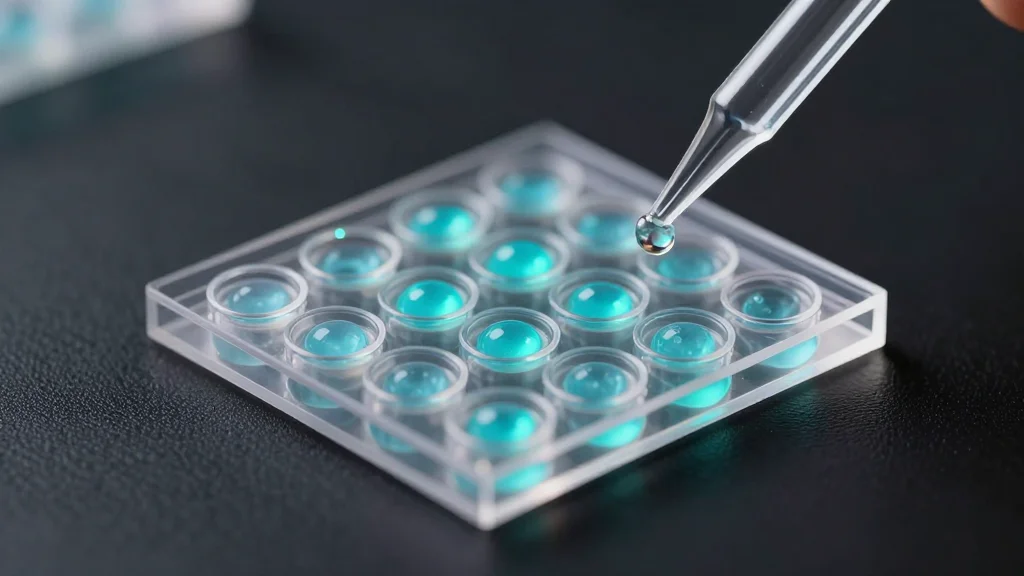
Single-Vesicle Profiling Could Push Liquid Biopsies Toward Everyday Clinical Use
Why It Matters
By revealing rare vesicle subpopulations, single‑EV profiling promises earlier, more accurate disease detection and personalized treatment decisions, accelerating the adoption of liquid biopsies across oncology and other chronic diseases.
Key Takeaways
- •Single‑EV platforms achieve near single‑molecule sensitivity via amplification.
- •Droplet microfluidics can profile tens of thousands of vesicles per sample.
- •Rare tumor‑derived EVs distinguish cancer patients from healthy controls.
- •AI integration will decode massive single‑vesicle datasets for clinical use.
Pulse Analysis
Extracellular vesicles (EVs) have emerged as a rich source of biomarkers because they ferry proteins, RNA, lipids and other cargo that mirror the physiological state of their parent cells. Traditional bulk assays—Western blots, ELISAs, and nanoparticle tracking—average signals across millions of vesicles, masking low‑frequency subpopulations that often carry the most clinically relevant information. This limitation has stalled the translation of EV‑based tests from promising research tools to reliable diagnostics, especially for early‑stage cancers where tumor‑derived vesicles are exceedingly scarce.
Recent advances in single‑EV profiling address these gaps by physically isolating individual vesicles and interrogating them with multiplexed molecular tags. Substrate‑based chips, droplet microfluidic emulsions, and solution‑phase nanoplasmonic sensors now combine high‑resolution separation with fluorescence, DNA barcoding and rolling‑circle amplification, pushing detection limits to near‑single‑molecule levels. High‑throughput designs can analyze tens of thousands to a million vesicles per run, generating multidimensional data that distinguish healthy donors from patients with pancreatic, cholangiocarcinoma, and lung adenocarcinoma based on rare tumor‑derived EV signatures. Multi‑omic readouts—simultaneously capturing protein, RNA, lipid and mechanical properties—provide a holistic view of disease biology that bulk methods cannot achieve.
The clinical implications are profound. As AI algorithms mature, they will translate the massive, high‑dimensional datasets produced by single‑EV platforms into actionable diagnostic scores, enabling routine liquid‑biopsy screening in primary care settings. Faster, less invasive detection could shift treatment paradigms toward earlier intervention and truly personalized therapy across oncology, cardiology and neurodegeneration. With scalability improving and costs dropping, industry analysts project that single‑EV technologies will move from specialized labs into mainstream health systems within the next decade, reshaping the biomarker landscape and solidifying liquid biopsies as a standard of care.
Single-vesicle profiling could push liquid biopsies toward everyday clinical use
Comments
Want to join the conversation?
Loading comments...