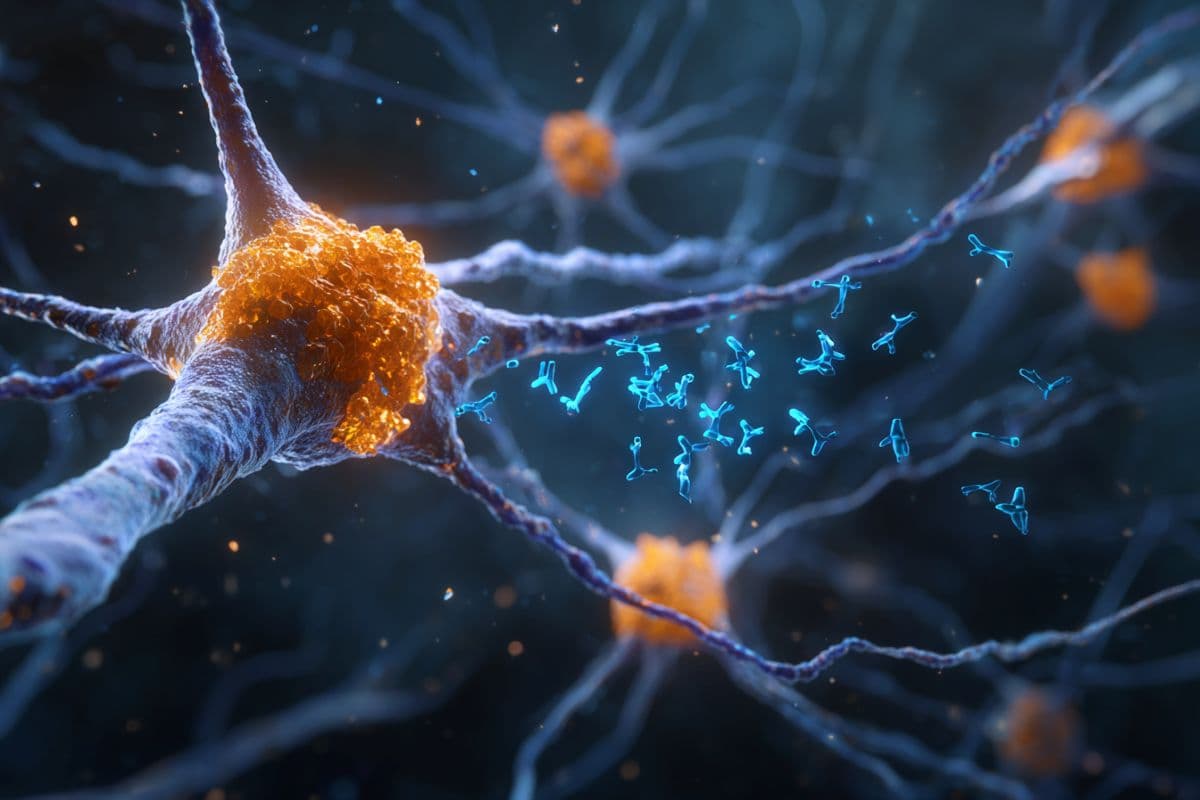
Slowing Parkinson’s by Blocking a Key Protein
Why It Matters
A therapy that interrupts GPNMB‑mediated spread could slow or stop Parkinson’s progression, addressing an unmet clinical need and reshaping the treatment landscape.
Key Takeaways
- •GPNMB identified as catalyst for alpha‑synuclein spread in Parkinson’s
- •Anti‑GPNMB antibodies halted pathology transmission in cell models
- •High‑GPNMB genetic variants linked to greater brain alpha‑synuclein burden
- •GPNMB elevation specific to Parkinson’s, not Alzheimer’s markers
- •Over 1 million U.S. patients could benefit from disease‑modifying therapy
Pulse Analysis
Parkinson’s disease affects more than a million Americans, yet current therapies such as levodopa and deep‑brain stimulation merely mask symptoms without altering the underlying neurodegeneration. The disease’s hallmark—misfolded alpha‑synuclein—propagates through the brain in a prion‑like fashion, progressively damaging motor and non‑motor circuits. Researchers have long sought a disease‑modifying approach that can break this cascade, and the recent identification of GPNMB as a facilitator of alpha‑synuclein spread offers a promising molecular entry point.
The University of Pennsylvania team demonstrated that microglia release GPNMB after neuronal injury, and the extracellular domain of this protein enhances the uptake of pathogenic alpha‑synuclein by neighboring neurons. By engineering monoclonal antibodies that bind GPNMB, they were able to block this intercellular transfer in cultured neuron systems, effectively halting the formation of new alpha‑synuclein aggregates. Complementary human data from the Penn Brain Bank—1,675 post‑mortem brains—showed that individuals carrying high‑expression GPNMB alleles exhibited significantly broader alpha‑synuclein pathology, while no similar association appeared for Alzheimer’s markers, underscoring the specificity of the target.
If these preclinical results translate into clinical success, the impact on the biotech landscape could be substantial. A disease‑modifying antibody would fill a glaring gap in the Parkinson’s pipeline, attracting investment from both venture capital and major pharmaceutical firms seeking first‑in‑class neurodegenerative therapies. However, challenges remain: scaling antibody production, confirming safety in humans, and designing trials that can capture slowing of disease progression over years. Nonetheless, the convergence of mechanistic insight, genetic validation, and therapeutic feasibility positions anti‑GPNMB antibodies as a compelling candidate to redefine Parkinson’s care.
Slowing Parkinson’s by Blocking a Key Protein
Comments
Want to join the conversation?
Loading comments...