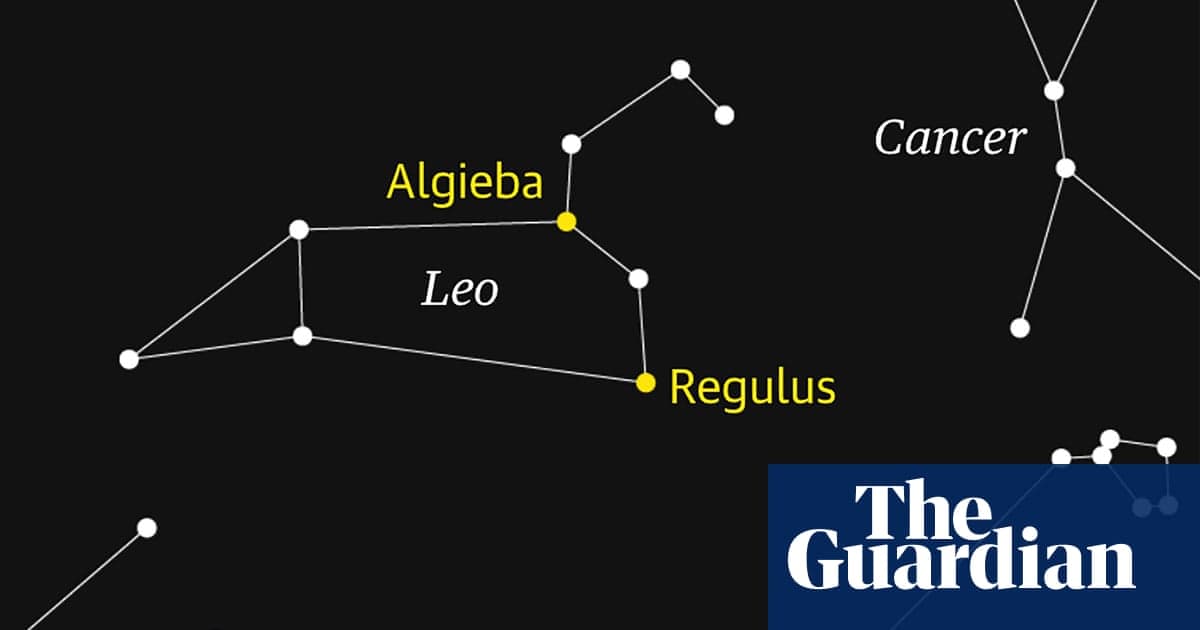
Starwatch: Leo the Lion Dominates the Northern Hemisphere
Companies Mentioned
Why It Matters
Leo’s prominence offers a prime target for amateur astronomers and sky‑watching tourism, while its cultural legacy underscores humanity’s long‑standing connection to the night sky.
Key Takeaways
- •Leo rises high in the night sky throughout late April
- •The “sickle” asterism outlines Leo’s head and mane
- •Regulus, a blue-white star, sits on the ecliptic line
- •Leo’s myth links to Mesopotamian, Egyptian, and Greek legends
- •Visibility remains consistent across the northern hemisphere this week
Pulse Analysis
Leo’s seasonal surge is more than a visual treat; it signals a period when the ecliptic aligns with one of the sky’s most iconic figures. Regulus, the lion’s heart, is a blue‑white star of roughly 300 times the Sun’s luminosity, and its position on the ecliptic means it can be occulted by the Moon or planets, creating rare photogenic events for enthusiasts. This alignment also aids educators who use Leo to illustrate celestial mechanics, reinforcing concepts like the zodiacal belt and planetary motion.
The constellation’s mythic pedigree adds a layer of storytelling that enriches public engagement. In ancient Mesopotamia, Leo was linked to Ishtar’s lion‑ridden chariot, while Egyptian astronomers associated its rise with the Nile’s annual flood, a crucial agricultural marker. Greek lore casts Leo as the slain Nemean lion of Heracles’ first labor, a narrative that still resonates in modern pop culture. By weaving these tales into contemporary sky‑watching guides, media outlets can attract a broader audience beyond hardcore hobbyists, tapping into cultural tourism and educational programming.
Practical viewing tips round out the experience. From mid‑latitude cities like London to rural dark‑sky sites, Leo reaches its apex around 10 p.m. local time in late April, appearing high in the southern sky. Observers should look for the backward question‑mark shape formed by the “sickle” asterism, then trace the line to Regulus, which shines at magnitude 1.4. Pairing binoculars with a star chart enhances the hunt for nearby deep‑sky objects such as the Leo Triplet galaxies. As the constellation remains visible through May, it provides a reliable anchor for nightly stargazing schedules, supporting the growing market for guided night‑tourism and astronomy apps.
Starwatch: Leo the lion dominates the northern hemisphere
Comments
Want to join the conversation?
Loading comments...