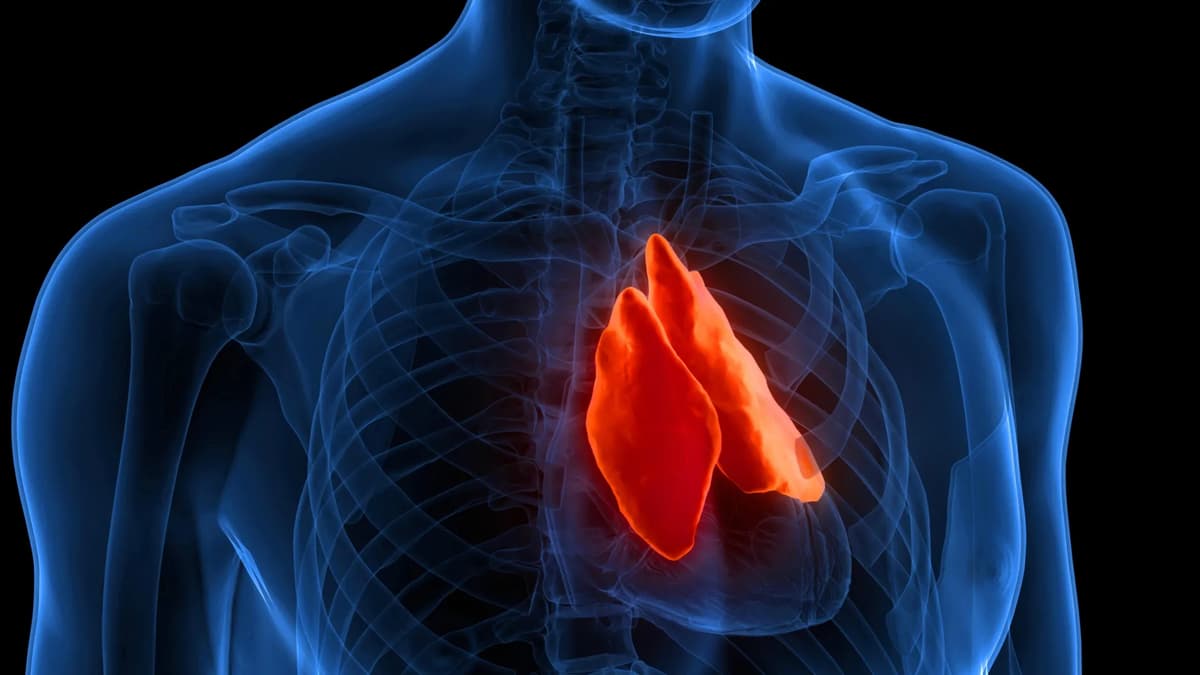
The Forgotten Organ that Could Predict How Long You Live
Why It Matters
The findings reposition the thymus as a measurable biomarker for longevity and immunotherapy response, offering a potential new lever for preventive health strategies and personalized cancer care.
Key Takeaways
- •Healthier thymus linked to 50% lower all-cause mortality.
- •Strong thymic health reduces cardiovascular death risk by 63%.
- •Better thymus predicts 37% lower cancer progression on immunotherapy.
- •Smoking, obesity, inflammation correlate with poorer thymic scores.
- •AI‑derived thymic health score could become a new risk‑stratification tool.
Pulse Analysis
The thymus, long dismissed as a vestigial organ after adolescence, is re‑emerging as a central player in adult immunity. By training T‑cells that patrol the body for pathogens and abnormal cells, the gland sustains the adaptive immune repertoire. Decades of research assumed its involution rendered it irrelevant for most adults, but the new Mass General Brigham studies overturn that dogma, linking thymic integrity directly to lifespan and chronic‑disease risk. This shift mirrors a broader scientific trend that views aging through the lens of immune resilience rather than merely metabolic wear and tear.
Leveraging artificial‑intelligence algorithms on routine chest CT scans, investigators derived a quantitative "thymic health" score across tens of thousands of participants in the National Lung‑Cancer Screening Trial and the Framingham Heart Study. The data reveal striking risk gradients: a 50% drop in all‑cause mortality, a 63% reduction in cardiovascular deaths, and a 36% lower incidence of lung cancer for those with robust thymic metrics. Lifestyle factors such as smoking, excess weight, and chronic inflammation emerged as key determinants of poorer scores, underscoring the organ’s sensitivity to modifiable health behaviors. These insights suggest that routine imaging could soon provide clinicians with a non‑invasive window into immune aging.
The implications for oncology are equally profound. In a cohort of more than 1,200 patients receiving checkpoint‑inhibitor immunotherapy, a healthier thymus correlated with a 37% lower risk of disease progression and a 44% reduction in mortality, independent of tumor type or treatment regimen. This association hints that thymic function may influence the generation of diverse, tumor‑recognizing T‑cells, a prerequisite for successful immunotherapy. While the imaging technique is not yet ready for standard practice, its potential as a risk‑stratification tool could refine patient selection, guide adjunctive therapies, and spark research into interventions—pharmacologic or lifestyle‑based—that preserve or restore thymic health. Continued validation could ultimately embed thymic assessment into precision‑medicine pipelines, reshaping preventive and therapeutic strategies across the health continuum.
The forgotten organ that could predict how long you live
Comments
Want to join the conversation?
Loading comments...