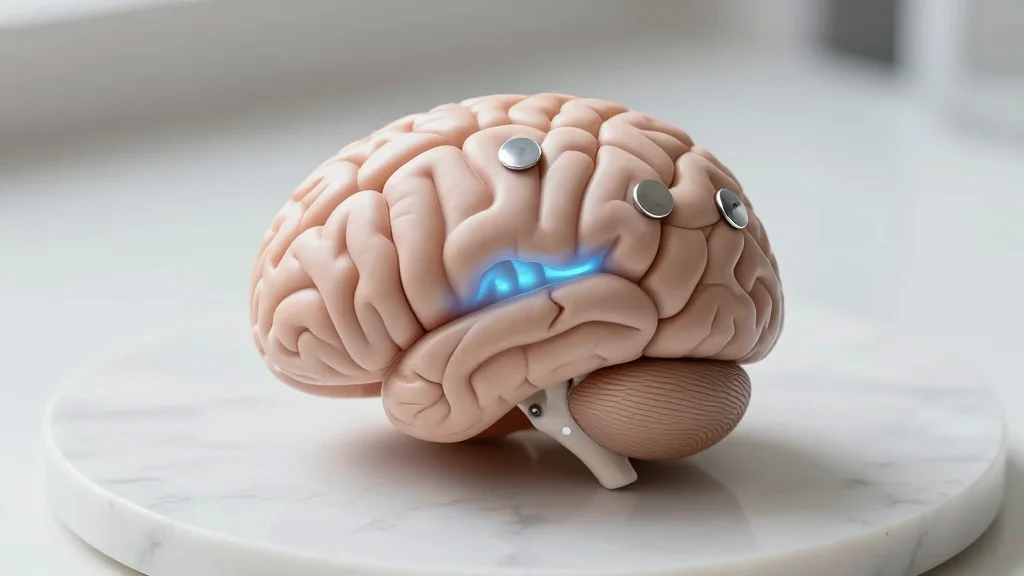
Third Electrode Pair Can Sharpen Deep Brain Stimulation Technique, Mouse Experiments Suggest
Why It Matters
By improving precision, the method could offer a safer, surgery‑free alternative for deep‑brain disorders, expanding therapeutic options and reducing procedural risks.
Key Takeaways
- •Third electrode pair creates cancellation field, cutting off‑target activation
- •fMRI mapping confirmed precise stimulation of medial prefrontal cortex in mice
- •Technique bridges gap between surface TMS and invasive deep brain stimulation
- •Potential applications include Parkinson’s, depression, OCD, and addiction treatment
- •Human safety and efficacy studies remain necessary before clinical adoption
Pulse Analysis
Deep brain stimulation (DBS) has become a cornerstone for treating movement and psychiatric disorders, but its reliance on surgically implanted electrodes limits accessibility and carries infection risk. Non‑invasive alternatives such as transcranial magnetic stimulation (TMS) and transcranial direct current stimulation (tDCS) affect only cortical layers, leaving deeper nuclei untouched. Temporal‑interference stimulation (TIS) emerged as a promising compromise: by projecting two high‑frequency currents through the scalp, their interference creates a low‑frequency envelope that neurons can follow, theoretically reaching subcortical targets without breaching the skull. Yet, uncontrolled spread of electric fields has hampered its translation to patients.
The University of Geneva team, together with ETH Zurich and the Wyss Center, tackled this limitation by adding a third pair of scalp electrodes designed to generate a cancellation field. In mice, they targeted the medial prefrontal cortex while simultaneously recording electrophysiology, calcium signals and functional MRI across the whole brain. The added electrodes suppressed off‑target activation by up to 70 % without diminishing the intended modulation of the target region. This multipair, phase‑modulated approach demonstrates that precise field shaping is feasible even with non‑invasive hardware.
If replicated in humans, the refined TIS could open a new therapeutic niche between conventional TMS and invasive DBS, offering clinicians a tool to modulate deep circuits implicated in Parkinson’s disease, major depressive disorder, obsessive‑compulsive disorder and substance‑use disorders. The ability to limit peripheral stimulation may also reduce side‑effects such as scalp tingling or unintended cognitive changes, improving patient compliance. Nonetheless, regulatory pathways will demand rigorous safety data, and large‑scale trials will be needed to confirm efficacy. Successful commercialization could reshape the neuro‑technology market, attracting investment from both med‑tech firms and pharmaceutical companies seeking adjunctive neuromodulation platforms.
Third electrode pair can sharpen deep brain stimulation technique, mouse experiments suggest
Comments
Want to join the conversation?
Loading comments...