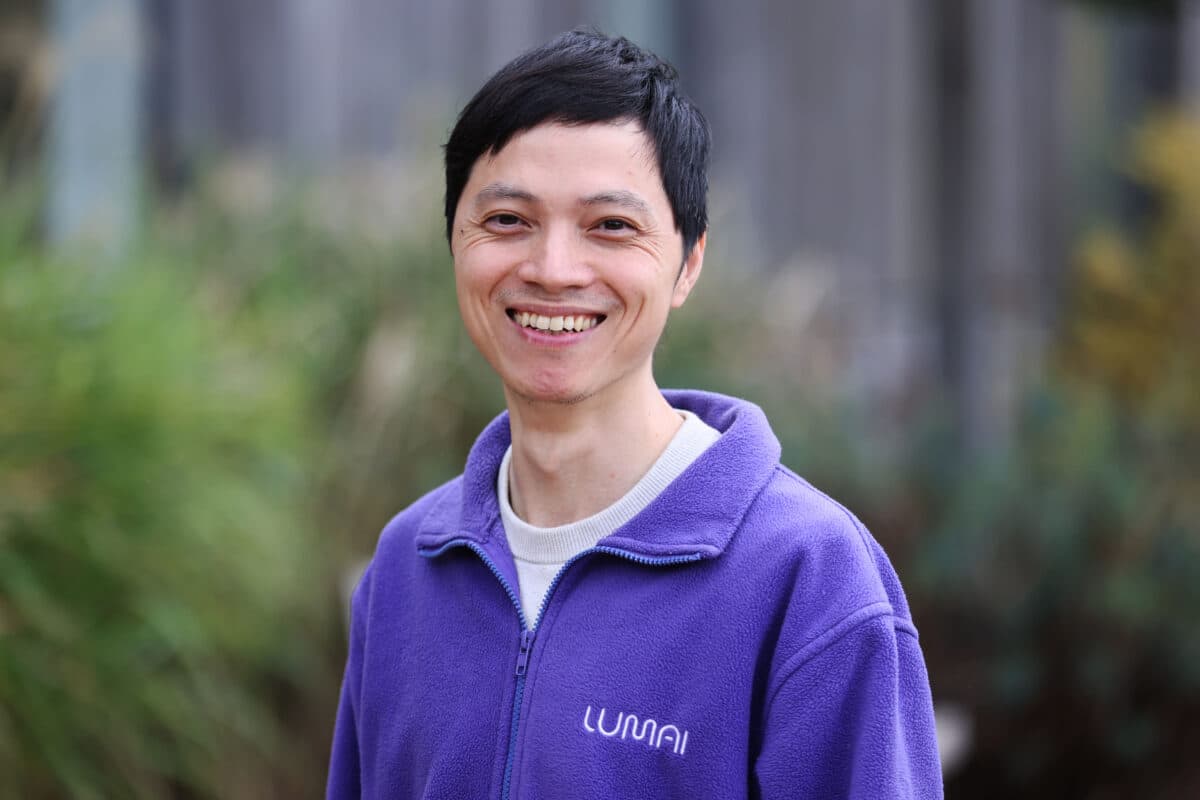
CEO Interview with Xianxin Guo of Lumai
Key Takeaways
- •Lumai uses light for tensor operations, boosting performance-per-watt
- •Hybrid optical‑electronic processor integrates with existing AI software stacks
- •Targets high‑throughput inference like large language models and video processing
- •Offers step‑function efficiency gains versus incremental GPU/ASIC improvements
Pulse Analysis
Optical computing, once confined to academic labs, is emerging as a viable answer to the physical limits of silicon scaling. Researchers at the University of Oxford have demonstrated that photons can perform dense linear algebra—core to AI inference—far more efficiently than electrons. Lumai leverages this research to build a hybrid processor that offloads matrix multiplications to an optical engine while retaining a conventional digital core for control and software execution. This architecture sidesteps the exponential power growth seen in GPUs and ASICs, delivering a substantial uplift in performance-per-watt that directly addresses the "power wall" confronting hyperscale data centres.
The market need is acute: AI workloads now dominate data‑centre power budgets, with a 1 GW facility capped at its own consumption ceiling. Lumai’s solution promises to generate more tokens per watt, translating into lower electricity bills and reduced cooling requirements. By exposing a standard software interface, the processor can slot into existing AI pipelines without demanding a rewrite of models or frameworks. This compatibility lowers adoption friction for enterprises seeking to scale large language models, recommendation systems, or video analytics while keeping capital expenditures in check.
Competitive pressure from GPU vendors, ASIC designers, and emerging neuromorphic chips is intense, yet most remain rooted in electronic architectures that deliver incremental gains. Lumai’s optical approach offers a step‑function improvement, potentially reshaping the economics of AI compute. As pilot programs mature and integration challenges are resolved, the company could catalyse a broader shift toward photonic data‑centre components, prompting incumbents to rethink roadmaps and investors to reassess valuation models for AI infrastructure providers.
CEO Interview with Xianxin Guo of Lumai
Comments
Want to join the conversation?