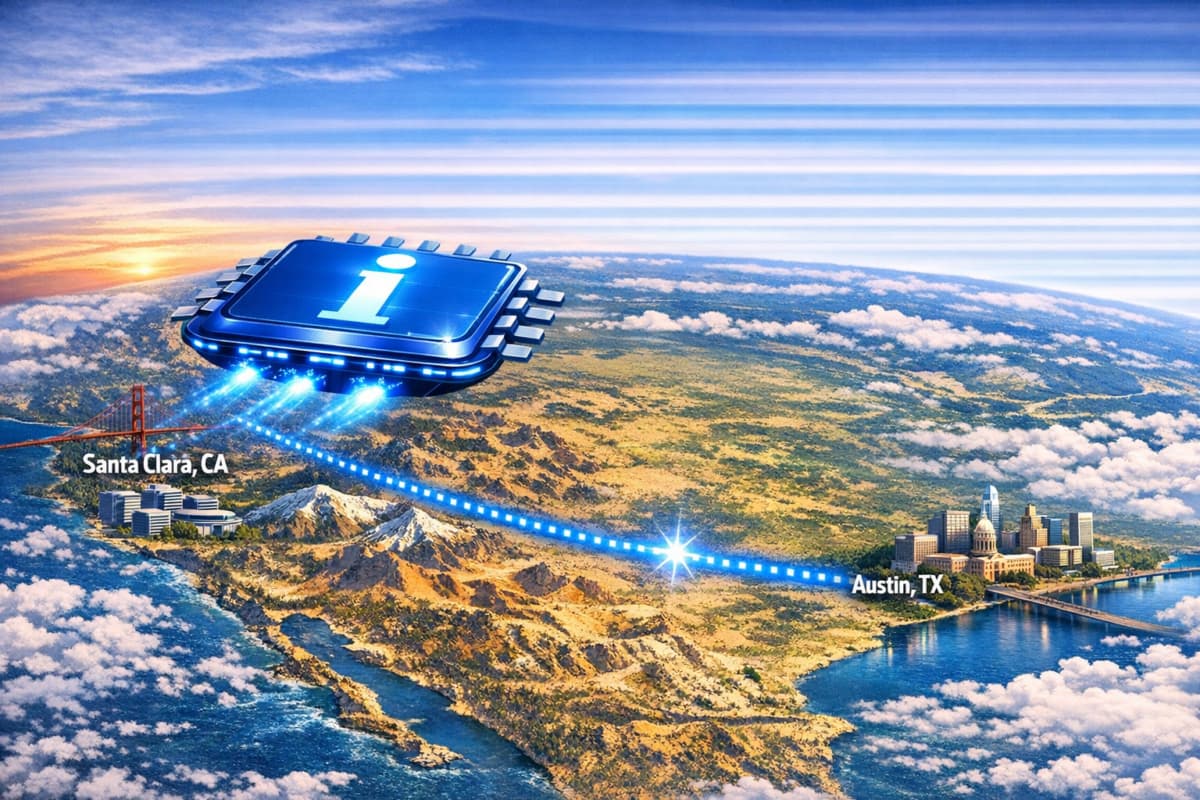
Is Intel About to Take Flight?
Key Takeaways
- •Intel pledges to work with Musk on custom AI inference chips.
- •Intel's Hillsboro fab has idle capacity that could serve Tesla.
- •Talent drain threatens process‑engineering expertise needed for yield improvements.
- •TSMC and Samsung remain oversubscribed, leaving Intel as sole queue‑free option.
- •Success hinges on Intel’s ability to deliver yields without a clear timeline.
Pulse Analysis
Elon Musk’s recent call for a “Terafab” has thrust Intel back into the spotlight as the only foundry with spare capacity that can meet the massive silicon demand of Tesla, SpaceX and upcoming robotics projects. While TSMC’s lines are booked for years and Samsung has already committed its next‑generation tools, Intel’s Hillsboro plant sits under‑utilized, equipped with ASML EUV machines and a mature 18A node. By offering a queue‑free production slot, Intel hopes to turn Musk’s high‑volume inference‑chip order into a steady revenue stream and a catalyst for its struggling foundry business.
The partnership, however, faces a deeper structural problem: a shrinking pool of process‑engineering talent. Decades of expertise that once lived in the walls of National Semiconductor and Intel’s own 14 nm and Intel 4 ramps are disappearing as engineers migrate to AI‑focused startups and research labs. Without that tacit knowledge, yield ramp‑up on advanced nodes remains uncertain, especially when the equipment—ASML lithography, Lam etch, Applied Materials deposition—encodes only the physics, not the judgment. Intel must rebuild its internal knowledge base while delivering chips that meet Musk’s aggressive timelines.
If Intel can translate Musk’s order into reliable silicon, the deal could provide a lifeline, funding the retention of senior engineers and justifying further capital investment in its foundry roadmap. Analysts see the arrangement as a potential “softball” compared with hyperscaler contracts, giving Intel a low‑risk learning environment to improve yields before tackling larger customers like Broadcom. Yet the lack of disclosed timelines, cost per wafer and yield targets leaves investors wary. Success would reinforce Intel’s relevance in the AI‑driven era; failure could deepen the perception that the company lags behind the Taiwan‑Japan equipment ecosystem.
Is Intel About to Take Flight?
Comments
Want to join the conversation?