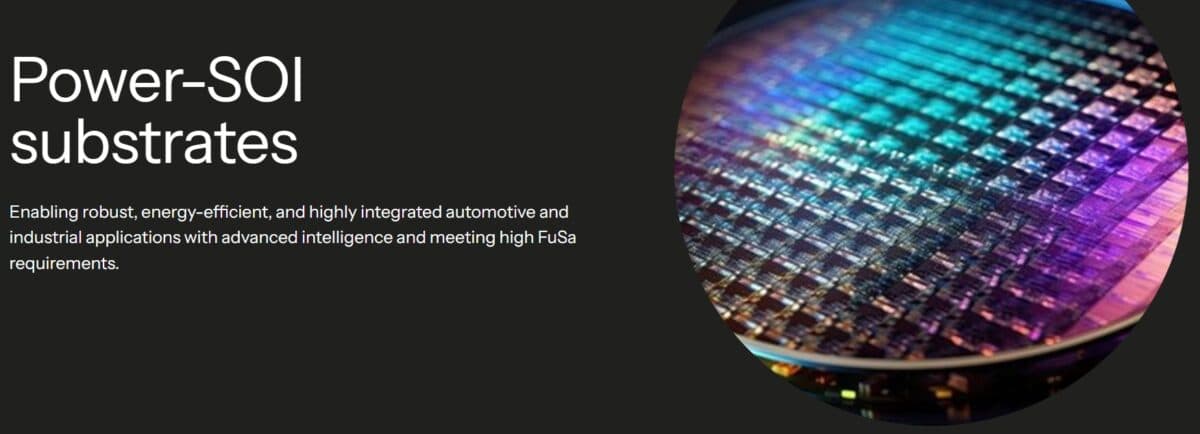
Power-SOI: The Reliability Engine Behind Functional Safety ICs
Key Takeaways
- •Power‑SOI offers intrinsic latch‑up immunity via buried oxide isolation.
- •Reduces leakage at >150 °C, improving analog precision in harsh environments.
- •Enhances EMI and transient robustness, supporting high‑speed GaN converters.
- •Enables compact smart‑joint modules for robotics with integrated AI.
- •Scaling to 65 nm and 300 mm wafers drives higher digital integration.
Pulse Analysis
Power‑SOI’s dielectric isolation reshapes how designers meet functional‑safety standards such as ISO 26262 and IEC 61508. By separating active devices on silicon islands, the buried‑oxide (BOX) layer blocks vertical current paths that form parasitic p‑n‑p‑n thyristors, effectively removing latch‑up from FMEDA calculations. This intrinsic immunity not only reduces the hardware failure‑in‑time (FIT) rates required for ASIL‑D and SIL‑4 classifications but also shortens the time‑to‑market for safety‑critical ASICs, a critical advantage as automotive and industrial sectors push toward higher autonomy levels.
Beyond latch‑up, Power‑SOI excels under extreme thermal and electromagnetic stress. The BOX layer curtails substrate leakage, keeping analog blocks like bandgap references and voltage monitors accurate even above 150 °C—a common junction temperature in electric‑vehicle power modules and high‑speed motor drives. Moreover, the isolation dampens EMI coupling and shields digital logic from negative voltage transients that can otherwise corrupt sensor data or trigger false safety events. These traits enable designers to integrate GaN power stages and high‑frequency converters without sacrificing reliability, supporting the rapid rise of wide‑bandgap solutions in electrified platforms.
The technology roadmap underscores Power‑SOI’s strategic relevance. Process nodes are shrinking from 180 nm to 65 nm while transitioning to 300 mm wafer production, unlocking higher transistor densities and embedded safety processors. This scaling facilitates monolithic integration of AI accelerators and on‑chip diagnostics, paving the way for compact smart‑joint modules in humanoid robots and collaborative automation. As safety requirements tighten and system complexity grows, Power‑SOI is poised to become the foundational substrate for fail‑operational electronics, delivering both the performance and reliability demanded by tomorrow’s autonomous ecosystems.
Power-SOI: The Reliability Engine Behind Functional Safety ICs
Comments
Want to join the conversation?