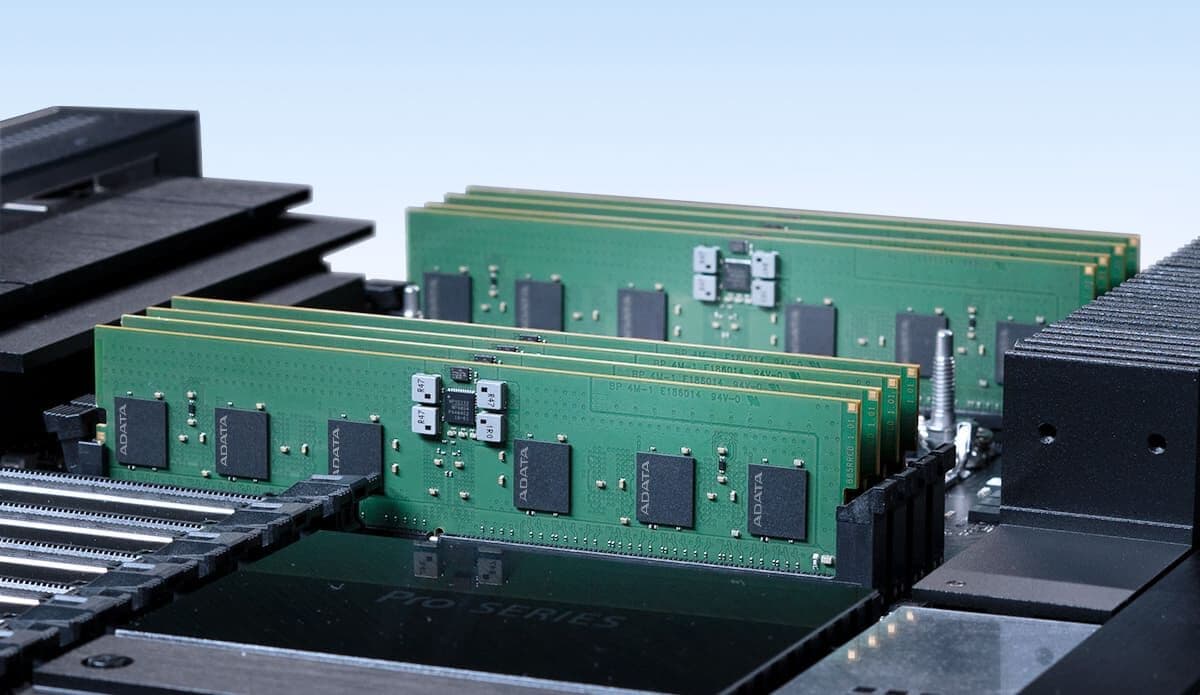
ADATA Expects Memory Shortage to Continue as AI Demand Grows
Why It Matters
The sustained memory shortage and rising prices can lift margins for firms with ample stock, while AI‑heavy data centers face higher capex, reshaping investment priorities across the semiconductor ecosystem. This dynamic signals a shift from consumer‑electronics cycles to AI‑centric demand as the primary market driver.
Key Takeaways
- •AI demand pushes DRAM prices up in H1 2025
- •NAND flash momentum expected to accelerate in H2 2025
- •ADATA inventory reached US$1.27 billion by April 2025
- •Inventory mix now 55% DRAM, 45% NAND
- •Supply constraints favor profit growth for inventory‑rich firms
Pulse Analysis
The surge in artificial‑intelligence workloads is rewriting the memory playbook. Whereas the past decade saw DRAM and NAND flash cycles tied to smartphones and PCs, today AI training clusters, inference servers and edge devices are gobbling up capacity at an unprecedented rate. Analysts estimate that AI‑related memory consumption could grow double‑digit percentages annually, outpacing traditional consumer demand. This shift forces manufacturers to re‑balance production lines, prioritize high‑speed, high‑capacity modules, and accept tighter supply buffers as the market pivots toward compute‑intensive applications.
ADATA’s response illustrates how inventory‑rich distributors can capture upside in a constrained market. By the end of April 2025 the Taiwanese firm reported US$1.27 billion of stock, split roughly 55 % DRAM and 45 % NAND, a deliberate tilt toward flash ahead of expected price hikes. Sourcing directly from upstream fabs gives ADATA tighter cost control and the ability to honor long‑term contracts even as new customers, especially cloud service providers, knock on its door. The elevated inventory level not only cushions short‑term shortages but also positions the company to benefit from the premium pricing trend.
Looking ahead, the memory gap is unlikely to close before 2026, as new fab capacity in China and elsewhere will take time to ramp up. Consequently, DRAM and NAND prices are projected to stay elevated, squeezing margins for OEMs that lack buffer stock while rewarding those that have stocked ahead. For cloud providers and enterprise data‑center operators, the environment may accelerate negotiations for long‑term supply agreements and spur investment in alternative memory technologies such as HBM or persistent‑memory modules. The broader industry thus faces a strategic inflection point where AI demand dictates supply‑chain priorities.
ADATA expects memory shortage to continue as AI demand grows
Comments
Want to join the conversation?
Loading comments...