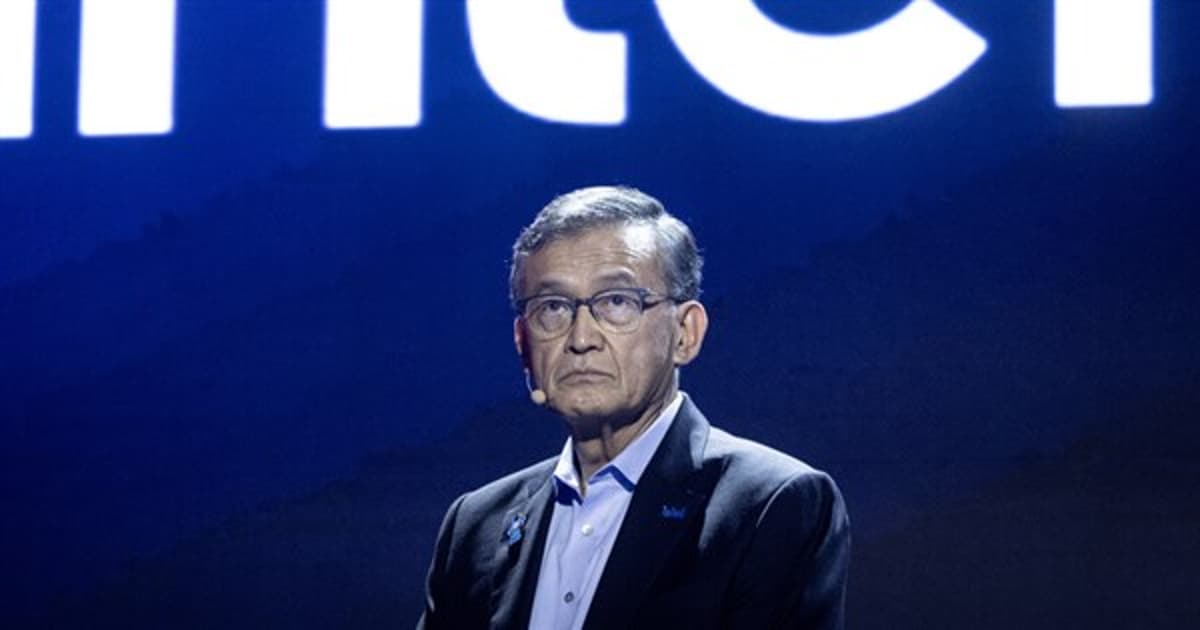
Agentic AI to Drive CPU Demand: Intel CEO
Companies Mentioned
Why It Matters
Agentic AI shifts the compute balance toward CPUs, opening growth avenues for Intel across data‑center, edge and consumer markets. This re‑orientation could revitalize Intel’s revenue and reshape AI hardware competition.
Key Takeaways
- •Intel's Xeon 6 CPUs offer up to 288 efficiency cores.
- •AI agents increase CPU demand for task orchestration.
- •Intel 18A process powers Core Ultra 3 processors for local AI.
- •Partnerships with Foxconn, Google, Ericsson expand AI infrastructure.
- •Hybrid agentic inference splits workloads between device and cloud.
Pulse Analysis
The rise of agentic artificial intelligence is reshaping how computing resources are allocated across the tech ecosystem. Unlike traditional AI inference that leans heavily on GPUs, agentic AI requires a broader set of operations—task scheduling, data retrieval, and tool integration—that are best handled by general‑purpose processors. Intel’s CEO Lip‑Bu Tan highlighted this shift at Computex Taipei, noting that CPUs will become the orchestration layer for AI agents operating on PCs, data‑center servers, edge devices, and even physical robots. This evolution promises to revive demand for high‑performance, low‑latency CPUs.
To meet the anticipated surge, Intel unveiled its Xeon 6 family, featuring a high‑density configuration with up to 288 efficiency cores and a massive 576 MB L3 cache. These specifications are designed to sustain large‑scale AI workloads and the complex coordination required by agentic models. Simultaneously, the company announced that its 18‑angstrom (18A) process is now in full‑scale production, powering the Core Ultra 3 series that brings on‑device AI acceleration to thousands of consumer and commercial PCs. The dual focus on data‑center and edge silicon underscores Intel’s strategy to dominate the entire AI stack.
Analysts see Intel’s push as a direct response to rival chipmakers such as AMD and Nvidia, which have also been courting the AI market with GPU‑centric solutions. By emphasizing CPU‑centric orchestration and hybrid inference, Intel aims to capture workloads that demand both local privacy and cloud‑scale processing. The announced partnerships with Foxconn, Google, Ericsson and SambaNova could accelerate ecosystem adoption, while the hybrid agentic inference demo with Perplexity showcases a practical path for enterprises to balance data security with performance. If successful, this could re‑energize Intel’s revenue streams and reshape the competitive landscape of AI hardware.
Agentic AI to drive CPU demand: Intel CEO
Comments
Want to join the conversation?
Loading comments...