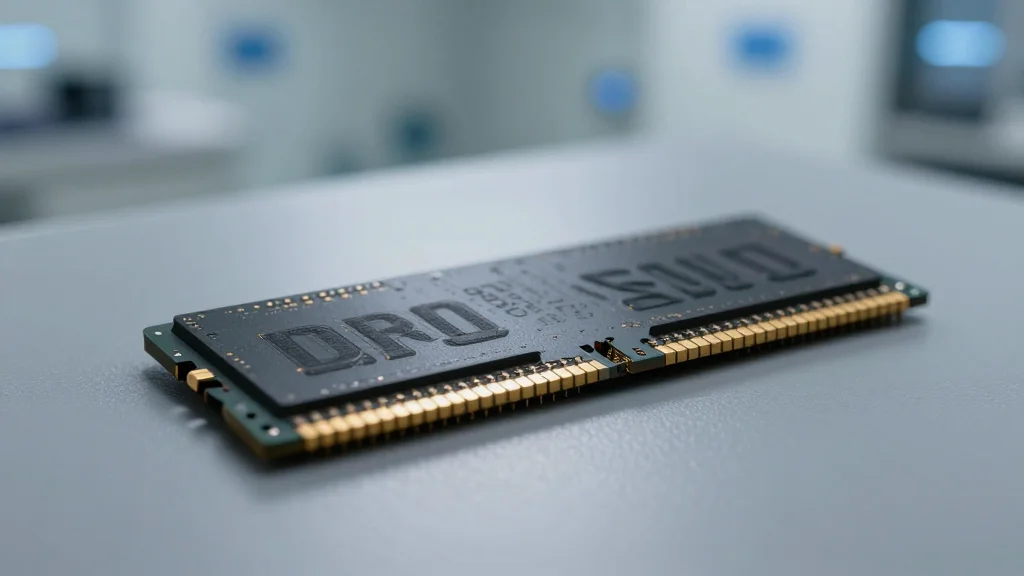
AI Supercycle, Geopolitics Triggering Global Memory Market Crisis
Companies Mentioned


Why It Matters
The memory shortage reshapes profit margins and product roadmaps across the tech ecosystem, while geopolitical supply‑chain fragility accelerates a shift toward localized, resilient manufacturing.
Key Takeaways
- •AI data centers to consume ~70% of high‑end memory by 2026
- •DRAM and SSD prices projected to jump 130% by end‑2026
- •Global smartphone output may fall 10% YoY, to ~1.135 bn units
- •Qatar helium disruption cuts ~65% of South Korea’s supply, straining fabs
- •OEMs raise baseline storage to 256 GB, dropping low‑capacity models
Pulse Analysis
The surge in artificial‑intelligence workloads is redefining semiconductor economics. Memory giants are repurposing fabs for high‑bandwidth memory (HBM) and server‑grade DDR5, which consume more wafer area and yield fewer chips per wafer. This strategic reallocation, rather than a capacity shortfall, is driving a projected 130% price hike in DRAM and SSDs by late 2026. Analysts warn that AI data centers will claim roughly 70% of the high‑end memory pool, upending the traditional consumer‑focused supply balance that has underpinned the industry for decades.
Consumer‑device makers feel the pressure immediately. Higher memory costs are inflating bill‑of‑materials, pushing laptop and smartphone prices up by several hundred dollars. TrendForce predicts a 10% YoY decline in global smartphone shipments, even as average storage climbs 4.8% to support on‑device AI. OEMs are standardizing 256 GB storage in premium phones and trimming low‑capacity models, a move that reshapes product line‑ups and squeezes margins for budget‑segment brands. Tablet and PC manufacturers face similar bifurcations, with premium devices adding more RAM while entry‑level products risk becoming unprofitable.
Compounding the market imbalance is the geopolitical fallout from recent Middle‑East hostilities. Iranian strikes halted Qatar’s Ras Laffan plant, cutting roughly one‑third of global helium output—a critical gas for semiconductor lithography. South Korea, which sources about 65% of its helium from Qatar, now confronts rationed supplies, further throttling memory fab yields. The crisis is prompting chipmakers to reconsider the just‑in‑time model, accelerating investments in domestic material reserves and resilient supply chains. While new fabs in the U.S. and allied nations promise relief, they won’t be operational until 2027‑28, leaving 2026 as a pivotal year for strategic allocation of every silicon wafer.
AI Supercycle, Geopolitics Triggering Global Memory Market Crisis
Comments
Want to join the conversation?
Loading comments...