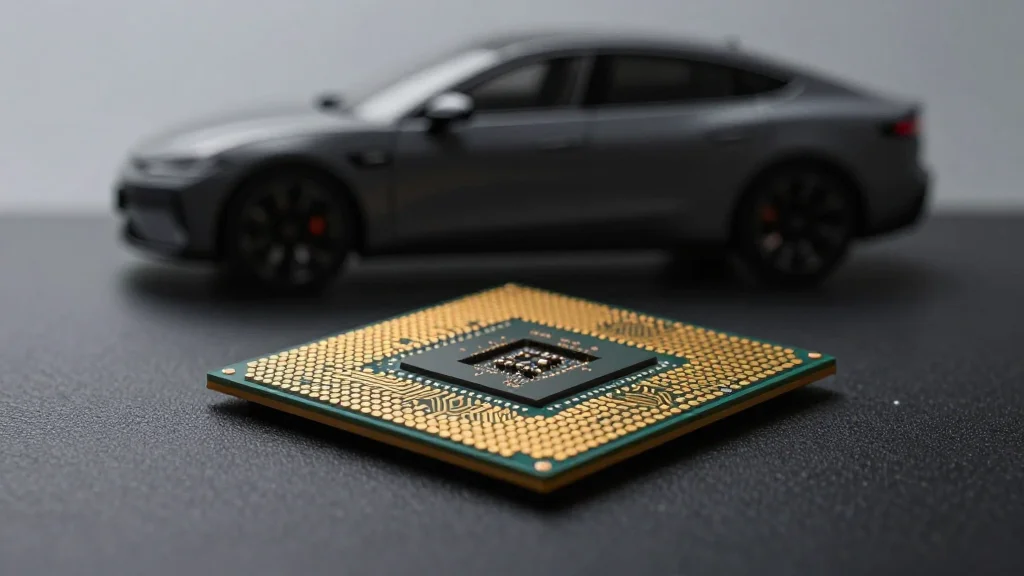
Athos Scraps Multi-Vendor Roadmap, Plans Chiplet Tape-Out
Companies Mentioned
Why It Matters
By consolidating to a single chiplet, Athos can compete on price and safety, a critical differentiator in the cost‑sensitive automotive market and fast‑growing drone sector. The move also showcases a leaner, more controllable path for silicon startups navigating volatile supplier ecosystems.
Key Takeaways
- •Athos drops multi‑vendor chiplet plan, opts for single in‑house chiplet
- •Single‑chiplet tape‑out cuts costs, enables competitive pricing for automotive OEMs
- •Redundant power rails and voting system improve safety over traditional lockstep
- •Athos targets autonomous vehicles and drones, first samples expected Q1 2027
Pulse Analysis
The chiplet paradigm has reshaped how high‑performance silicon is built, promising modularity and faster time‑to‑market. Yet the model also introduces supply‑chain complexity and cost overhead, especially when multiple third‑party dies must be co‑packaged. Athos Silicon’s spin‑out from Mercedes‑Benz initially embraced this approach, planning a hub‑centric system that combined DreamBig’s chiplet hub with external CPU, GPU and NPU dies. Arm’s $240 million acquisition of DreamBig forced a strategic rethink, prompting Athos to reclaim design ownership and simplify its architecture.
Athos’s new single‑chiplet solution tackles two perennial automotive challenges: price and safety. By integrating third‑party IP onto an in‑house silicon substrate, the startup eliminates the need for multiple tape‑outs, dramatically reducing fabrication expenses. The design also incorporates dual redundant power rails, custom voltage regulators, and a novel voting mechanism that isolates faulty chiplets—offering granular error diagnosis beyond conventional lockstep schemes. This architecture not only meets ISO 26262 safety targets but also provides deterministic behavior that can protect manufacturers in liability disputes.
Targeting both autonomous vehicles and commercial drones, Athos leverages the flexibility of its chiplet to scale performance—from 250 TOPS for drone AI to higher‑end configurations for automotive safety‑critical workloads. The dual‑market strategy mitigates the long automotive design cycle by generating near‑term revenue from the faster‑moving drone sector. With first silicon samples slated for early 2027, Athos positions itself as a nimble competitor capable of delivering cost‑effective, safety‑centric compute, potentially reshaping the competitive dynamics among monolithic and multi‑chiplet players in the autonomous‑driving ecosystem.
Athos Scraps Multi-Vendor Roadmap, Plans Chiplet Tape-Out
Comments
Want to join the conversation?
Loading comments...