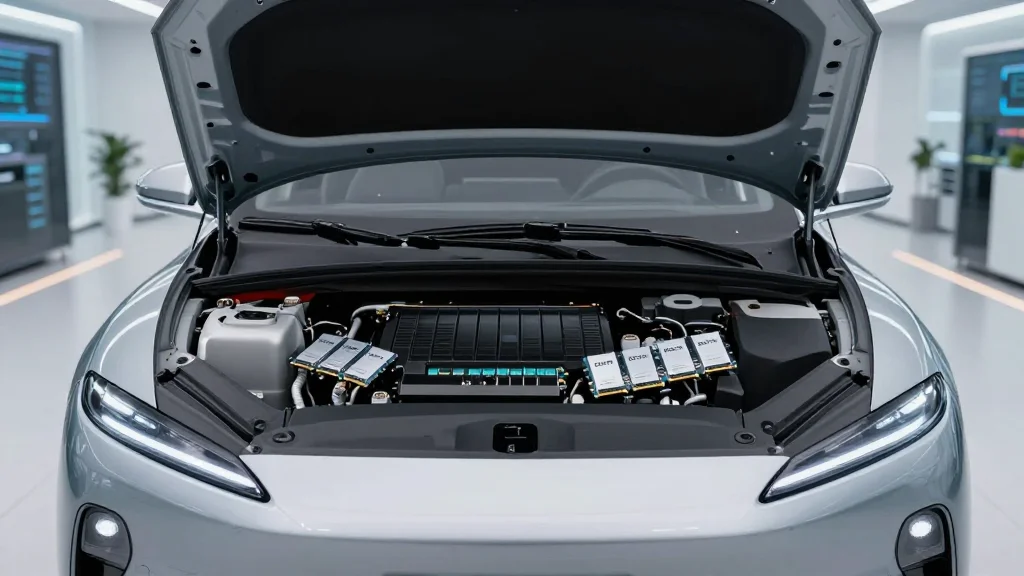
Automakers Now Competing with AI Infra Developers for Memory Supply
Why It Matters
Memory scarcity threatens the rollout speed of advanced driver‑assistance systems and inflates vehicle costs, prompting a strategic overhaul of automotive supply chains.
Key Takeaways
- •AI data‑center demand diverts DRAM from automotive manufacturers.
- •EU safety regs push automotive RAM needs to ~278 GB per car.
- •Memory prices add up to $1,470 to premium EV production cost.
- •OEMs consider mixed‑criticality and zonal architectures to conserve chips.
- •Direct deals or local fabs become new procurement tactics for automakers.
Pulse Analysis
The current memory crunch stems from a structural shift in semiconductor allocation. AI‑focused data centers, backed by massive investments from Samsung, SK Hynix and Micron, are snapping up high‑bandwidth memory for training large models, leaving traditional DRAM and NAND supplies thin for other sectors. Unlike the pandemic‑driven bottlenecks of 2021, this shortage is driven by sustained, high‑margin AI demand, making it less likely to resolve without a downturn in AI spending.
Automakers face a perfect storm: stricter EU safety mandates now require every new vehicle sold in Europe to embed advanced driver‑assistance functions that consume gigabytes of local memory. Combined with the inherent need for automotive‑grade, AEC‑Q100‑qualified chips, the result is a steep rise in component costs—up to $1,470 per premium EV—and a slowdown in the transition to Level‑3/4 autonomy. Engineers are exploring mixed‑criticality designs, where consumer‑grade memory handles low‑risk infotainment tasks while reserving auto‑grade parts for safety‑critical functions, and they are evaluating zonal architectures that consolidate processing to reduce overall memory footprints.
In response, OEMs are rethinking supply‑chain tactics. Some are forging direct agreements with memory fabs or investing in regional fabs to secure dedicated capacity, while others are adjusting product strategies, such as limiting high‑end infotainment features to luxury lines and adopting smartphone‑class chips for mass‑market models. These moves signal a longer‑term pivot toward inventory buffering and diversified sourcing, acknowledging that automotive semiconductors represent only about 10% of the broader market and will remain a lower priority for memory manufacturers unless the industry collectively reshapes its demand profile.
Automakers Now Competing with AI Infra Developers for Memory Supply
Comments
Want to join the conversation?
Loading comments...