Beyond PCIe Compliance: Why Stress Testing Is Crucial For Edge AI Deployments
Companies Mentioned
Why It Matters
Without stress testing, thin‑margin PCIe links can degrade silently, driving costly downtime and maintenance across thousands of distributed edge sites.
Key Takeaways
- •Compliance confirms spec conformance, not field reliability.
- •Stress tests reveal margin under temperature and power cycling.
- •Long‑duration BER testing uncovers hidden error floors.
- •Edge AI servers operate –20 °C to 60 °C, demanding robust links.
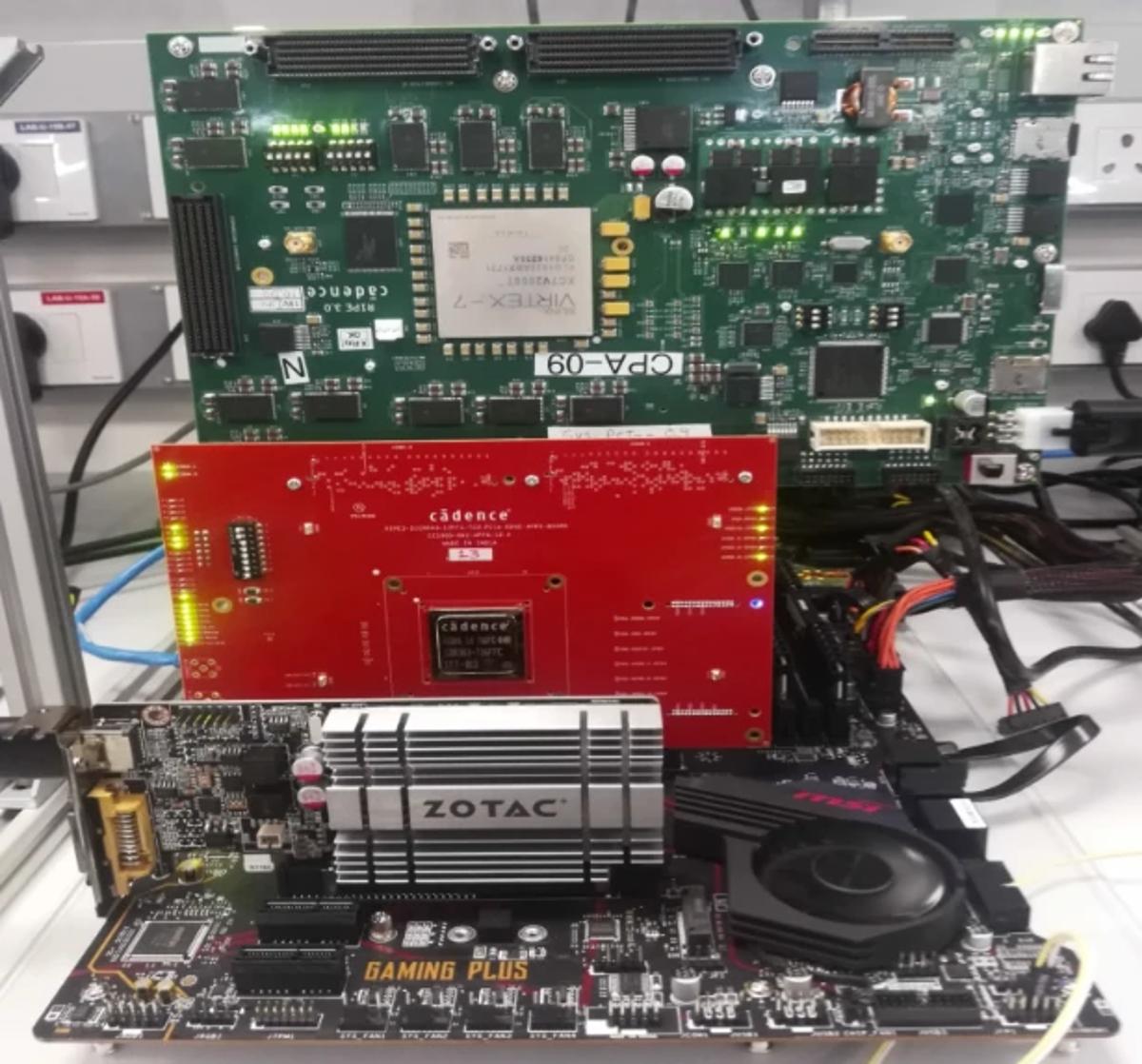
- •Cadence’s stress methods extend PCIe validation beyond standard tests.
Pulse Analysis
Compliance testing is a necessary first step for any PCIe design, but it is fundamentally a snapshot of performance under ideal, repeatable conditions. It answers the binary question of whether a link meets the electrical parameters defined by the PCI‑Sig specification. For edge AI hardware, however, the operating envelope is anything but ideal: devices run continuously, swing between idle and peak inference loads, and endure temperature swings that far exceed a controlled lab bench. The gap between passing a compliance test and surviving months of field operation can be the difference between a reliable edge server and a costly field failure.
Stress testing fills that gap by deliberately pushing the design beyond the compliance envelope. Engineers sweep receiver jitter tolerance across degraded inputs, drive transmitters at extreme supply and temperature corners, and run high‑temperature operating life (HTOL) tests to watch parametric drift over time. System‑level exercises such as lane‑width variation, speed‑negotiation transitions, and thousands of cold‑warm boot cycles emulate the real‑world churn of edge AI workloads. Long‑duration bit‑error‑rate (BER) testing, often run for days, uncovers a non‑zero error floor that would be invisible in a short compliance window. These rigorous scenarios expose latent weaknesses—such as intermittent CRC errors after repeated power‑state cycling—that compliance alone would miss.
The business impact is tangible. In distributed edge deployments, a marginal PCIe link can manifest as intermittent inference latency or subtle throughput variance, problems that are hard to diagnose remotely and may require on‑site hardware replacement. By quantifying margin through stress testing, OEMs can ship designs with confidence that they will maintain performance across the –20 °C to 60 °C temperature range typical of factories and logistics hubs. Cadence’s expanded stress‑testing methodology, built on top of standard PCIe qualification, offers a practical pathway for manufacturers to prove field readiness, reduce warranty costs, and protect brand reputation in the fast‑growing edge AI market.
Beyond PCIe Compliance: Why Stress Testing Is Crucial For Edge AI Deployments
Comments
Want to join the conversation?
Loading comments...