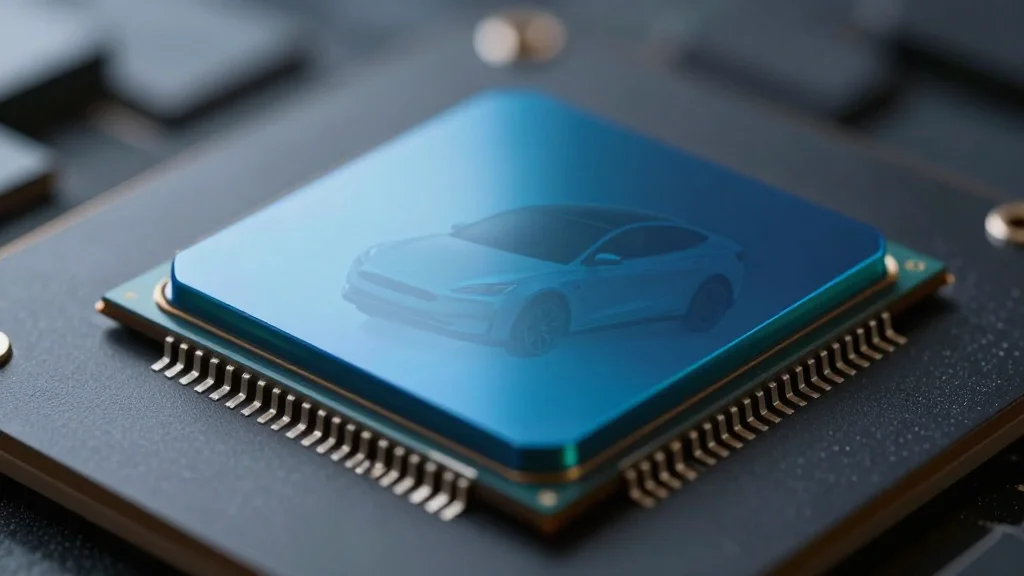
Bosch Sampling Third-Generation SiC Chips to Global Automakers
Companies Mentioned
Why It Matters
The advance boosts EV power‑train efficiency and diversifies the semiconductor supply chain, giving automakers a more reliable source of high‑performance chips.
Key Takeaways
- •Bosch's third-gen SiC chips are 20% more powerful and smaller
- •New chips boost wafer yield, lowering cost per unit
- •Bosch invested $3.3bn in European SiC fabs and $2.1bn US plant
- •Samples are being sent to global automakers for EV powertrains
- •Production aims for mid‑nine‑figure annual volume, strengthening supply chain
Pulse Analysis
Silicon carbide (SiC) semiconductors have become a cornerstone of modern electric‑vehicle (EV) powertrains, offering higher efficiency and thermal resilience than traditional silicon. Bosch’s third‑generation SiC chips push the technology further by delivering roughly 20% more power in a smaller footprint, a leap enabled by its refined etching technique that creates high‑precision vertical structures. This miniaturization not only improves performance but also increases the number of chips that can be produced from each 200‑mm wafer, driving down the cost per kilowatt and making high‑performance EV components more accessible to a broader range of manufacturers.
To translate the technical edge into market impact, Bosch has poured roughly $3.3 billion into its European semiconductor hub in Reutlingen and an additional $2.1 billion into a newly acquired fab in Roseville, California. The dual‑fab strategy strengthens supply‑chain resilience, a critical factor as the automotive industry grapples with recent chip shortages. By equipping the U.S. plant for production and beginning sample shipments in 2025, Bosch positions itself as a transatlantic supplier capable of meeting the surge in demand from global automakers seeking reliable SiC sources for next‑generation EVs.
The broader market implications are significant. As automakers accelerate electrification targets, the need for compact, high‑density power modules will rise sharply, and Bosch’s mid‑nine‑figure annual volume ambition signals confidence in sustained demand. Competitors such as Infineon and ON Semiconductor are also scaling SiC capacity, but Bosch’s integrated approach—combining advanced chip design, substantial capital investment, and a diversified manufacturing footprint—offers a compelling value proposition. This development is likely to spur faster adoption of SiC across vehicle platforms, driving efficiency gains, reducing vehicle weight, and ultimately lowering the total cost of ownership for consumers.
Bosch sampling third-generation SiC chips to global automakers
Comments
Want to join the conversation?
Loading comments...