Chip-Processing Method Could Assist Cryptography Schemes to Keep Data Secure
Companies Mentioned
Why It Matters
The twin‑PUF technique raises hardware security to a level where keys never leave the silicon, reducing attack surfaces for IoT and medical devices. Heat‑based analog computing offers a pathway to reuse otherwise wasted thermal energy, improving energy efficiency for edge AI workloads.
Key Takeaways
- •MIT created twin PUF chips with >98% matching reliability
- •Twin PUF eliminates need for external server storage of secret keys
- •Method works with standard CMOS foundry processes, no special materials
- •Heat‑conducting silicon structures perform matrix‑vector multiplication with >99% accuracy
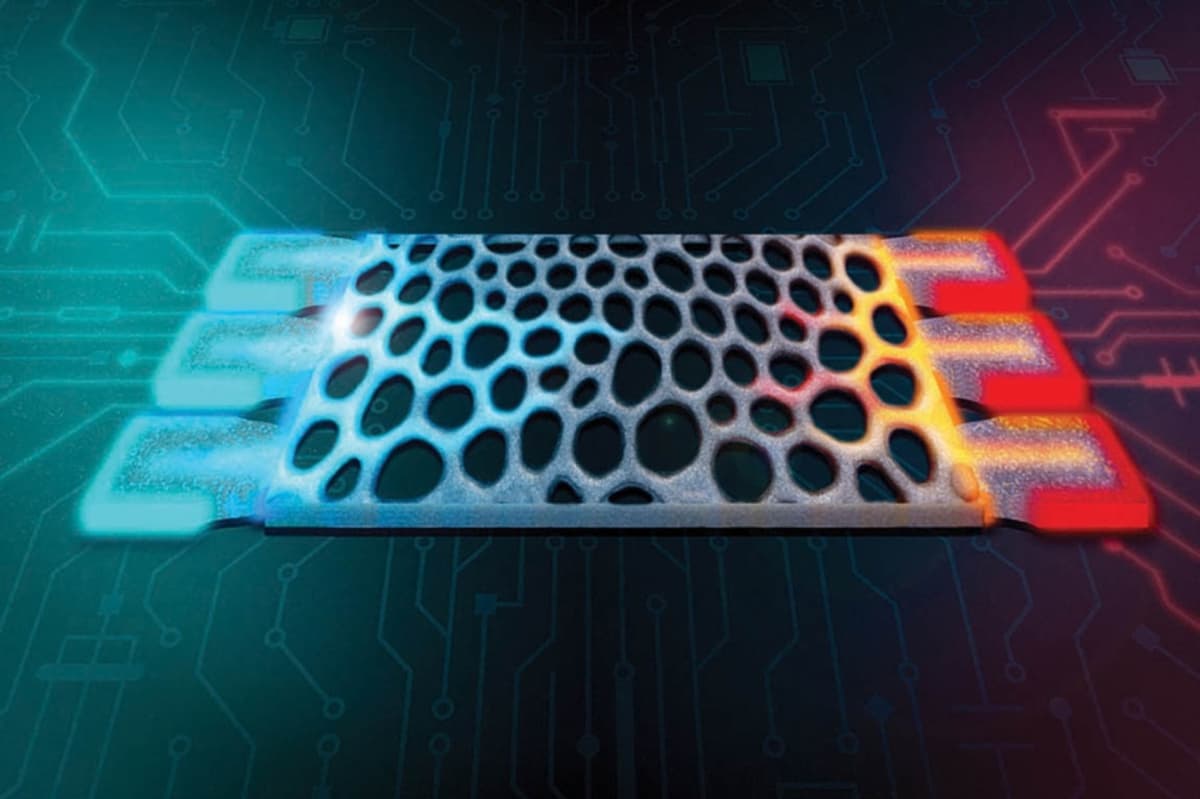
- •Inverse‑design algorithm generates porous silicon layouts for analog heat computing
Pulse Analysis
The twin‑PUF breakthrough leverages inherent manufacturing variations to generate a shared cryptographic key between two chips that are split at the wafer level. By embedding correlated transistor breakdown states, the chips can authenticate each other directly, eliminating the need for a third‑party database of secret fingerprints. This on‑chip secrecy is especially valuable for ultra‑low‑power applications—such as ingestible sensor pills paired with wearable patches—where any external communication would drain precious battery life and expose additional attack vectors.
Separately, MIT’s heat‑based computing research flips the conventional view of thermal waste into a functional resource. Using an inverse‑design software platform, researchers automatically generate porous silicon geometries that steer heat flow to perform matrix‑vector multiplication, a core operation in machine‑learning inference. The prototypes achieve more than 99% accuracy on small matrices, demonstrating that analog heat processing can rival digital precision for specific tasks while consuming no extra electrical power. Potential uses include on‑chip thermal monitoring, heat‑source localization, and specialized accelerators for edge AI where energy budgets are tight.
Together, these innovations signal a shift toward hardware that is both more secure and more energy‑aware. The twin‑PUF method could become a standard security primitive for IoT devices, reducing reliance on software‑based key management and mitigating supply‑chain tampering risks. Meanwhile, heat‑driven analog processors may complement conventional silicon cores, offering a low‑overhead compute layer for sensor‑rich environments. As the industry pushes for greener, more resilient edge systems, integrating such silicon‑native solutions could accelerate adoption across medical, automotive, and consumer electronics sectors.
Chip-processing method could assist cryptography schemes to keep data secure
Comments
Want to join the conversation?
Loading comments...