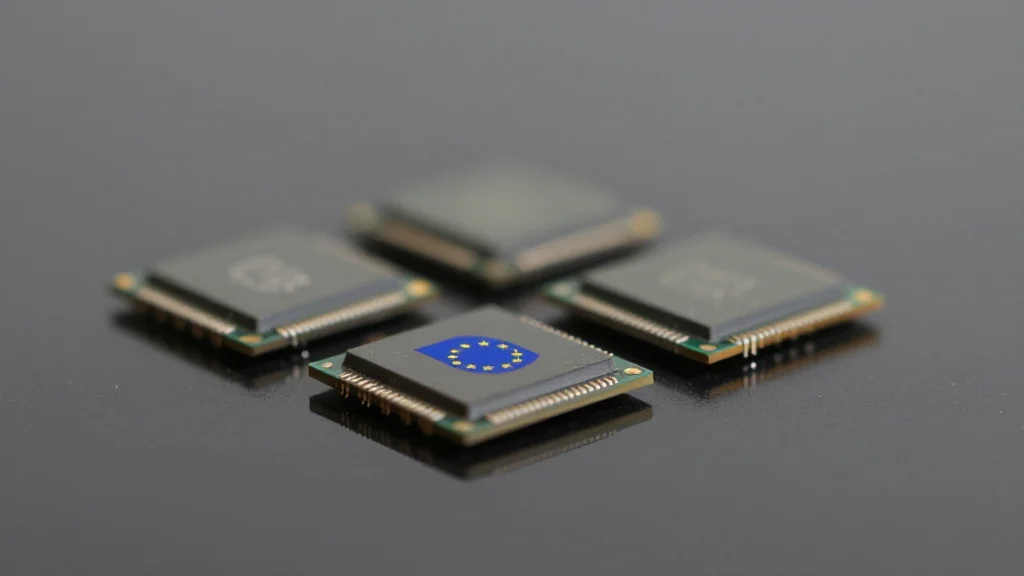
Chiplets, Ecosystems, and Europe’s Post-Fab Semiconductor Strategy
Companies Mentioned

Why It Matters
By focusing on chiplet ecosystems, Europe can leverage its strengths in automotive and industrial expertise to remain relevant in a market where scale‑only fabs no longer guarantee leadership. This re‑orientation could reshape global semiconductor value chains and influence future policy funding.
Key Takeaways
- •Europe's semiconductor market share may drop to 6% in 2026
- •Chiplets enable modular high‑performance compute for low‑volume automotive
- •Imec opens Heilbronn site for chiplet prototyping and testing
- •Chips Act 2.0 shifts focus to ecosystem coordination, not just fabs
Pulse Analysis
The semiconductor landscape is moving beyond the traditional race for smaller nodes and larger fabs. Europe, long hampered by limited manufacturing scale, is now channeling the Chips Act into ecosystem development—standardizing interfaces, fostering multi‑vendor collaboration, and investing in advanced packaging. This strategic pivot aligns with the rise of heterogeneous integration, where the value chain is distributed across design houses, foundries, and system integrators rather than confined to a single vertically integrated player.
Automotive demand has become a catalyst for this transition. High‑performance compute needed for autonomous driving cannot be justified by the relatively modest production volumes of cars, making custom monolithic chips prohibitively expensive. Chiplets offer a modular alternative, allowing manufacturers to reuse functional blocks across models and even across industries such as robotics and edge AI. Imec’s evolution from an automotive‑focused chiplet program to a broader Autonomous Edge initiative, coupled with its new Heilbronn prototyping hub, exemplifies how European research institutes are addressing reliability, thermal stress and compliance challenges that are critical for safety‑critical applications.
Policy implications are profound. Chips Act 2.0’s emphasis on ecosystem support signals a shift from subsidizing fabs to nurturing standards bodies, startup ecosystems, and design talent. By becoming a hub for chiplet interoperability and advanced packaging, Europe can leverage its historical strengths in automotive and industrial supply chains to secure a strategic foothold in the next generation of semiconductor value creation. This could redefine global leadership, making coordination and standards as valuable as transistor density itself.
Chiplets, Ecosystems, and Europe’s Post-Fab Semiconductor Strategy
Comments
Want to join the conversation?
Loading comments...