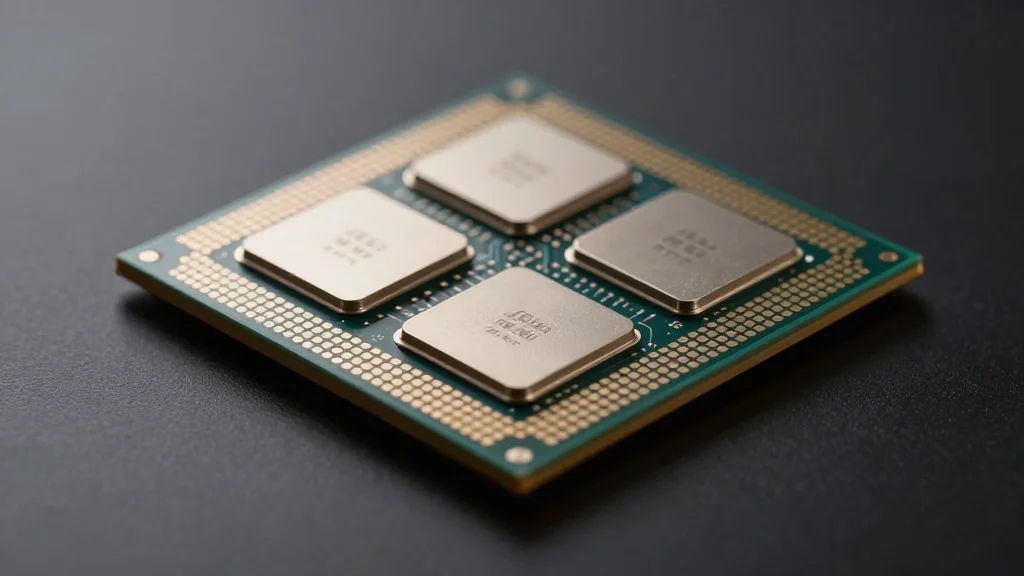
Why It Matters
Multicore bare‑metal designs deliver higher performance and cleaner code while keeping bill‑of‑materials low, accelerating time‑to‑market for IoT and edge devices.
Key Takeaways
- •RP2040 dual‑core boards cost about $5 USD.
- •Launch core 1 via multicore_launch_core1() in Arduino IDE.
- •Shared volatile variables enable simple inter‑core communication.
- •Use FIFOs, mailboxes, or semaphores for complex data exchange.
- •Separate peripheral usage per core to avoid resource conflicts.
Pulse Analysis
Multicore processors have moved from high‑end servers into the realm of low‑cost microcontrollers, reshaping how embedded firmware is written. The RP2040, a Raspberry Pi‑derived chip priced near $5, offers two independent cores that can be programmed directly from the Arduino IDE. This democratization means engineers no longer need a full operating system to reap the benefits of parallel execution; they can simply launch a second function on core 1 and let each core handle distinct tasks, from LED blinking to sensor sampling.
Implementing a bare‑metal multicore solution revolves around a few straightforward patterns. Developers include pico/multicore.h, define a core1_main routine, and invoke multicore_launch_core1() from the primary setup. Communication can start with a shared volatile variable, but for higher‑throughput scenarios, FIFO queues, mailboxes, or semaphore primitives—readily available in open‑source libraries—provide safer synchronization. Peripheral access remains flexible: any core can drive a GPIO or UART, though best practice is to allocate exclusive resources or employ lightweight locking flags to prevent contention.
From a business perspective, the ability to double processing capacity without increasing hardware cost translates into faster product cycles and more sophisticated feature sets. Engineers can offload time‑critical loops or interrupt handling to a dedicated core, simplifying code maintenance and reducing debugging time. As edge AI workloads grow, scaling from dual‑core to higher‑core RISC‑V or ARM silicon follows the same model, protecting early investments. Ultimately, embracing bare‑metal multicore architectures offers a competitive edge in the crowded IoT market, delivering performance, energy efficiency, and development agility.
Give bare-metal multicore processing a try
Comments
Want to join the conversation?
Loading comments...