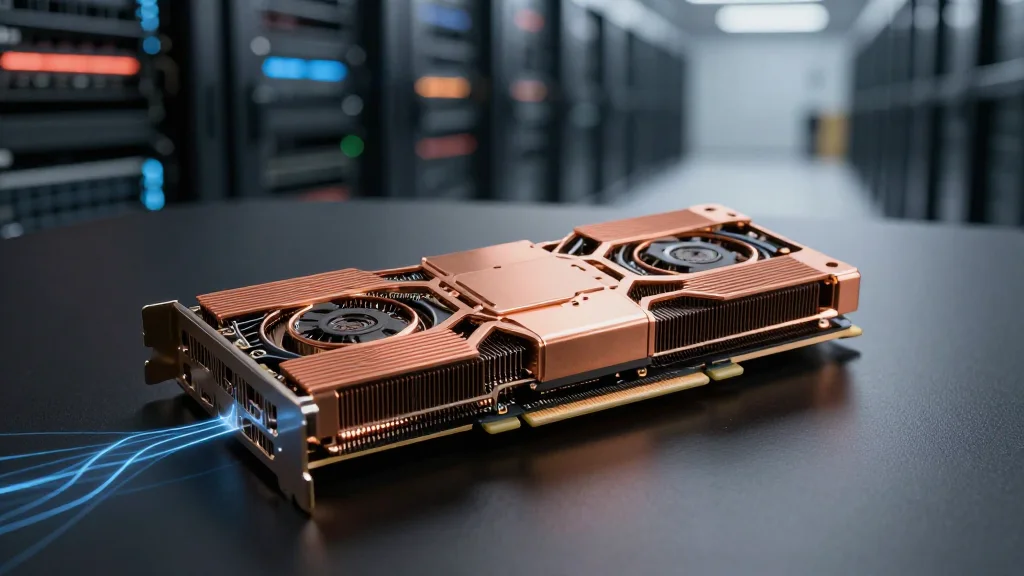
GPUs: A High-Throughput Architecture Confronting a Workload Shift
Companies Mentioned
Why It Matters
The shift from compute‑bound to memory‑bound AI workloads threatens GPU efficiency and raises engineering costs, prompting a strategic pivot toward specialized accelerators that better match emerging model architectures.
Key Takeaways
- •Memory bandwidth, not compute, now limits trillion‑parameter LLM inference.
- •Sparse MoE and dynamic routing cause warp divergence and low GPU occupancy.
- •Small batch, latency‑sensitive AI agents further reduce GPU efficiency.
- •Optimizing GPUs demands extensive manual tuning, raising engineering complexity tax.
- •Emerging accelerators prioritize dataflow and locality over raw FLOPS.
Pulse Analysis
The rise of trillion‑parameter language models has turned the classic GPU advantage on its head. Modern GPUs excel at dense, regular tensor operations, but LLM inference increasingly runs into the memory wall: data must travel across high‑bandwidth memory and inter‑chip links faster than the compute cores can consume it. When arithmetic intensity drops below ten FLOPs per byte, bandwidth, not FLOPs, dictates throughput, and the massive FP8 capabilities of H100‑class silicon sit idle.
Compounding the hardware mismatch is the software complexity of today’s AI workloads. Sparse mixture‑of‑experts layers, dynamic token routing, and speculative decoding introduce irregular execution patterns that break the SIMT model’s lockstep efficiency. Small batch sizes required for interactive agents further shrink matrix dimensions, inflating data movement relative to computation. Engineers must now spend weeks fine‑tuning kernel launches, tensor layouts, and memory transfers, a “complexity tax” that inflates development costs and reduces portability across hardware generations.
These pressures have catalyzed a wave of alternative accelerator designs that treat data movement as the primary constraint. Google’s TPU leverages systolic arrays and compiler‑driven dataflow, while Graphcore’s IPU and Cerebras’ wafer‑scale engine embed massive on‑chip memory to cut latency. VSORA’s dataflow architecture replaces SIMT with a flat register file and deep pipelines, targeting the same memory‑centric bottleneck. As the industry moves toward sparsity‑rich, latency‑sensitive AI, accelerators that minimize cross‑chip traffic and schedule work dynamically will likely eclipse traditional GPUs for inference, reshaping the AI hardware landscape.
GPUs: A high-throughput architecture confronting a workload shift
Comments
Want to join the conversation?
Loading comments...