How Dummy Silicon Helps Drive 3D Chip Innovation
Why It Matters
Early, rigorous validation reduces costly re‑spins and improves yield for advanced packaging, a key competitive edge in high‑performance computing and AI markets.
Key Takeaways
- •Dummy silicon test vehicles mimic real chips without functional transistors
- •Daisy‑chain resistance checks instantly reveal open interconnects
- •Heaters and comb structures simulate thermal stress and contamination
- •Automated EDA tools streamline daisy‑chain netlist generation
- •Multiple test vehicles per product cover process, thermal and mechanical risks
Pulse Analysis
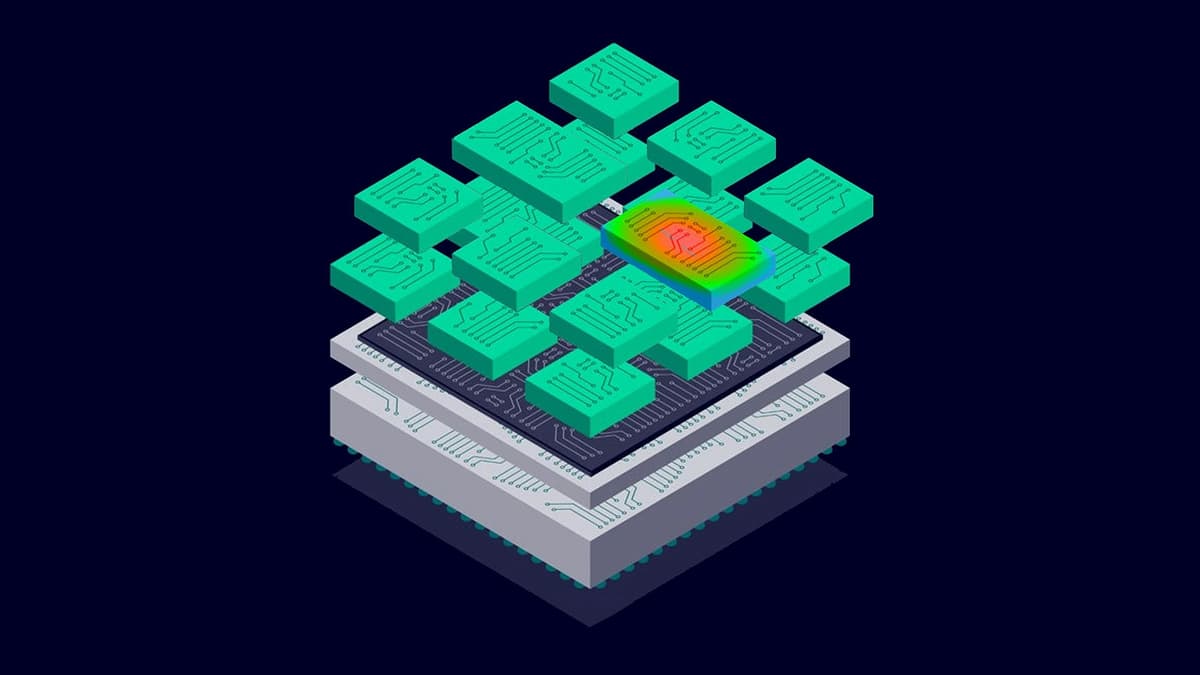
Advanced packaging, especially 3D ICs, pushes the limits of interconnect density and thermal management. Traditional validation methods struggle to keep pace, making dedicated test vehicles indispensable. By embedding dummy silicon dies, silicon bridges, and engineered daisy‑chains, manufacturers can isolate specific failure modes—such as micro‑cracks in high‑pin‑count bumps or misregistered vias—without the expense of functional silicon. These platforms also incorporate heaters to accelerate thermal aging and comb structures to detect residual contaminants, providing a comprehensive picture of reliability before committing to high‑volume production.
The strategic use of daisy‑chain testing adds a layer of efficiency to this validation workflow. A simple resistance measurement across a serial chain of interconnects flags any open circuit instantly, while sub‑chains and tap points enable rapid fault localization. This approach is especially valuable as designs scale from 80,000 to 100,000 pins, where manual inspection becomes impractical. By coupling daisy‑chains with physical failure analysis tools—such as scanning acoustic microscopy—engineers can quickly iterate process parameters, fine‑tune underfill materials, and tighten design rules, thereby protecting yield and reducing time‑to‑market.
Automation is the next frontier. Manual creation of daisy‑chain netlists is error‑prone and time‑consuming, a bottleneck that modern EDA solutions are eliminating. Intelligent algorithms now generate complex test structures—daisy‑chains, stacked via arrays, and thermal heaters—directly from design specifications, integrating simulation data to predict electrical and thermal behavior. This convergence of design, simulation, and physical testing accelerates the validation cycle, ensuring that the promise of 3D ICs—higher performance, lower power, and smaller form factors—can be realized with confidence and reliability.
How Dummy Silicon Helps Drive 3D Chip Innovation
Comments
Want to join the conversation?
Loading comments...