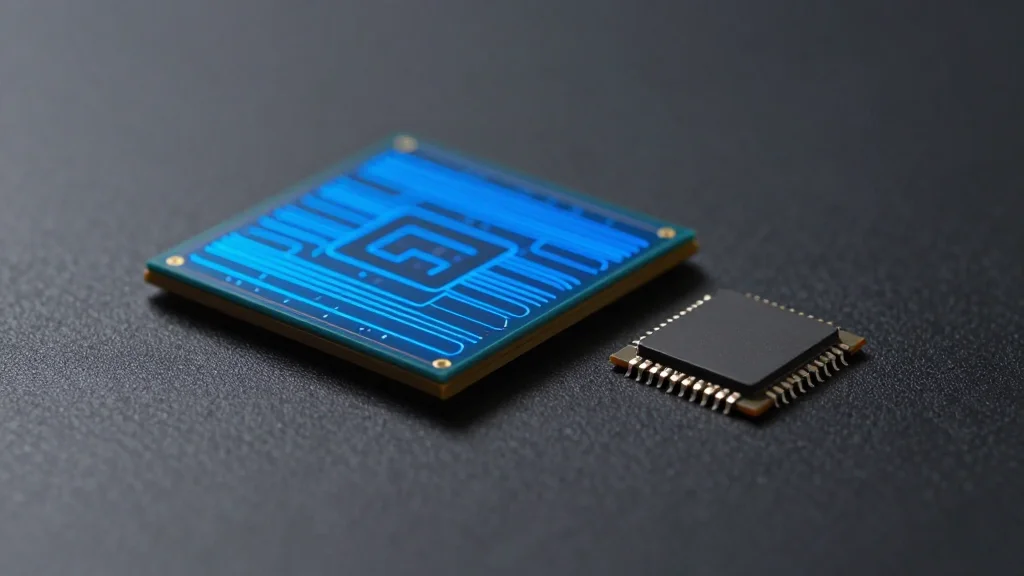
Imec’s Patrick Vandenameele: Full-Stack Innovation Is the Name of the Game
Why It Matters
Co‑optimizing hardware and AI workloads can unlock performance and energy gains that transistor scaling alone cannot, reshaping the semiconductor value chain and accelerating AI infrastructure.
Key Takeaways
- •XTCO framework links compute, memory, photonics, and AI models.
- •Silicon photonics expected to move from co‑packaged to in‑interposer by 2030.
- •Memory becomes custom, tightly integrated component to curb AI energy use.
- •Imec.AI‑labs bridges hardware benchmarking with AI software ecosystem.
- •First qubit made with ASML High‑NA EUV showcases quantum‑semiconductor convergence.
Pulse Analysis
Full‑stack innovation, which Imec brands as XTCO, is redefining how chips are designed. Rather than chasing transistor density alone, the framework aligns compute, memory, photonics, packaging, and even AI model architecture in a single optimization loop. This cross‑technology co‑optimization promises higher TOPS per watt for AI workloads, reducing the energy ceiling that has begun to choke traditional scaling. By acting as a neutral R&D hub, Imec can orchestrate deeper collaboration among foundries, fabless firms, hyperscalers, and AI architects, accelerating the translation of research into market‑ready solutions.
Silicon photonics is poised to become the linchpin of next‑generation interconnects. As electrical links hit bandwidth and power limits, Imec foresees a shift from co‑packaged photonics to in‑interposer solutions by 2030, a "scale‑in" approach that replaces short‑distance copper traces with light. Coupled with a move toward custom, tightly integrated memory—such as embedded DRAM and gain‑cell technologies—these advances aim to slash the massive energy draw of AI data centers, especially as multi‑agent systems demand up to 150× more compute for inference.
Quantum computing is also entering the semiconductor mainstream. Imec’s upcoming demonstration of a qubit fabricated with ASML’s High‑NA EUV lithography showcases how quantum devices can leverage the same manufacturing ecosystem that drives silicon chips. This convergence reduces development risk and speeds adoption, positioning the semiconductor supply chain as the backbone for both AI and quantum workloads. The broader industry implication is a more collaborative, open ecosystem where no single player can dominate, fostering faster innovation cycles across AI, photonics, memory, and quantum domains.
Imec’s Patrick Vandenameele: Full-stack Innovation Is the Name of the Game
Comments
Want to join the conversation?
Loading comments...