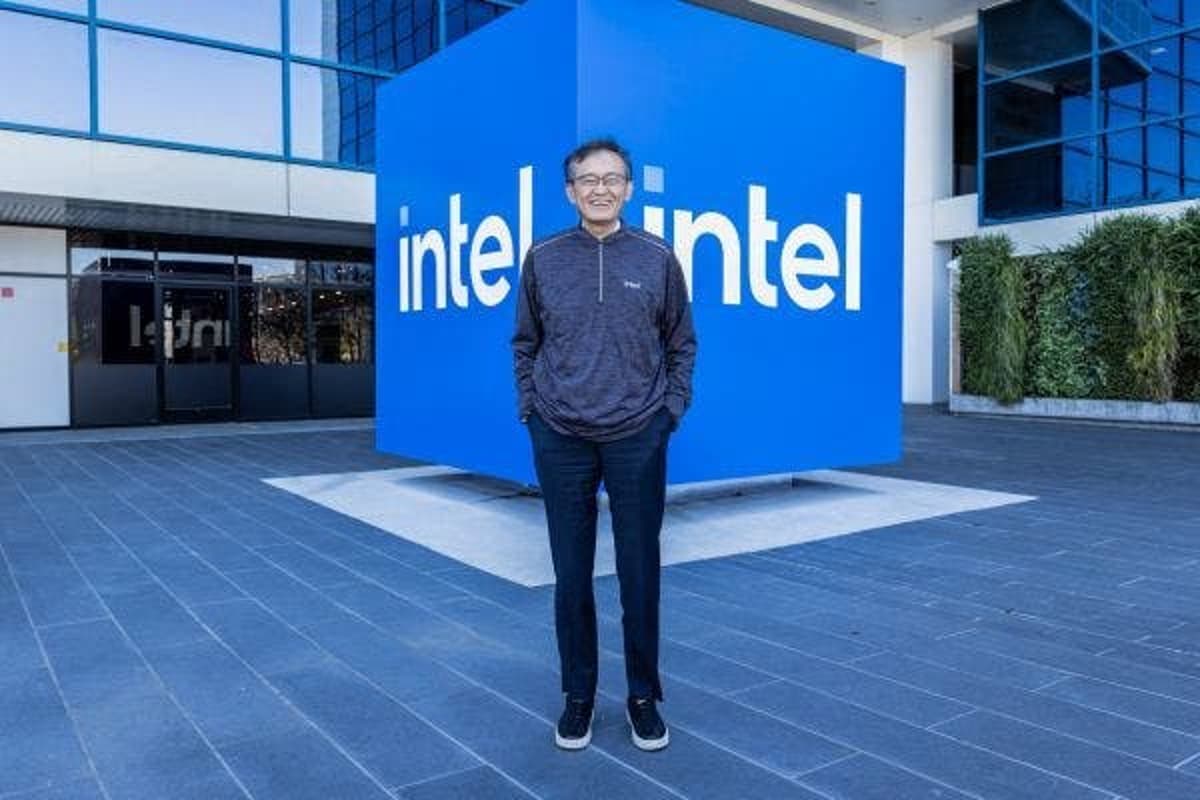
Intel CEO Lip-Bu Tan: ‘This Is A Fundamentally Different Company Today’
Companies Mentioned
Why It Matters
The turnaround signals Intel’s re‑emergence as a key AI‑chip supplier and revives confidence in its IDM 2.0 strategy, reshaping competitive dynamics in the semiconductor and data‑center markets.
Key Takeaways
- •Q1 revenue $13.6B, up 7% YoY, beating estimates
- •Data‑center sales rose 22% on AI demand surge
- •Workforce cut 15% and managers reduced 50% under Tan
- •Intel shares surged over 19% in after‑hours trading
- •Foundry backlog growing; first big customers expected 2026‑27
Pulse Analysis
Intel posted a strong first‑quarter performance, reporting $13.6 billion in revenue, a 7 percent year‑over‑year increase that topped Wall Street forecasts. The surge was powered primarily by a 22 percent jump in its data‑center segment as AI‑driven workloads accelerate demand for Xeon processors. The earnings beat sent the stock up more than 19 percent in after‑hours trading, signaling renewed investor confidence after a year of survival‑focused headlines. Analysts see the results as a first tangible sign that the company’s AI‑centric roadmap is beginning to translate into top‑line growth.
Since assuming the helm in March 2025, CEO Lip‑Bu Tan has reshaped Intel’s cost structure and talent pool. A 15 percent workforce reduction paired with a 50 percent cut in managerial layers trimmed overhead while opening senior roles to external AI and data‑center experts. The move dovetails with Pat Gelsinger’s “IDM 2.0” vision of expanding contract‑chip manufacturing for third‑party designs, a strategy reinforced by a recent U.S. government conversion of federal grants into roughly a 10 percent equity stake that bolstered the balance sheet. The leaner organization is now focused on engineering execution and rapid capacity expansion.
Looking ahead, Intel is betting on its foundry business to capture a slice of the booming custom‑chip market. Backlog for the upcoming Intel 18A‑P and Intel 14A nodes is growing, and the company expects its first major external design wins in the second half of 2026, with momentum extending into 2027. Meanwhile, the Intel 4 and Intel 3 process nodes are delivering yields ahead of internal targets, supporting the ramp‑up of AI‑optimized Xeon and Core Ultra processors. However, supply‑chain volatility, geopolitical uncertainty, and fierce competition from TSMC and Samsung mean execution risk remains high.
Intel CEO Lip-Bu Tan: ‘This Is A Fundamentally Different Company Today’
Comments
Want to join the conversation?
Loading comments...