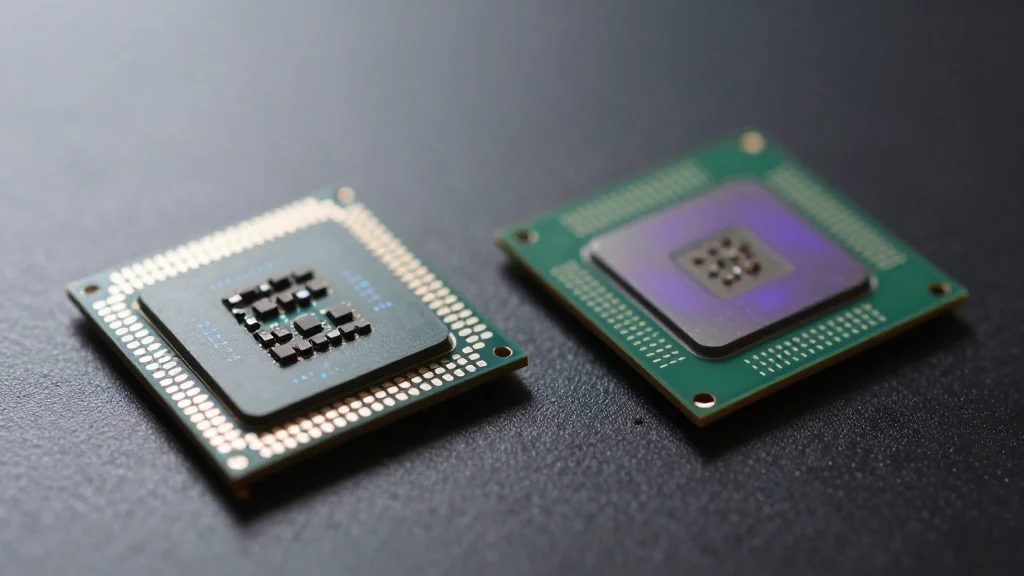
Intel CPUs with Nvidia RTX Integrated Graphics Are Targeting an Early 2028 Release
Companies Mentioned

Why It Matters
The partnership could intensify competition in the high‑end laptop and mobile gaming segment, forcing AMD to defend its market share while giving Intel a stronger graphics offering. It also signals a broader shift toward heterogeneous chiplet designs that blend CPU and GPU capabilities for AI and gaming workloads.
Key Takeaways
- •Intel plans x86 CPUs with Nvidia RTX graphics for early 2028.
- •Chips will use TSMC N3P node and LPDDR6 memory support.
- •Target market: high‑end laptop APUs competing against AMD’s Strix Halo.
- •Integration relies on Nvidia Rubin GPU chiplets via high‑bandwidth interconnect.
- •Could reshape mobile gaming and AI workloads, challenging AMD’s dominance.
Pulse Analysis
The Intel‑Nvidia alliance reflects a growing industry trend toward heterogeneous integration, where CPU and GPU functions are packaged as a single system‑on‑chip. By leveraging Nvidia’s Rubin GPU chiplets and Intel’s Titan Lake cores, the duo aims to deliver a unified architecture that reduces latency and improves power efficiency. This approach mirrors similar strategies at rivals, but the combination of Intel’s process expertise with Nvidia’s graphics leadership could set a new benchmark for performance‑centric laptops and portable devices.
Technically, the upcoming chips will be manufactured on TSMC’s N3P node, a cutting‑edge 3‑nanometer process that promises higher transistor density and lower power draw. Coupled with LPDDR6 memory, the platform is positioned to handle demanding gaming graphics and AI inference workloads simultaneously. By targeting AMD’s Strix Halo APUs, Intel and Nvidia are directly challenging the current market leader in the high‑end mobile segment, potentially reshaping pricing dynamics and prompting faster innovation cycles across the ecosystem.
Beyond raw performance, the collaboration may have ripple effects across the broader semiconductor supply chain. Intel’s pursuit of the 18A node for its own Arc GPUs and Apple’s reported negotiations to use the same process underscore a shift toward diversified fab sourcing amid geopolitical pressures. If the chips meet yield and cost expectations, they could accelerate the adoption of chiplet‑based designs in consumer devices, expand Intel’s graphics portfolio, and give Nvidia a foothold in the x86 market, thereby intensifying competition across gaming, AI, and mobile computing sectors.
Intel CPUs with Nvidia RTX integrated graphics are targeting an early 2028 release
Comments
Want to join the conversation?
Loading comments...