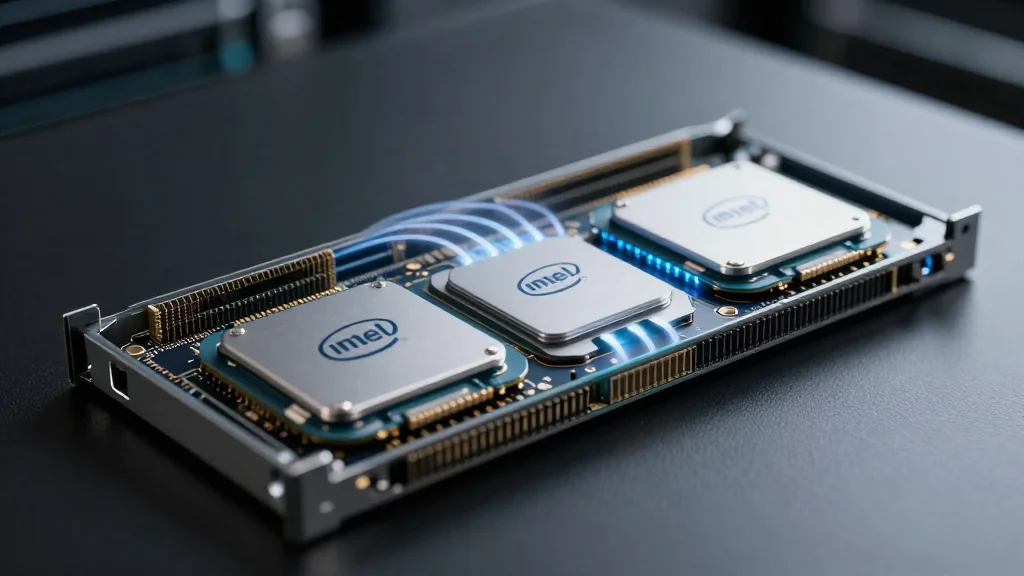
Intel-Google Alliance Signals CPU Resurgence in AI Infrastructure Era
Companies Mentioned

Why It Matters
By integrating merchant CPUs with purpose‑built IPUs, Intel and Google aim to improve efficiency, lower total cost of ownership, and keep x86 relevant in hyperscale AI deployments. The partnership reshapes the competitive dynamics of AI hardware, challenging GPU‑only and Arm‑centric strategies.
Key Takeaways
- •Intel Xeon CPUs power Google Cloud inference and orchestration workloads
- •Custom IPUs handle networking, storage, and security, freeing CPU cycles
- •Partnership counters GPU‑centric AI narrative with balanced heterogeneous systems
- •Arm’s agentic AI CPU sparks competition, but x86 retains continuity advantage
- •Google’s Xeon usage signals merchant silicon relevance in hyperscale AI
Pulse Analysis
The AI hardware landscape is moving beyond pure model training, where GPUs dominate, toward latency‑critical inference and complex orchestration. Those stages demand robust general‑purpose processing for data preparation, scheduling, and system control—tasks where traditional CPUs excel. As AI applications become more stateful and integrated, a single‑type accelerator architecture strains efficiency and predictability, prompting vendors to revisit balanced designs that combine CPUs with specialized offload engines.
Intel’s multi‑year alliance with Google directly addresses that need. By pairing Xeon Scalable processors with custom‑designed infrastructure processing units, the duo promises to shift networking, storage, and security workloads away from the CPU core. The result is higher utilization of Xeon cycles for actual AI model execution, reduced latency, and a clearer path to lower total cost of ownership for cloud providers. Google already runs Xeon 5 and Xeon 6 chips in its C4 and N4 instances, and the new IPUs will deepen that integration, offering a programmable ASIC layer that can evolve alongside emerging AI workloads.
The partnership also intensifies competition with Arm, which recently unveiled a purpose‑built CPU targeting agentic AI and claims double‑rack performance over x86. While Arm’s approach showcases the appeal of clean‑sheet designs, Intel’s strategy leans on continuity, leveraging existing software ecosystems and the massive installed base of Xeon servers. For hyperscalers, the choice hinges on balancing performance gains against migration risk. Intel’s move signals that x86 will remain a cornerstone of AI infrastructure, especially for enterprises that prioritize stability and incremental innovation over wholesale architectural shifts.
Intel-Google Alliance Signals CPU Resurgence in AI Infrastructure Era
Comments
Want to join the conversation?
Loading comments...