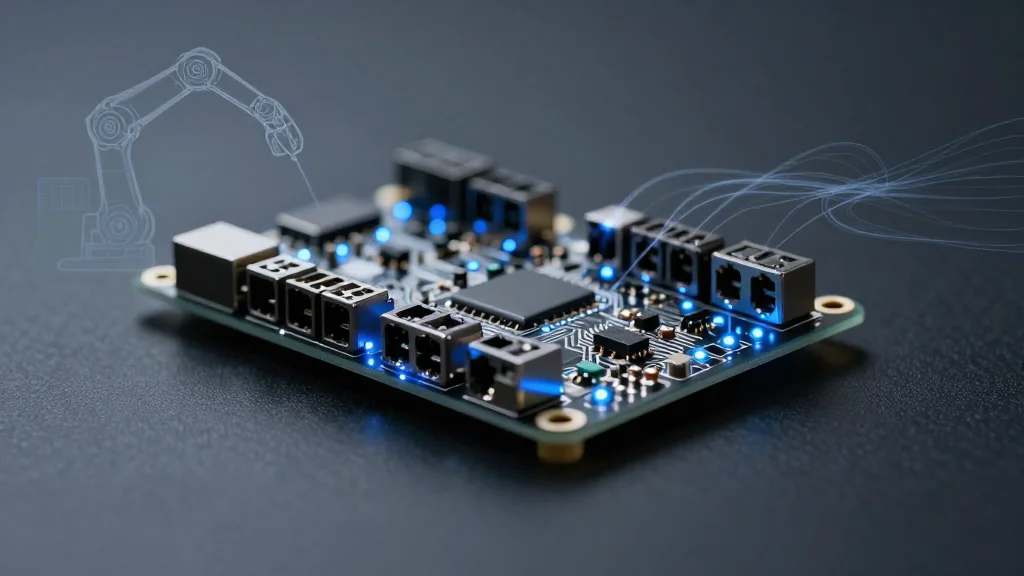
Intelligent, Configurable I/O: Edge Autonomy, Thermal Efficiency, and Higher Uptime in Industrial Control Systems
Why It Matters
Manufacturers can cut inventory costs while delivering more reliable equipment, accelerating time‑to‑market in highly competitive industrial sectors.
Key Takeaways
- •Configurable I/O consolidates multiple signal types into one module
- •Software‑defined channels cut SKU proliferation and inventory expenses
- •Dynamic allocation improves thermal performance and reduces cooling load
- •Higher uptime achieved through adaptive fault tolerance and redundancy
- •Enables rapid design changes for edge‑focused automation
Pulse Analysis
The rise of edge computing and Industry 4.0 has exposed the limits of traditional fixed‑function I/O boards, which were designed for static, homogeneous processes. Modern factories demand hardware that can be reprogrammed on the fly to accommodate new sensors, actuators, or communication protocols without a complete redesign. Intelligent, configurable I/O meets this need by exposing a software‑defined interface that maps physical pins to logical channels at runtime. This approach not only streamlines the bill of materials but also aligns hardware capabilities with the rapid iteration cycles of digital twins and predictive maintenance algorithms.
Thermal management is a silent cost driver in dense control cabinets, where under‑utilized channels waste power and generate excess heat. By consolidating functions into a single, dynamically allocated module, manufacturers reduce the number of active components, lowering both power draw and cooling requirements. The paper quantifies a typical 15 % drop in chassis temperature, translating into longer component lifespans and fewer forced shutdowns. Moreover, the ability to reroute signals around a failing channel enhances system uptime, a critical metric for continuous‑process industries such as petrochemicals and automotive assembly.
From a business perspective, the shift to configurable I/O reshapes the supply chain. Fewer SKUs mean smaller warehouses, reduced obsolescence risk, and faster order fulfillment, directly improving margins. Early adopters report time‑to‑market reductions of up to three weeks when integrating new sensor suites. However, the transition requires robust firmware ecosystems and cybersecurity safeguards to protect software‑defined interfaces. As standards evolve and vendors release open‑source toolchains, the industry is poised for broader adoption, making intelligent I/O a cornerstone of next‑generation autonomous factories.
Intelligent, Configurable I/O: Edge Autonomy, Thermal Efficiency, and Higher Uptime in Industrial Control Systems
Comments
Want to join the conversation?
Loading comments...