Low-Power, Flexible Radio-Frequency Transistors Break 100 GHz Barrier
Why It Matters
The breakthrough enables the next generation of 6G and wearable networks to be both ultra‑fast and energy‑efficient, removing a major barrier to flexible, high‑bandwidth electronics.
Key Takeaways
- •Flexible CNT transistors achieve 152 GHz current‑gain cutoff
- •Power consumption stays under 200 mW per millimeter
- •Electro‑thermal co‑design balances heat removal with RF performance
- •Devices retain speed while bent on polyamide substrate
- •Framework may enable full flexible RF systems for wearables
Pulse Analysis
The race toward sixth‑generation (6G) wireless hinges on components that can handle frequencies well beyond 100 GHz while staying power‑frugal. Traditional silicon platforms struggle to meet these demands on flexible substrates, prompting researchers to explore carbon nanotubes (CNTs) for their superior electrical conductivity and thermal conductivity. By marrying CNTs with a thin polyamide film, the new transistors inherit the mechanical pliability needed for wearables, yet retain the high‑frequency characteristics essential for ultra‑fast data links.
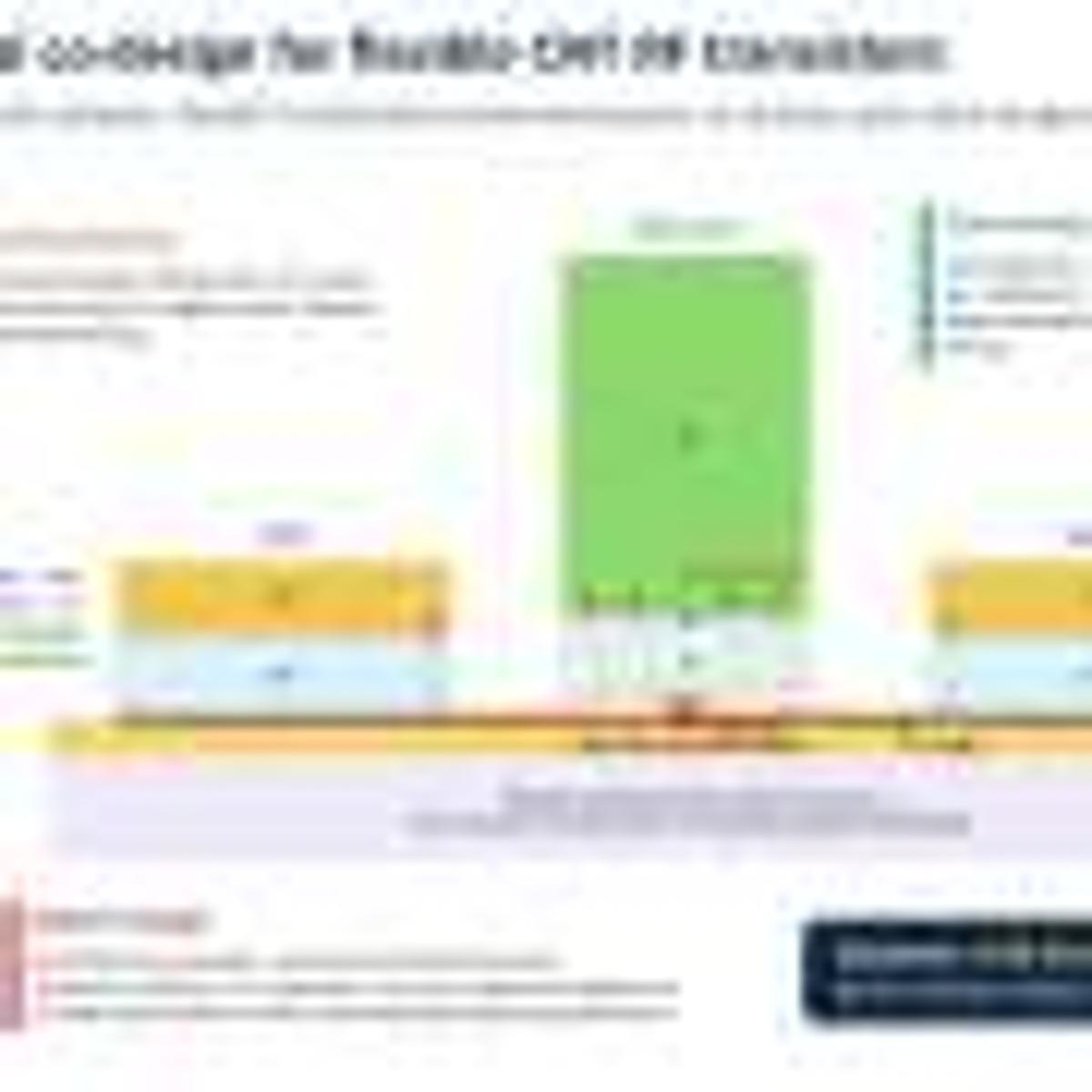
What sets this work apart is the electro‑thermal co‑design strategy, which deliberately engineers contacts and gate stacks to act as heat‑spreading pathways. This approach mitigates the self‑heating that typically plagues miniaturized, flexible devices, allowing the transistors to reach a peak current‑gain cutoff of 152 GHz and a power‑gain cutoff of 102 GHz with power draw under 200 mW mm⁻¹. Bending tests showed negligible performance loss, confirming that the thermal management scheme works even under mechanical strain. The results demonstrate that high‑speed RF operation and low power consumption are no longer mutually exclusive on flexible platforms.
Industry implications are immediate. Wearable health monitors, conformal antennas, and flexible IoT nodes can now envision integration of full RF front‑ends without bulky rigid silicon. As 6G standards evolve toward terahertz‑level spectra, the ability to fabricate low‑power, bendable transistors will accelerate the rollout of seamless, body‑centric connectivity. Future research will likely focus on scaling the design to larger circuits, improving substrate heat dissipation, and coupling these transistors with on‑chip antennas, paving the way for truly integrated flexible communication systems.
Low-power, flexible radio-frequency transistors break 100 GHz barrier
Comments
Want to join the conversation?
Loading comments...