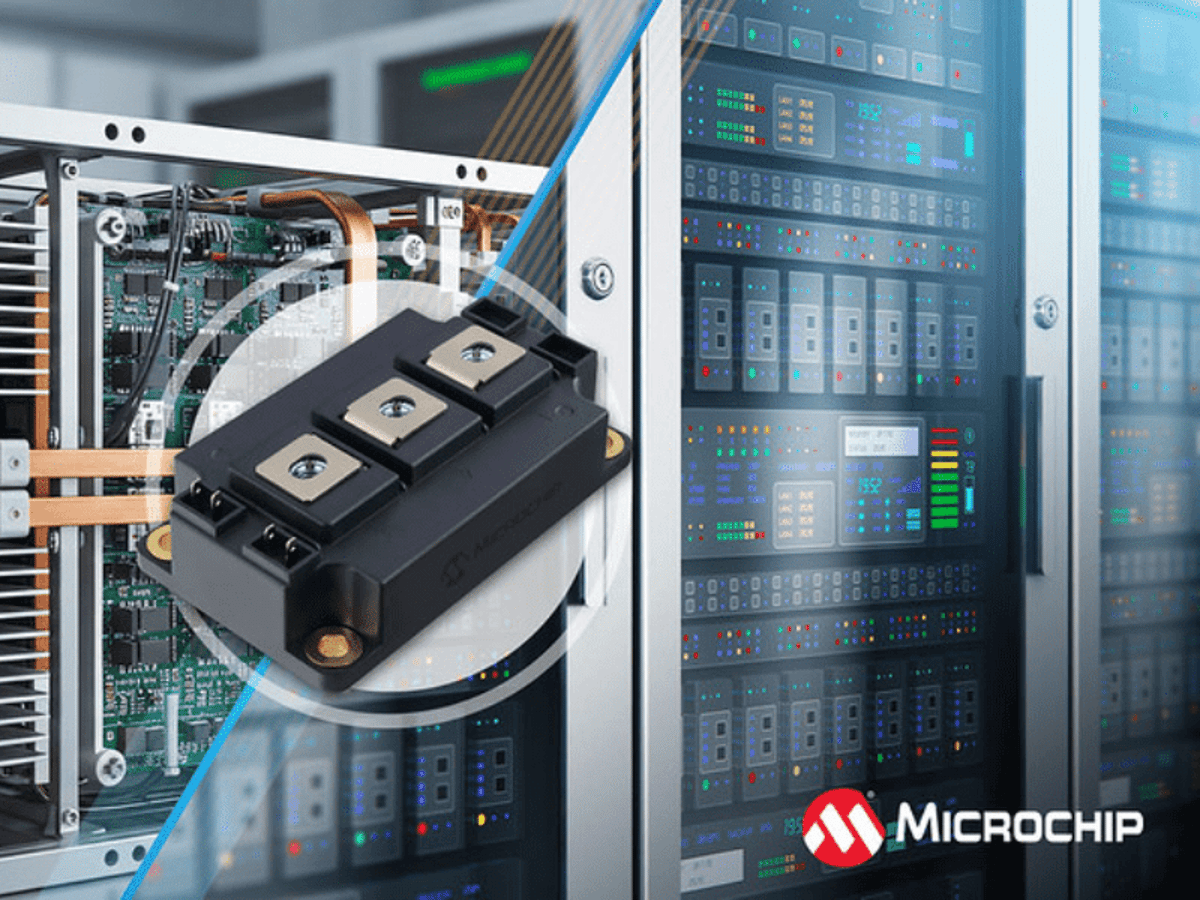
Microchip’s SiC Modules Support Solid-State Transformer Designs
Why It Matters
The modules enable more efficient, compact power conversion for AI data centres, reducing conversion stages and cooling demands while accelerating solid‑state transformer adoption across high‑voltage markets.
Key Takeaways
- •HV‑D3 modules deliver 3.3 kV SiC performance in 62 mm package
- •Supports 6 kV isolation, series connection to 13.8 kV/34.5 kV grids
- •Halves series devices needed versus lower‑voltage SiC alternatives
- •Targets 100‑300 A applications: AI racks, EV charging, rail power
- •Silicon nitride substrate boosts thermal conductivity and power density
Pulse Analysis
The surge in artificial‑intelligence workloads has turned power delivery into a bottleneck for modern data centres. Traditional low‑frequency transformers add weight, size and conversion losses as electricity moves from medium‑voltage utility feeders to the 400‑V racks that power GPUs. Engineers are therefore turning to solid‑state transformers, which can convert medium‑voltage AC directly to regulated DC with far higher efficiency and a smaller footprint. Silicon‑carbide (SiC) devices are at the heart of this shift, offering fast switching, low losses and the voltage tolerance required for grid‑level integration. Enterprises are also pressured by rising energy costs and sustainability targets, making high‑efficiency conversion increasingly critical.
Microchip’s newly announced HV‑D3 mSiC power modules crystallize that trend. Packaged in a standard 62 mm footprint, each module houses 3.3 kV SiC MOSFETs and optional anti‑parallel Schottky diodes, delivering 100‑300 A and supporting up to 6 kV isolation. The silicon‑nitride substrate improves thermal conductivity, allowing higher power density without aggressive cooling. Crucially, the devices can be series‑connected to 13.8 kV or 34.5 kV distribution networks, cutting the number of series devices roughly in half compared with lower‑voltage SiC solutions. Both half‑bridge and common‑source versions are offered, with optional anti‑parallel diodes for bidirectional flow.
The availability of a compact, high‑voltage SiC building block opens doors beyond AI racks. Megawatt‑scale electric‑vehicle fast chargers, rail auxiliary supplies, medium‑voltage motor drives and defence power systems can all benefit from the same efficiency gains and reduced component count. As utilities and OEMs seek to modernise grid‑edge infrastructure, the HV‑D3’s blend of isolation, current capability and thermal performance positions it as a catalyst for broader solid‑state transformer adoption, accelerating the transition to cleaner, more resilient power architectures. Analysts expect the solid‑state transformer market to grow at a CAGR above 12% through 2030, driven by such component breakthroughs.
Microchip’s SiC modules support solid-state transformer designs
Comments
Want to join the conversation?
Loading comments...