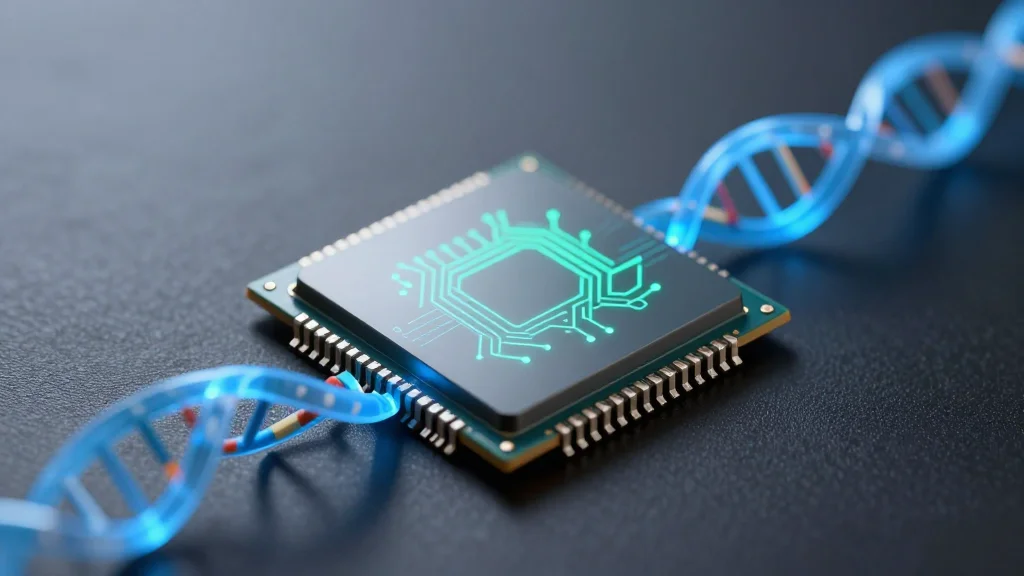
MZT Joins JST’s Next-Gen Edge AI Semiconductor R&D Program
Why It Matters
The partnership fast‑tracks the commercialization of AI‑optimized genomics chips, potentially lowering sequencing costs and accelerating drug development. It also underscores Japan’s strategic push to turn edge‑AI semiconductor research into global biotech hardware leadership.
Key Takeaways
- •MZT designated as social implementation partner in JST’s AI semiconductor program
- •RASEN ASIC will embed AI from RIKEN and Tohoku University
- •Goal: commercial genome‑analysis chips ready for market by 2029
- •Initiative could cut genomics processing time and costs dramatically
Pulse Analysis
Japan’s national push to fuse edge‑AI chips with scientific workloads gained a new industrial champion when Mitate Zepto Technica (MZT) entered the JST‑led Next‑Generation Edge AI Semiconductor R&D Program. The initiative, backed by the Japan Science and Technology Agency, seeks to create a new class of low‑power, high‑throughput processors that can run sophisticated AI models at the edge. By focusing on genome analysis—a data‑intensive domain—the program aims to demonstrate how next‑gen semiconductors can accelerate scientific discovery while keeping energy footprints modest.
MZT’s role centers on its proprietary RASEN accelerator, a purpose‑built ASIC designed to speed up DNA sequencing and variant calling. Leveraging AI algorithms from RIKEN and Tohoku University, RASEN will embed deep‑learning inference directly into silicon, eliminating the need for separate GPU clusters. This integration promises orders‑of‑magnitude reductions in latency and cost per sample, making large‑scale genomics projects more affordable for hospitals, research institutes, and biotech firms. The company’s roadmap targets a commercial launch by 2029, positioning RASEN as one of the first edge‑AI chips ready for widespread deployment in the life‑science sector.
The broader market implications are significant. Faster, cheaper genome analysis can accelerate drug target identification, personalize therapies, and expand population‑scale screening programs. Moreover, Japan’s emphasis on turning academic AI breakthroughs into marketable hardware could reshape the global semiconductor landscape, challenging the dominance of traditional fabless players. MZT’s partnership signals confidence that specialized AI chips, rather than generic processors, will drive the next wave of biotech innovation, offering investors and industry stakeholders a clear signal of where future growth will materialize.
MZT Joins JST’s Next-gen Edge AI Semiconductor R&D Program
Comments
Want to join the conversation?
Loading comments...