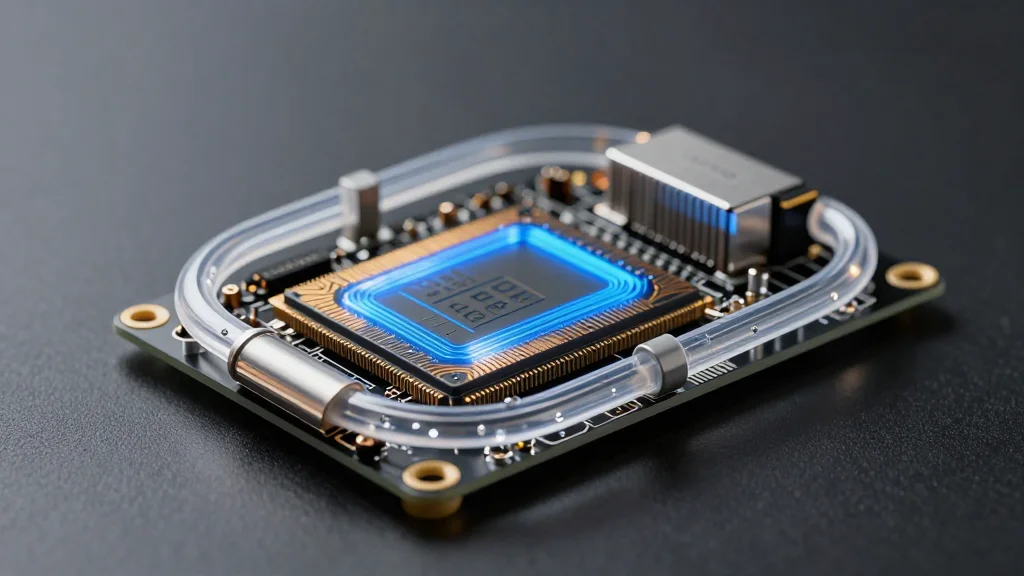
New Power, Memory, Interconnect, and Thermal Architectures for AI Infrastructure at Scale
Companies Mentioned
Why It Matters
Inference dominates future AI spend, so overcoming these infrastructure constraints is critical for cost‑effective, high‑throughput services. Solving the four walls will determine the scalability and profitability of AI data centers and downstream edge deployments.
Key Takeaways
- •Inference projected to be 85% of enterprise AI workloads by 2029.
- •Power wall drives 800 V distribution and on‑die voltage regulation.
- •SRAM‑centric designs cut memory latency, boosting inference throughput.
- •Liquid and MEMS cooling tackle 100 kW‑1 MW rack heat densities.
- •Optical interconnects replace copper, cutting AI fabric power by 40%.
Pulse Analysis
The transition from model training to real‑time inference reshapes data‑center priorities. While training thrives on raw compute, inference is constrained by how quickly data can move, how efficiently power is delivered, and how heat is expelled. Analysts forecast that inference will dominate AI spend, prompting operators to scrutinize every watt and byte. This new focus has surfaced four interrelated "walls"—power, memory, thermal and copper—that together cap rack‑scale density and raise total‑cost‑of‑ownership concerns.
Addressing each wall requires a holistic, system‑level strategy. At the power tier, hyperscalers are adopting 800 V high‑voltage distribution and embedding voltage regulation directly in silicon, slashing conversion losses and enabling rapid response to bursty inference queries. Memory bottlenecks are being mitigated by SRAM‑centric architectures that keep weights and activations on‑chip, dramatically reducing latency and bandwidth pressure. Thermal challenges are met with liquid‑cooling loops and emerging MEMS‑based micro‑coolers that sustain 100 kW‑1 MW per‑rack heat fluxes without excessive fan power. Finally, optical interconnects replace copper, delivering higher bandwidth over longer distances while cutting link power by roughly 40%, as demonstrated by Google’s Jupiter fabric.
The convergence of these innovations promises a new generation of AI infrastructure that is both scalable and sustainable. By co‑designing power delivery, memory hierarchy, cooling solutions and optical fabrics, vendors can lower TCO, improve latency, and unlock higher inference throughput. This integrated approach also paves the way for edge deployments, where power, space and cooling are even tighter. Companies that master the four‑wall co‑design will shape the economics of AI services and set the foundation for the next wave of intelligent applications.
New Power, Memory, Interconnect, and Thermal Architectures for AI Infrastructure at Scale
Comments
Want to join the conversation?
Loading comments...