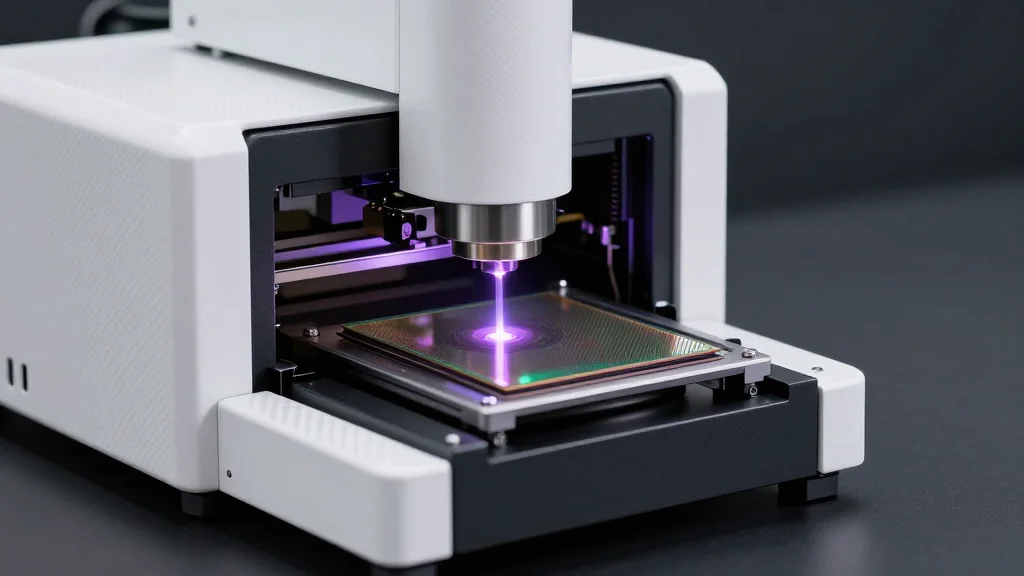
Nikon Leveraging ArF Scanner Price to Challenge ASML
Companies Mentioned
Why It Matters
By offering cheaper, compatible ArF scanners, Nikon could give fabs a viable alternative to ASML, potentially lowering total ownership costs and increasing supply‑chain resilience in the mature DUV segment that remains critical for advanced nodes.
Key Takeaways
- •Nikon plans to cut ArF scanner prices by in‑house part production.
- •New Nikon ArF immersion platform targeting launch in 2028.
- •Compatibility with ASML masks aims to reduce fab integration costs.
- •Nikon's current scanners already cost double‑digit percent less than ASML.
- •Success hinges on yield, integration complexity, and market share recovery.
Pulse Analysis
The semiconductor lithography market has been dominated by Dutch firm ASML, whose extreme ultraviolet (EUV) machines command the high‑end segment while its deep‑ultraviolet (DUV) ArF immersion tools still service the majority of patterning steps in 3‑nm and older nodes. Despite EUV’s hype, mature DUV remains indispensable because each advanced chip requires dozens of ArF exposures. This reliance creates a steady demand for cost‑effective scanners, yet the supply chain is tightly concentrated, with ASML and a few Japanese rivals controlling the few thousand units in operation worldwide.
Nikon’s latest maneuver is to undercut that concentration by internalizing the production of critical scanner components, a move that could shave several million dollars off the bill‑of‑materials. The company has already positioned its existing NSR‑S625E at a double‑digit percentage discount to comparable ASML models, and it is courting major U.S. and Asian fabs for near‑term orders. A 2028‑targeted ArF immersion platform will feature a new projection lens and wafer stage engineered for mask‑mirroring compatibility with ASML, aiming to eliminate the costly “dual‑scanner” workflow that many fabs currently endure.
If Nikon can deliver comparable yield and integration simplicity, the competitive pressure could force ASML to moderate its pricing and improve service terms, benefitting chipmakers that are currently squeezed by long lead times and high equipment costs. However, the upside is tempered by entrenched relationships—TSMC, Intel and Samsung have built deep expertise around ASML’s ecosystem—and by the risk that lower acquisition costs are offset by higher integration or yield penalties. Should Nikon’s 2028 platform succeed, it would re‑introduce genuine second‑source dynamics into lithography, a development that could reshape fab budgeting and supply‑chain risk management for the next decade.
Nikon Leveraging ArF Scanner Price to Challenge ASML
Comments
Want to join the conversation?
Loading comments...