Companies Mentioned
Why It Matters
By bringing petaflop‑scale AI to consumer hardware, NVIDIA enables on‑device intelligence that cuts latency, lowers cloud costs, and expands AI‑driven experiences for creators, developers, and gamers.
Key Takeaways
- •RTX Spark delivers up to 1 petaflop AI compute on PC.
- •Combines 128 GB unified memory with 6,144 CUDA cores.
- •Supports 120‑billion‑parameter models and 12K video editing.
- •Partners MediaTek and Microsoft for efficient CPU and secure OS.
- •Laptops and desktops launching fall 2024 from major OEMs.
Pulse Analysis
The AI landscape is rapidly moving from cloud‑centric models to edge‑powered workloads, driven by privacy concerns, latency demands, and bandwidth costs. By embedding high‑performance inference engines directly into consumer PCs, developers can deliver personalized assistants, real‑time content creation tools, and immersive gaming experiences without relying on distant data centers. NVIDIA’s introduction of the RTX Spark superchip marks a decisive step in this transition, offering a turnkey solution that merges AI acceleration with its long‑standing graphics pedigree.
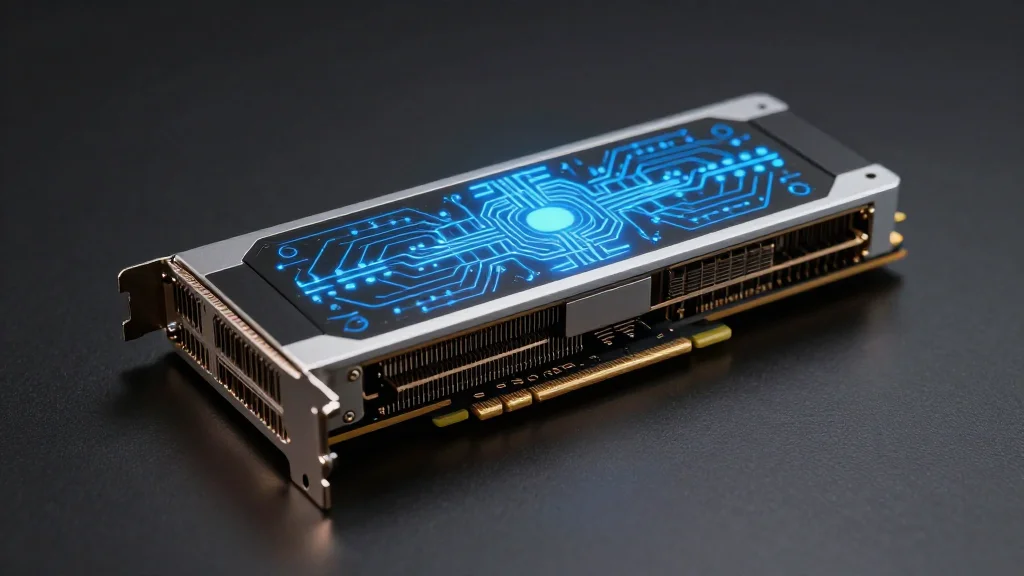
RTX Spark packs a Blackwell‑generation RTX GPU with 6,144 CUDA cores, fifth‑generation Tensor Cores supporting FP4 precision, and a massive 128 GB unified memory pool. The GPU links via NVLink‑C2 to a 20‑core Grace CPU, a custom design co‑engineered with MediaTek that balances power efficiency and connectivity. Integrated with Microsoft’s secure Windows platform and the NVIDIA OpenShell runtime, the chip can run 120‑billion‑parameter language models, render complex 3D scenes, and accelerate 12K video editing, while still delivering ray tracing and DLSS for gamers.
The RTX Spark platform is slated for laptop and compact‑desktop releases this fall, with major OEMs already lining up production. By democratizing petaflop‑scale AI compute, NVIDIA challenges rivals such as AMD and Intel to accelerate their own on‑device solutions, potentially reshaping the PC market’s value proposition. Enterprises and creators stand to benefit from reduced cloud spend and tighter data control, while gamers gain next‑generation visual fidelity. As more software ecosystems adopt on‑device agents, the RTX Spark could become a cornerstone of the emerging personal AI era. Early benchmarks suggest performance gains of up to three times over previous‑generation GPUs.
NVIDIA chip powers local AI workloads
Comments
Want to join the conversation?
Loading comments...