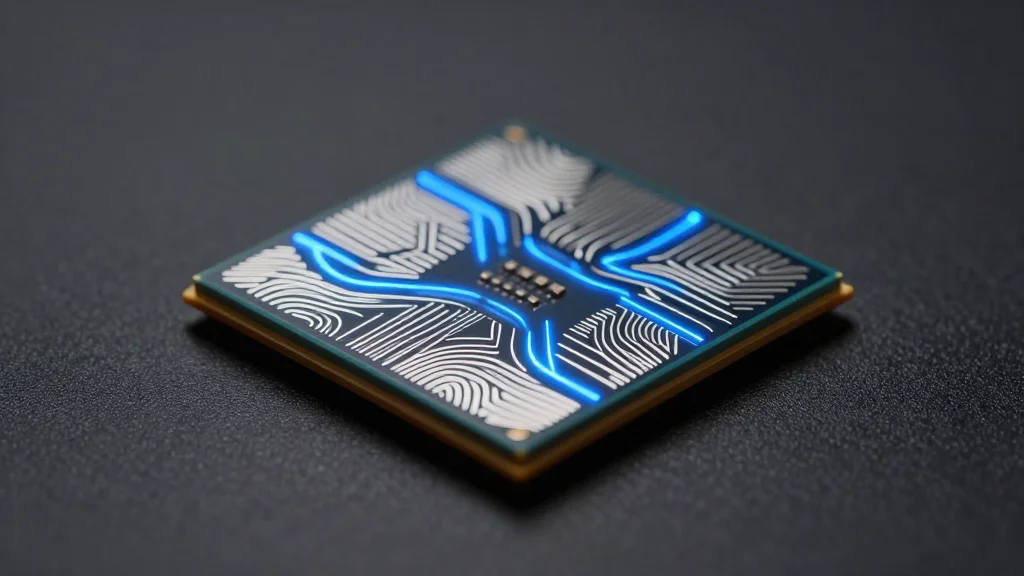
Photonics Emerges as Next Scaling Frontier for AI Infra, Distributed Computing
Companies Mentioned
Why It Matters
Optical scaling directly tackles the bandwidth and energy bottlenecks that constrain large‑scale AI training and inference, lowering operating costs and enabling new system architectures. The shift also strengthens data‑center security and paves the way for disaggregated compute‑memory fabrics.
Key Takeaways
- •Optical links cut latency and power for AI accelerator clusters.
- •CXL combined with photonics enables disaggregated, coherent memory across racks.
- •Photonic processors accelerate linear algebra, reducing compute energy consumption.
- •Light immunity improves security in EM‑noisy or defense environments.
- •Industry moving from copper to pluggable and co‑packaged optics for scalability.
Pulse Analysis
The rise of generative AI has exposed a fundamental mismatch between the exponential growth of model parameters and the physical limits of electrical interconnects. While GPUs and custom accelerators continue to deliver raw compute, their performance is throttled when data must travel across boards or racks using copper traces. Optical interconnects, with their orders‑of‑magnitude higher bandwidth and lower energy per bit, are emerging as the missing link that keeps accelerators fully utilized, especially in large‑scale training clusters where every idle chip translates to wasted capital.
Memory is becoming the new performance frontier. Modern inference workloads rely on massive key‑value caches and long‑context windows that outstrip the capacity of on‑chip high‑bandwidth memory. By leveraging CXL’s low‑latency, coherent protocol together with photonic links, data centers can create disaggregated memory pools that span multiple servers without incurring the latency penalties of traditional storage hierarchies. This architecture not only preserves the speed needed for real‑time AI services but also reduces the overall silicon cost per terabyte of usable memory, improving the tokens‑per‑watt and tokens‑per‑dollar metrics that drive profitability.
Beyond speed and efficiency, photonics offers security and flexibility advantages. Light‑based signals are immune to electromagnetic interference and are harder to tap than copper, a benefit for defense, medical, and high‑security environments. The industry is responding with a wave of pluggable optics, co‑packaged modules, and even photonic processors that accelerate linear algebra kernels. As these technologies mature, data‑center topologies will be defined by workload requirements rather than the constraints of copper wiring, positioning optics as a foundational scaling layer for the next generation of AI and high‑performance computing.
Photonics Emerges as Next Scaling Frontier for AI Infra, Distributed Computing
Comments
Want to join the conversation?
Loading comments...