Polyn Achieves Successful Tapeout of Automotive Chip
Companies Mentioned
Why It Matters
Real‑time friction estimation from the tire provides predictive grip data that traditional TPMS cannot deliver, enhancing safety and control for advanced driver‑assistance and autonomous systems. Polyn’s solution offers a low‑power, on‑tire implementation that could become a new standard for vehicle manufacturers and Tier‑1 suppliers.
Key Takeaways
- •Polyn taped out its first analog neuromorphic automotive chip
- •Chip estimates tire-road friction in real time using vibration data
- •Low-power, asynchronous design enables placement inside the tire
- •Collaborations with Tier 1 suppliers target ADAS and autonomous vehicles
- •Validation shows accurate friction estimates across wet, dry, and aquaplaning surfaces
Pulse Analysis
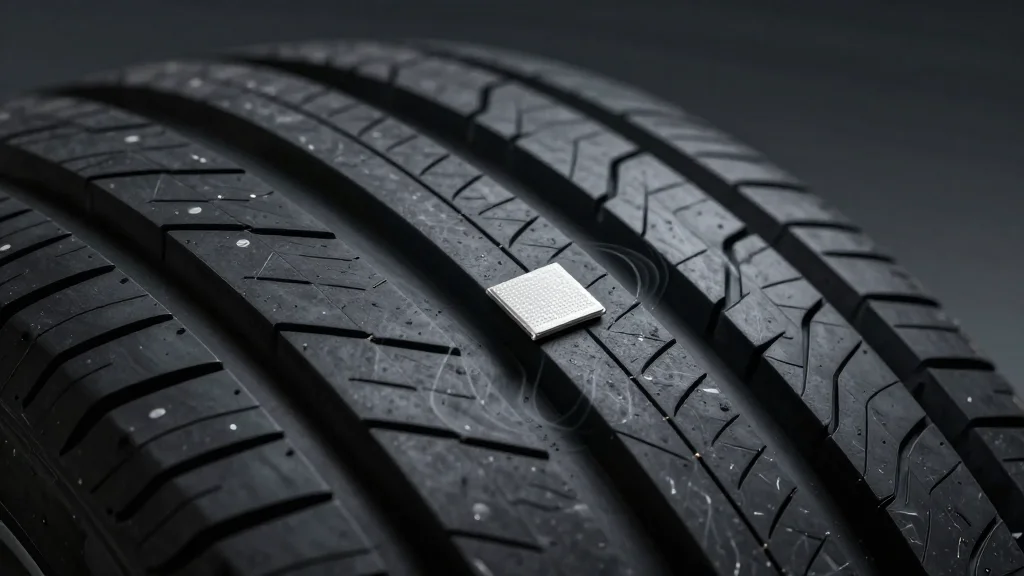
The automotive industry is rapidly moving toward sensor‑centric architectures that can deliver millisecond‑level insights for advanced driver‑assistance systems (ADAS) and fully autonomous vehicles. Traditional tire‑pressure monitoring systems (TPMS) provide only pressure data, leaving a gap in real‑time grip estimation. Polyn Technology’s recent tape‑out of the VibroSense chip bridges that gap by embedding an analog neuromorphic core directly in the tire, a first in practical road‑sensing hardware. By processing high‑frequency vibration signals on‑chip, the solution sidesteps the latency and bandwidth constraints of off‑board processing, positioning Polyn at the forefront of physics‑aware automotive sensing.
The core of VibroSense relies on Polyn’s NASP (Neuromorphic Analog Signal Processing) technology, which implements thousands of analog neurons and weight matrices in an asynchronous fashion. This architecture delivers ultra‑low power consumption—orders of magnitude below comparable digital AI accelerators—while maintaining inference latency measured in microseconds. Such efficiency makes it feasible to power the chip from the tire’s limited energy budget, eliminating the need for additional wiring or external compute resources. Moreover, the neural network compiler and custom EDA flow automate the translation of friction‑estimation models into silicon, accelerating product cycles.
From a market perspective, the ability to deliver reliable peak friction coefficient (PFC) estimates in wet, icy, or uneven conditions opens new safety and performance use cases. Tier‑1 suppliers and OEMs are already exploring integration of VibroSense with existing TPMS SoCs, enabling predictive braking and traction‑control algorithms that react before a slip event occurs. As autonomous driving stacks demand higher fidelity sensor data, Polyn’s solution could become a standard component in next‑generation vehicle platforms, potentially reshaping how manufacturers approach tire‑road interaction modeling and regulatory compliance.
Polyn Achieves Successful Tapeout of Automotive Chip
Comments
Want to join the conversation?
Loading comments...