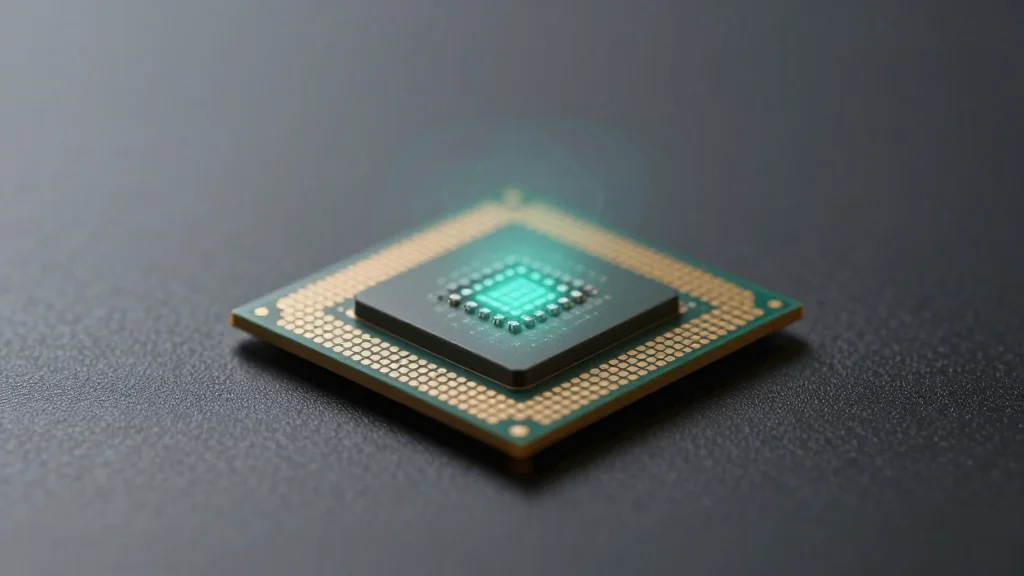
POLYN Technology Targets Sensor-Level AI Processing for Ultra-Low-Power Edge Intelligence
Companies Mentioned
Why It Matters
By embedding AI at the sensor, POLYN cuts latency, bandwidth, and power consumption, unlocking new use cases for privacy‑sensitive and battery‑constrained edge devices. This accelerates the shift toward pervasive, on‑device intelligence across the IoT ecosystem.
Key Takeaways
- •Chip consumes under 1 mW per inference
- •Supports 8‑bit neural networks on‑sensor
- •Integrates vision front‑end and on‑chip memory
- •Built on 28 nm FD‑SOI process
- •Secured design wins with two IoT manufacturers
Pulse Analysis
Edge AI is moving from the cloud to the sensor, and POLYN Technology’s latest processor exemplifies that transition. The new device delivers sub‑milliwatt power draw while running full 8‑bit neural networks, a combination that has previously required larger, power‑hungry modules. By leveraging a 28 nm fully‑depleted silicon‑on‑insulator (FD‑SOI) process, POLYN achieves high energy efficiency and robust analog performance, making it suitable for continuous operation in wearables, environmental monitors, and smart‑home appliances. The integrated vision front‑end eliminates the need for separate image signal processors, further shrinking bill of materials and simplifying system design.
The strategic impact of sensor‑level AI extends beyond power savings. Real‑time inference at the point of capture reduces data transmission, lowering network bandwidth and enhancing privacy by keeping raw sensor data on the device. For industries such as healthcare and security, where data sensitivity is paramount, this architecture offers a compelling compliance advantage. Moreover, the reduction in latency—processing occurs in microseconds rather than seconds—enables responsive interactions for augmented reality and autonomous robotics, opening new revenue streams for OEMs.
Market analysts predict that the ultra‑low‑power edge segment will grow at a CAGR of over 30% through 2030, driven by the proliferation of 5G and the explosion of IoT endpoints. POLYN’s early design wins position it to capture a meaningful share of this expanding market, especially as manufacturers seek turnkey solutions that combine AI compute, sensor integration, and minimal power draw. The company’s roadmap, which includes support for additional sensor modalities and on‑device learning, suggests it aims to become a foundational chip supplier for the next generation of intelligent edge devices.
POLYN Technology Targets Sensor-level AI Processing for Ultra-low-power Edge Intelligence
Comments
Want to join the conversation?
Loading comments...