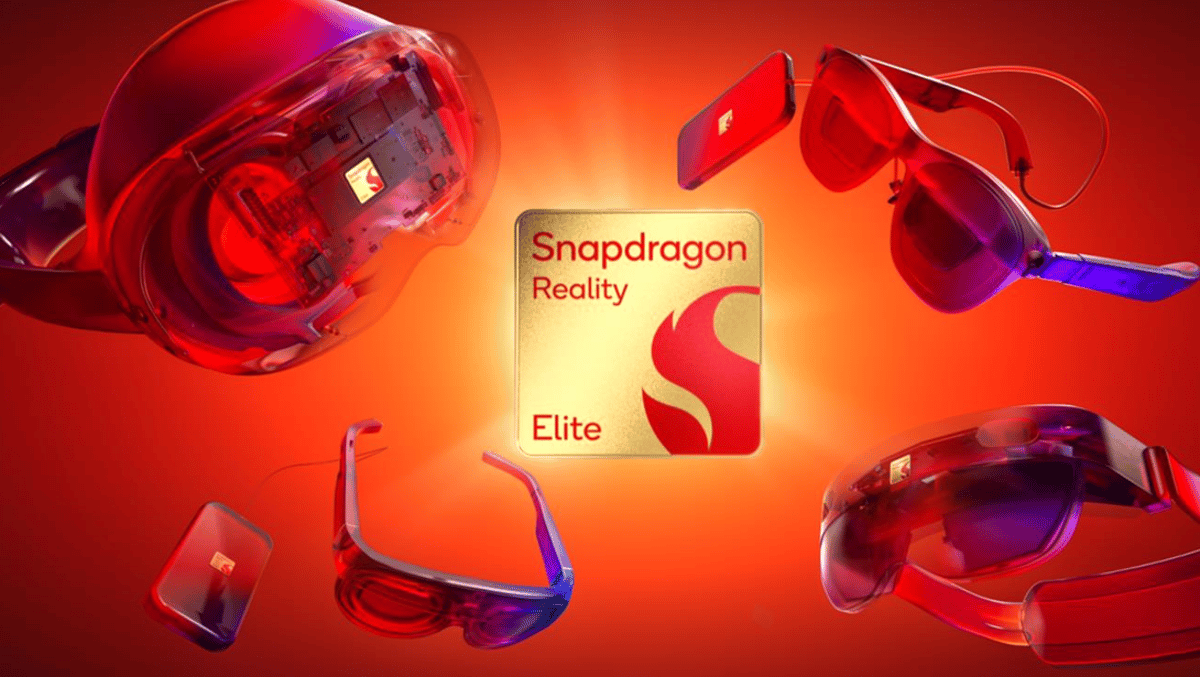
Qualcomm Takes Spatial Computing Into the AI Era with Snapdragon Reality Elite
Companies Mentioned
Why It Matters
Embedding high‑performance AI and superior efficiency into a compact chip lets mixed‑reality glasses run private AI tasks, speeding consumer adoption and reinforcing Qualcomm’s king‑maker role in the fast‑growing XR ecosystem.
Key Takeaways
- •Snapdragon Reality Elite offers up to 48 TOPS AI performance.
- •Chip delivers 60% GPU, 30% CPU, 160% NPU gains.
- •Improves battery life 20% and runs 12°C cooler.
- •Powers Xreal Project Aura and upcoming XR wearables.
- •Qualcomm launches Snapdragon START toolkit for rapid smart‑glass development.
Pulse Analysis
The extended‑reality market is reaching a tipping point, with more than 60 million XR devices already in consumers’ hands. Qualcomm’s decision to rebrand its XR2+ Gen 2 silicon as Snapdragon Reality Elite signals a strategic pivot toward on‑device artificial intelligence. By integrating a beefed‑up neural processing unit capable of 48 TOPS, the chip can run 3‑billion‑parameter language models locally, reducing latency and preserving user privacy—key concerns as smart glasses become everyday tools.
From a hardware perspective, Reality Elite delivers a generational leap: GPU throughput climbs 60%, CPU speed rises 30%, and the NPU’s compute power jumps 160%. Those gains translate into tangible user benefits, including up to 20% longer battery life and operating temperatures 12 °C lower than previous generations. The efficiency improvements are critical for wearables, where heat and power constraints dictate form factor, comfort, and device lifespan. Designers can now pack more sophisticated graphics and AI features into slimmer frames without sacrificing all‑day usability.
Qualcomm is backing the silicon with an ecosystem play. The company’s Snapdragon START program offers a turnkey design kit, echoing the reference‑design model that propelled Android smartphones. Early adopters like Xreal’s Project Aura, Play For Dream, and eyewear manufacturer Inspecs Group are already integrating the chip, promising a wave of AI‑enhanced glasses that can see, speak, and understand in real time. This coordinated push positions Qualcomm as the de‑facto supplier for the next generation of consumer and enterprise XR devices, potentially shaping market standards for years to come.
Qualcomm takes spatial computing into the AI era with Snapdragon Reality Elite
Comments
Want to join the conversation?
Loading comments...