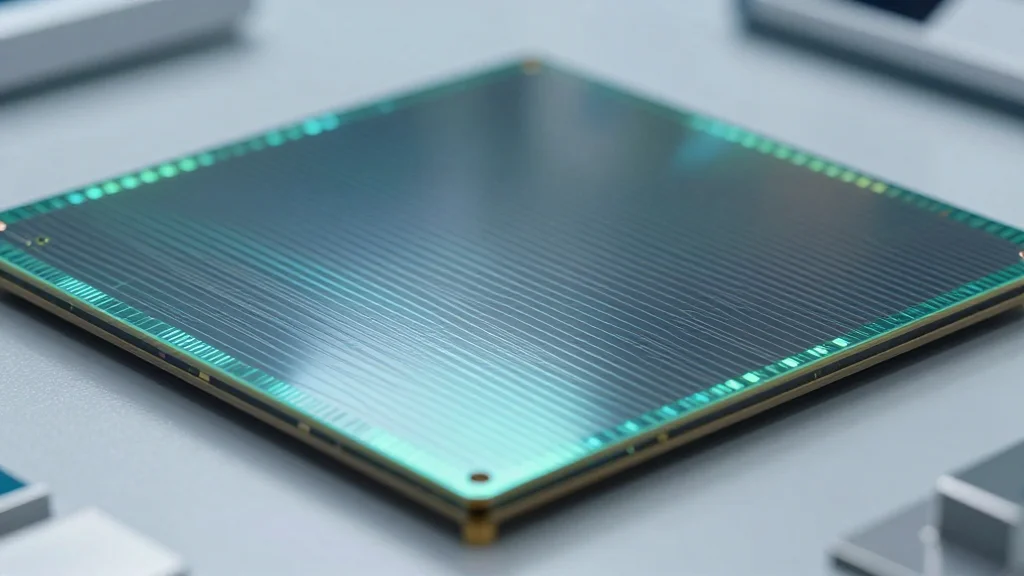
Quinas Advances ULTRARAM Development with Atomic-Scale Processing at KAUST Core Labs
Why It Matters
Atomic‑scale processing validates ULTRARAM’s performance claims and accelerates its path to market, giving the company a competitive edge in the fast‑growing non‑volatile memory sector.
Key Takeaways
- •Quinas uses ALE to refine quantum‑well structures for ULTRARAM.
- •Collaboration leverages KAUST Core Labs’ nanofabrication facilities.
- •Oxford Instruments supplies ALE tools enabling sub‑nanometre control.
- •ULTRARAM aims for DRAM‑speed with non‑volatile retention.
- •Milestone moves Quinas toward prototype and investor interest.
Pulse Analysis
The memory landscape is shifting as data centers and edge devices demand both speed and persistence. Traditional DRAM offers rapid access but loses data when power is cut, while NAND flash provides retention at the cost of latency. ULTRARAM promises to bridge this gap by delivering DRAM‑class access times with true non‑volatile storage, potentially slashing energy consumption and simplifying system architecture. This hybrid capability aligns with industry trends toward heterogeneous memory stacks and could reshape server and mobile designs if it scales.
Achieving ULTRARAM’s performance hinges on controlling quantum‑well heterostructures at the atomic level. Atomic‑layer etching, a low‑damage alternative to conventional plasma etch, removes material one atomic layer at a time, preserving interface integrity critical for III‑V semiconductor stacks. Oxford Instruments’ ALE platform, now operating within KAUST’s Core Labs, offers sub‑nanometre precision and reproducibility that were previously unattainable in a commercial setting. The partnership gives Quinas access to world‑class nanofabrication infrastructure, accelerating the transition from proof‑of‑concept to silicon‑level prototypes.
From a business perspective, the milestone signals to investors and foundries that Quinas is moving beyond academic research into viable product development. By embedding its R&D within Saudi Arabia’s burgeoning tech ecosystem, the company taps into regional funding, talent, and potential manufacturing pipelines. As memory manufacturers scramble to diversify beyond conventional flash, a proven ULTRARAM prototype could attract strategic partnerships, licensing deals, and early‑stage capital, positioning Quinas as a contender in the next generation of high‑performance, energy‑efficient memory solutions.
Quinas advances ULTRARAM development with atomic-scale processing at KAUST Core Labs
Comments
Want to join the conversation?
Loading comments...