Rethinking the Logic-Routing Tradeoff in FPGAs
Why It Matters
By reshaping the logic‑routing balance, Efinix offers a more power‑efficient, area‑compact FPGA solution that can accelerate edge‑AI devices and simplify system integration, challenging traditional FPGA and SoC offerings.
Key Takeaways
- •Titanium Edge uses XLR cells that switch between logic and routing
- •Claims up to 50% lower power and die area versus top FPGAs
- •Integrates up to eight 2.5 Gb/s MIPI lanes for edge‑vision sensors
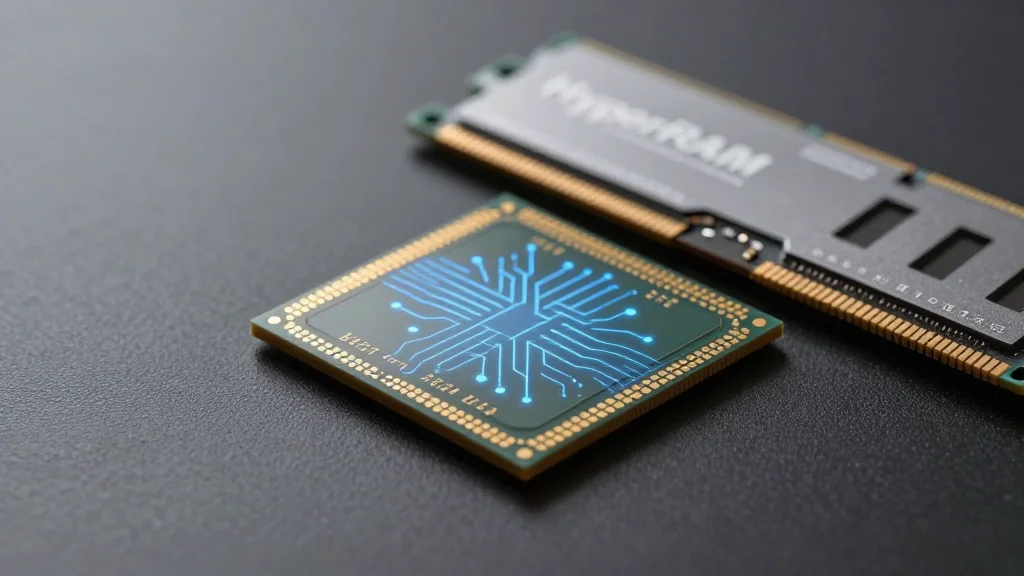
- •Co‑packs HyperRAM dies, enabling 3‑D memory stacking with minimal energy
Pulse Analysis
The surge in edge‑AI applications has intensified the need for programmable silicon that can deliver high compute density without draining limited power budgets. Traditional field‑programmable gate arrays (FPGAs) wrestle with a fixed logic‑to‑routing ratio, forcing designers to over‑provision either silicon area or interconnect resources. Efinix’s XLR (exchangeable logic and routing) cell breaks this paradigm by allowing software to allocate logic or routing resources on a per‑region basis, effectively tailoring the fabric to the workload’s topology. This dynamic rebalancing reduces unnecessary routing congestion and cuts static power, positioning the Titanium Edge as a leaner alternative to legacy FPGA architectures.
Beyond the core XLR innovation, the Titanium Edge family packs a suite of edge‑centric features. Integrated single‑event upset (SEU) mitigation and post‑quantum security blocks address reliability and emerging cryptographic demands in autonomous robots and industrial IoT nodes. High‑speed MIPI interfaces—up to eight lanes at 2.5 Gb/s—provide native connectivity for multi‑sensor vision systems, while the optional co‑packaged HyperRAM delivers SRAM‑like latency with DRAM capacity, enabling on‑chip storage of AI model weights and intermediate video frames. By stacking memory directly on the FPGA die, Efinix sidesteps the energy penalties that have limited 3‑D integration in competing products.
The strategic implications are notable. As system‑on‑chip (SoC) solutions dominate mainstream edge devices, designers increasingly turn to FPGAs for custom preprocessing, sensor fusion, or rapid algorithm iteration. Efinix’s flexible fabric and integrated memory reduce bill‑of‑materials and time‑to‑market, making it attractive for robotics, automotive, and defense sectors where latency and power are critical. With early silicon already shipping and a full lineup slated for release by late 2026, the Titanium Edge line could reshape the FPGA‑SoC value chain, prompting rivals to revisit their own logic‑routing tradeoffs and memory‑stacking strategies.
Rethinking the Logic-Routing Tradeoff in FPGAs
Comments
Want to join the conversation?
Loading comments...