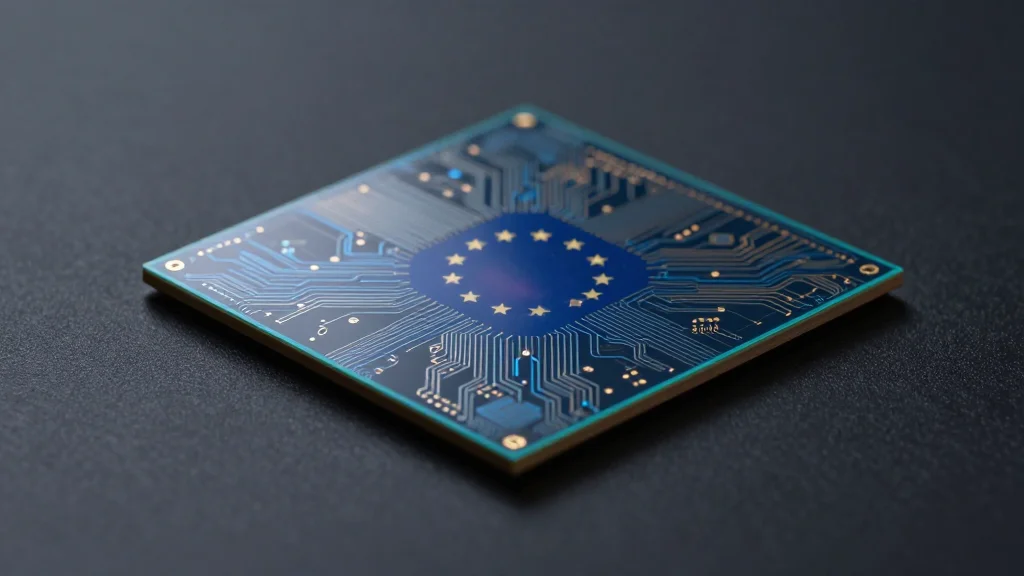
RISC-V Summit Europe 2026: Industry and Academia Unite in Bologna to Advance Open Hardware
Companies Mentioned

Why It Matters
The gathering signals Europe’s accelerating commitment to open‑source silicon, positioning RISC‑V as a competitive alternative to proprietary ISAs and accelerating innovation across AI, automotive, and security sectors.
Key Takeaways
- •RISC‑V Summit Europe 2026 runs June 8‑12 in Bologna.
- •University of Bologna leads EU RISC‑V research via PULP and TRISTAN.
- •New RVA23 silicon profile showcased across AI, automotive, space sessions.
- •Matrix extensions IME and VME near specification freeze, enabling unified AI compilers.
- •Qualcomm highlights layered isolation toolbox for microcontrollers to confidential computing.
Pulse Analysis
Europe’s open‑hardware momentum is crystallizing around the RISC‑V Summit in Bologna, a city whose academic heritage mirrors the collaborative ethos of the RISC‑V movement. The University of Bologna, a historic hub for research, anchors the event through its PULP platform and the EU‑funded TRISTAN project, which together aim to scale European chip design capabilities and reduce reliance on foreign IP. By aligning academia, manufacturers, and policy makers, the summit reinforces the continent’s strategic push toward sovereign semiconductor supply chains.
Technical sessions this year spotlight the RVA23 hardware profile, a silicon‑ready implementation that promises tighter power‑performance envelopes for edge AI, automotive, and space applications. Parallel tracks dive deep into matrix extensions—Integrated Matrix Extension (IME) and Vector Matrix Extension (VME)—which are converging on a specification freeze, simplifying compiler support for AI workloads. Qualcomm’s isolation toolbox presentation underscores a layered security philosophy, extending from microcontroller memory protection to emerging supervisor domains for confidential computing, illustrating RISC‑V’s holistic approach to hardware trust.
The commercial implications are significant. With platinum sponsors like SiFive, Tenstorrent, and Next Silicon, the summit serves as a launchpad for next‑generation processors ranging from $5 development boards to high‑throughput AI accelerators. Companies such as Luxottica are exploring RISC‑V‑based smart‑glass designs, while environmental projects like the Internet of Trees demonstrate the ISA’s versatility in ultra‑low‑power sensing. As the ecosystem coalesces around unified standards and security frameworks, RISC‑V is poised to capture a larger share of the global semiconductor market, driving cost‑effective innovation for a broad spectrum of industries.
RISC-V Summit Europe 2026: Industry and Academia Unite in Bologna to Advance Open Hardware
Comments
Want to join the conversation?
Loading comments...