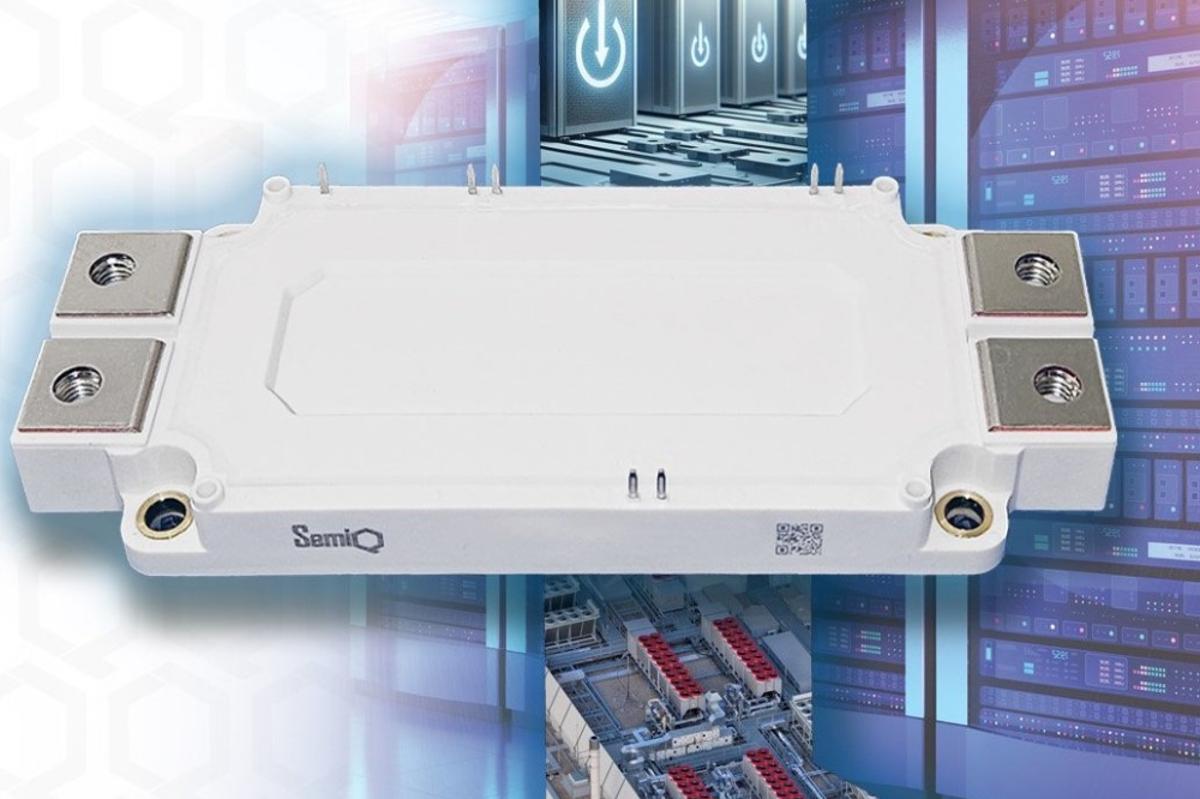
Semi Expands QSiC Module Range for SSTs and AC-DC
Why It Matters
The upgrades give data‑center and grid power systems a path to higher efficiency and reduced footprint, accelerating the shift from silicon IGBTs to silicon‑carbide technology. This could lower operating costs and enable more compact, reliable infrastructure for AI workloads and renewable‑energy integration.
Key Takeaways
- •SemiQ adds AlN‑substrate modules with pre‑applied TIM.
- •New 1700 V SiC MOSFETs achieve 1.7 mΩ RDSon.
- •Optional parallel SBD reduces switching loss in high‑temp environments.
- •Modules target AI data‑center AC‑DC converters and solid‑state transformers.
- •Design enables IGBT replacement with smaller heatsinks and higher power density.
Pulse Analysis
Silicon‑carbide (SiC) technology has become a cornerstone for next‑generation power electronics, especially as data‑center operators seek to cut energy waste while supporting ever‑growing AI workloads. Traditional silicon IGBTs struggle with high switching losses and bulky thermal management, prompting manufacturers to explore SiC’s superior bandgap and thermal conductivity. SemiQ’s latest QSiC Dual3 expansion taps into this trend by offering modules that combine AlN substrates—known for low thermal resistance—with pre‑applied thermal interface material, simplifying assembly and improving heat extraction in high‑density converters.
From a technical standpoint, the new 1700 V devices deliver an impressive 1.7 mΩ on‑state resistance, enabling currents up to 1150 A in a compact 62 × 152 mm package. The optional parallel Schottky barrier diode further trims switching losses, a critical factor for solid‑state transformers that must operate efficiently at elevated temperatures. By screening MOSFET dies with wafer‑level gate‑oxide burn‑in tests exceeding 1450 V, SemiQ ensures reliability that meets the rigorous uptime requirements of 24/7 data‑center environments. The low junction‑to‑case thermal resistance also means designers can shrink heatsinks, reducing overall system weight and footprint.
Market implications are significant. As hyperscale operators migrate to 800 V DC distribution and explore direct AC‑DC conversion from medium‑voltage feeders (13.8 kV or 35 kV), the ability to replace legacy IGBT modules with SiC alternatives without extensive redesign lowers capital expenditures. Industrial sectors—such as chillers, cooling towers, and grid‑scale energy storage—stand to benefit from higher power density and longer component lifespans. SemiQ’s expanded portfolio positions it to capture a larger share of the burgeoning SiC market, potentially accelerating the broader industry transition toward more efficient, compact power conversion architectures.
Semi expands QSiC module range for SSTs and AC-DC
Comments
Want to join the conversation?
Loading comments...