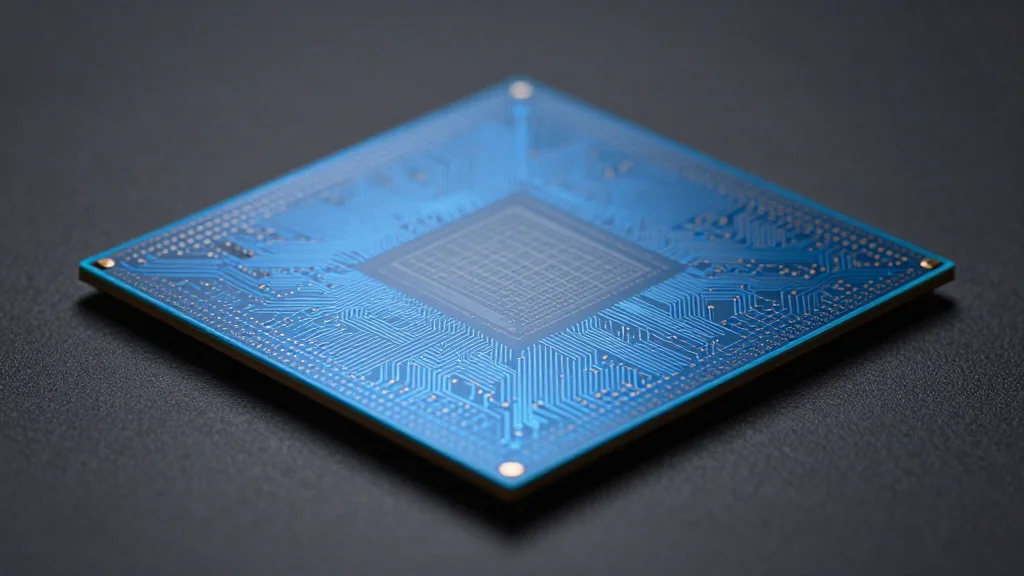
SRAM Chips Pulling Ahead in the New AI World
Companies Mentioned
Why It Matters
SRAM‑based accelerators dramatically cut inference latency and expand context windows, giving enterprises a competitive edge in real‑time AI services. Their emergence reshapes the chip market, challenging GPU supremacy and attracting major capital.
Key Takeaways
- •SRAM on-chip memory offers 100‑150 TBps bandwidth, dwarfing HBM3/4
- •Nvidia’s $20B Groq acquisition enables LPUs with massive SRAM caches
- •d‑Matrix’s Corsair accelerator ships with 256 MB SRAM, 2,400 TFLOPS at 600 W
- •Cerebras WSE‑3 packs 44 GB SRAM, 4 trillion transistors, valued at $56 B
- •Gimlet Labs raises $80 M to orchestrate SRAM‑centric inference in the cloud
Pulse Analysis
The AI inference bottleneck has shifted from raw compute to memory bandwidth, a problem dubbed the "GPU memory wall." Traditional GPUs rely on off‑chip high‑bandwidth memory (HBM) that caps data transfer rates at roughly 1.2‑2 TBps per stack. By contrast, static random‑access memory (SRAM) sits directly on the silicon die, delivering 100‑150 TBps—two orders of magnitude faster. This ultra‑fast, low‑latency cache enables larger key‑value (KV) stores, reducing response times and expanding context windows for large language models, a critical advantage for applications like real‑time agents and interactive coding assistants.
Industry leaders are racing to commercialize SRAM‑centric designs. Nvidia’s $20 billion acquisition of Groq has produced the Groq 3 LPU, a rack‑scale accelerator that pairs vector‑matrix units with dense SRAM to sidestep the memory wall. Meanwhile, d‑Matrix’s Corsair chiplet, now in full production, offers 256 MB of on‑chip SRAM and 2,400 TFLOPS of 8‑bit compute within a 600‑W envelope, targeting latency‑sensitive workloads. Cerebras pushes the envelope further with its wafer‑scale WSE‑3, housing 44 GB of SRAM and nearly a million AI cores, positioning the company at a $56 billion valuation after a $5.55 billion IPO. These moves underscore a market pivot: silicon designers are betting that near‑compute memory will become the new performance frontier.
The ecosystem is maturing beyond hardware. Gimlet Labs, fresh from an $80 million Series A, offers a cloud‑native abstraction layer that dynamically matches inference tasks to the optimal accelerator—whether GPU or SRAM‑based. This orchestration mitigates the complexity of heterogeneous deployments and accelerates adoption across enterprises. As AI models grow in size and demand sub‑millisecond latency, investors are pouring capital into SRAM‑centric startups, and data‑center operators are re‑architecting racks to accommodate these high‑bandwidth chips. The convergence of hardware breakthroughs and software orchestration heralds a new era where SRAM‑driven inference could become the default backbone for real‑time AI services.
SRAM Chips Pulling Ahead in the New AI World
Comments
Want to join the conversation?
Loading comments...